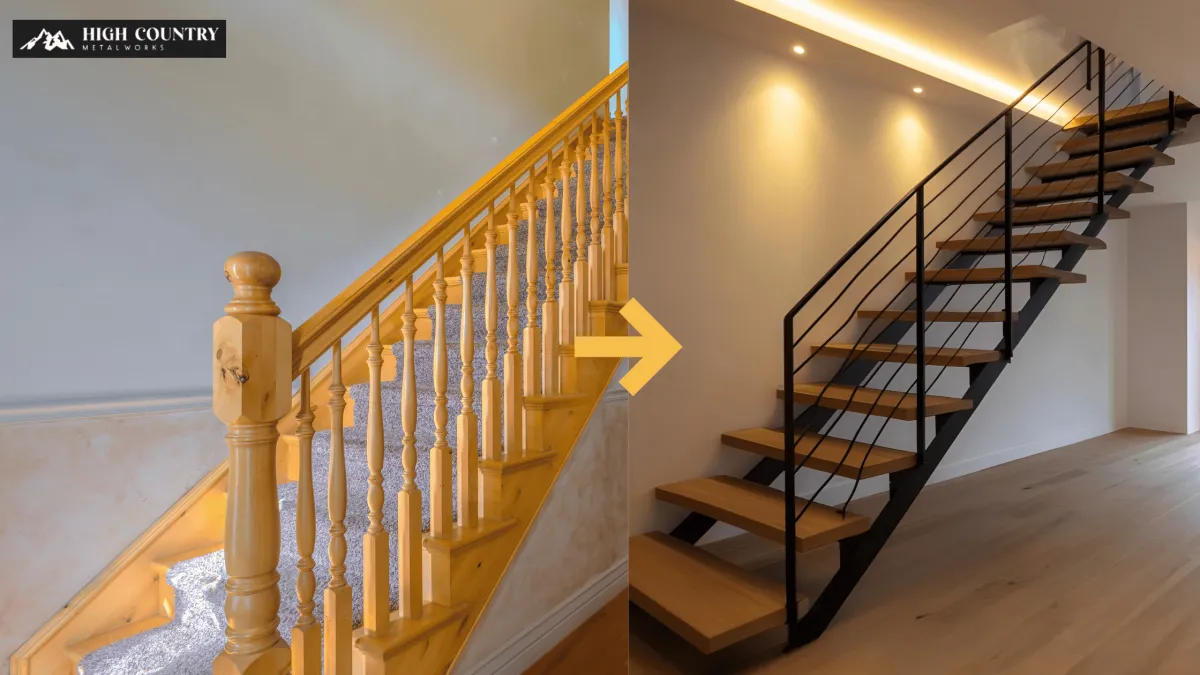
Wood Railings to Metal Upgrade Guide: Smart, Practical Tips for Every Homeowner
Replacing wood railings with metal is one of the highest-value upgrades a homeowner can make, improving structural safety, slashing long-term maintenance, and modernizing curb appeal in a single project. Whether you're dealing with rotting deck balusters, a wobbly interior stair railing, or simply want a cleaner aesthetic, this guide covers everything you need to make a confident decision: material types, design options, the installation process, real cost figures, and the building code basics that many guides skip.
Our team at High Country Metal Works has completed hundreds of residential wood-to-metal railing conversions. The recommendations below are drawn from that direct, hands-on experience, not just manufacturer specs.
Why Upgrade from Wood Railings to Metal? Key Benefits Explained
Wood has served homeowners for generations, but it has real structural limitations outdoors. Sun exposure causes UV degradation, moisture promotes rot and mold, and temperature swings warp boards and loosen hardware. Most painted or stained wood railings require refinishing every 2–3 years to stay code-compliant and visually appealing.
Metal railings, whether aluminum, stainless steel, or wrought iron, address all of these failure points simultaneously:
Durability: Metal does not rot, warp, or splinter. Properly finished metal railings regularly last 30–50 years in residential applications.
Safety: A structurally sound railing is a code and liability issue. Metal provides superior load resistance and won't fail the way deteriorated wood can, a critical advantage on elevated decks and staircases.
Low maintenance: Aluminum and stainless steel require nothing more than an occasional wipe-down. Even wrought iron only needs periodic touch-up painting, far less labor than annual wood refinishing.
Design versatility: Modern metal fabrication techniques allow for custom profiles, mixed materials (e.g., cable infill with steel posts), and a range of powder-coat colors that hold up to UV far better than exterior wood paint.
Property value: Upgraded railings are consistently flagged by real estate professionals as a meaningful curb-appeal improvement, especially when they replace visibly deteriorating wood.
Pro insight: In our experience, homeowners who delay replacing failing wood railings typically spend more on repairs than the original replacement cost, and run the risk of a safety incident in the meantime.
Metal Railing Material Options: Stainless Steel, Aluminum, and Wrought Iron Compared
Choosing the right metal comes down to three factors: your home's architectural style, your climate, and your budget. Here's how the most common metal railing materials stack up in real-world residential use:
Stainless Steel Railings
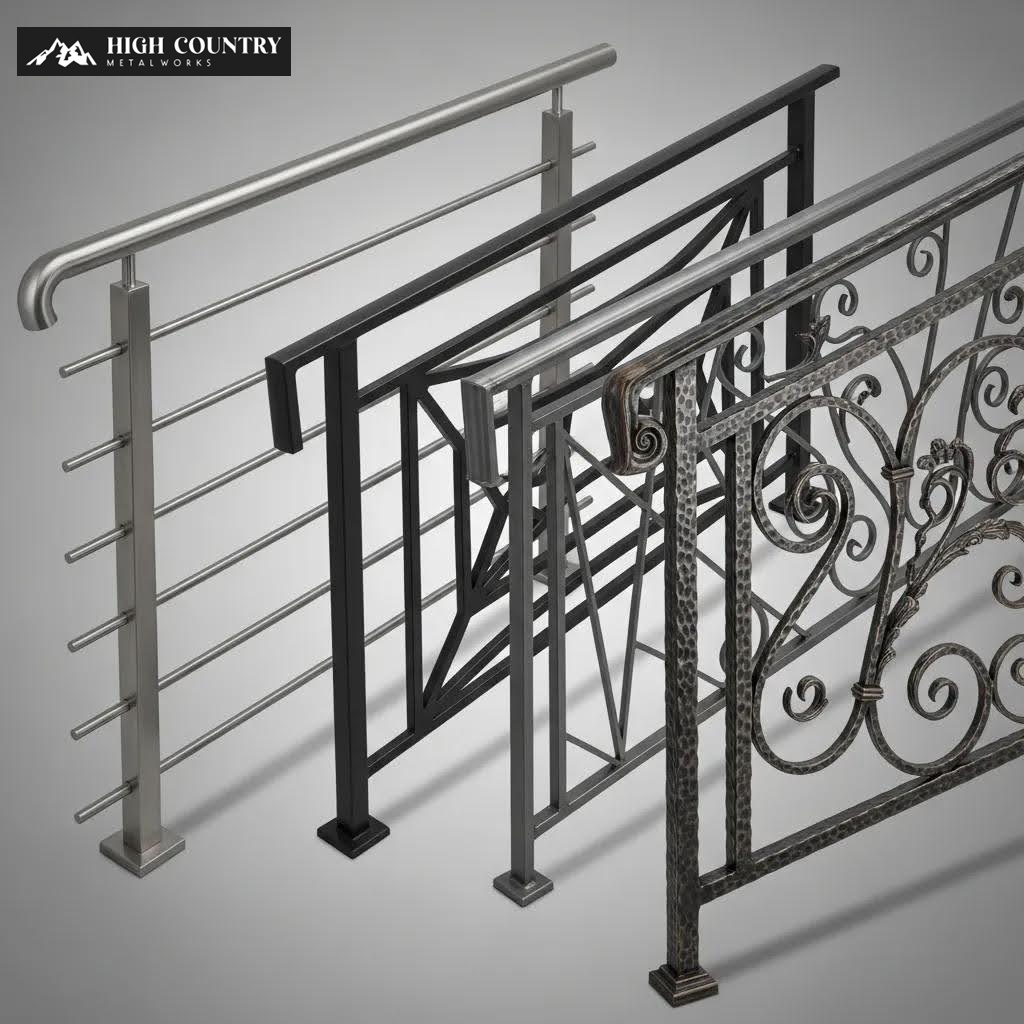
Stainless steel offers the highest corrosion resistance of any common railing material. It's the go-to choice for coastal homes, pool surrounds, and modern architecture. Grades 304 and 316 are standard for exterior use; 316 is recommended within a mile of saltwater. Stainless steel works particularly well as posts and top rails paired with cable or glass infill for a frameless, open view. Higher upfront cost, zero annual maintenance.
Aluminum Railings
Aluminum is the most popular choice for residential decks and patios. It's lightweight, doesn't rust, accepts powder-coat finishes in hundreds of colors, and is the most cost-effective metal option for large linear footage. Pre-fabricated aluminum panel systems can reduce installation time significantly. For homeowners wanting a clean look without a premium price tag, aluminum delivers exceptional value.
Wrought Iron Railings
Wrought iron is the traditional choice for classic, craftsman, and Victorian-style homes. Its density allows for ornate scrollwork, custom picket designs, and decorative collars that aluminum can't replicate. The trade-off: wrought iron is heavier, more expensive to ship and install, and requires periodic painting to prevent surface rust, particularly in humid or coastal climates. Properly maintained wrought iron railings on protected porches can last a lifetime.
Mild Steel and Cable Railing Systems
Mild (carbon) steel offers a raw industrial aesthetic that pairs well with wood decking and contemporary architecture. It requires finishing (paint or powder coat) to prevent oxidation, but can be custom-fabricated into virtually any profile. Cable railing systems, typically stainless steel wire tensioned between steel or aluminum posts, are increasingly popular for their minimal visual impact and panoramic views.
How the Wood-to-Metal Railing Installation Process Works
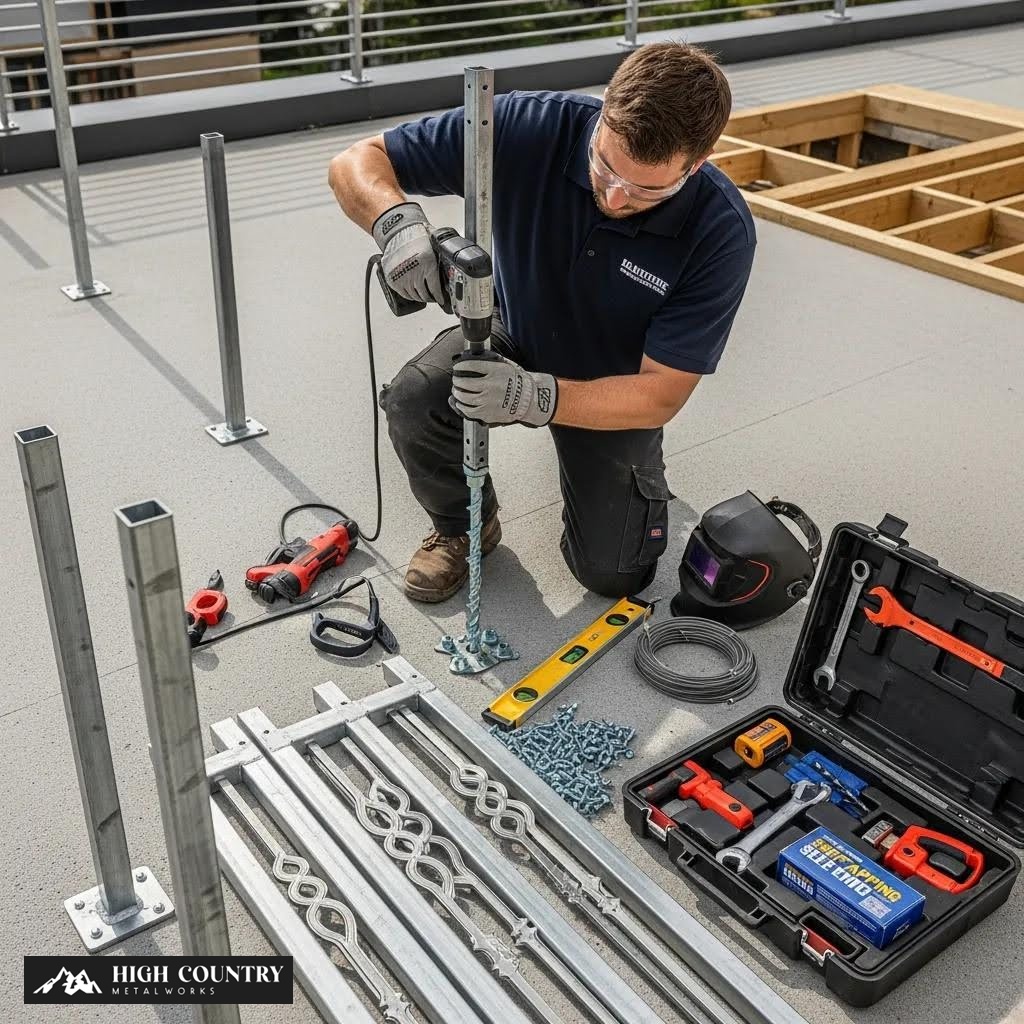
Understanding the installation sequence helps you set realistic timelines and avoid surprises. A professional wood-to-metal railing conversion typically involves five stages:
Design consultation and site assessment: A qualified installer measures all runs, checks substrate conditions (deck boards, concrete, or framing), and discusses style, color, and finish options. This is also when any underlying structural issues, such as rotted posts or inadequate footings, are identified and scoped.
Material fabrication or procurement: Custom metalwork is fabricated off-site; standard aluminum systems are ordered. Lead times range from one week for stock systems to 4–6 weeks for fully custom fabrication.
Old railing removal: Existing wood railings are removed. Post holes or substrate anchor points are inspected and, if needed, reinforced before new hardware is set.
Post installation and infill: Posts are set and secured either surface-mounted or through-bolted, depending on the substrate and local code. Pickets, panels, or cable infill are installed, followed by the top rail.
Final inspection and sign-off: A good installer tests every post for rigidity, verifies handrail height and baluster spacing against local code, and walks the homeowner through the finished installation before cleaning up.
Installation timeline: Most residential projects of 20–60 linear feet are completed in one to two days once materials arrive on-site.
Metal Railing Costs: What to Budget for a Wood-to-Metal Conversion
Cost is the most common sticking point in railing upgrade decisions. Below is a realistic breakdown based on current market pricing for residential projects in 2025. Note that labor rates vary by region; figures below reflect typical mid-range U.S. markets.
Stainless steel is one of the most durable options available. Material costs range from $60 to $120 per linear foot, with installation adding another $40 to $65 per linear foot. It requires virtually no annual maintenance beyond simple rinsing or wiping, and it typically lasts 40 to over 50 years.
Aluminum is a more budget-friendly alternative. Materials cost between $40 and $80 per linear foot, while installation ranges from $25 to $45 per linear foot. Like stainless steel, it has minimal maintenance requirements, usually just occasional cleaning, and offers a lifespan of 30 to 40 years.
Wrought iron provides a classic look, with material costs of $50 to $100 per linear foot and installation costs of $30 to $55 per linear foot. However, it requires regular upkeep, averaging $50 to $100 per year. Its typical lifespan is 30 to 40 years.
Mild steel or cable systems cost about $55 to $110 per linear foot for materials and $35 to $60 per linear foot for installation. Annual maintenance generally falls between $20 and $60, and these systems usually last 25 to 35 years.
Wood is the most affordable upfront option. Materials range from $15 to $40 per linear foot, with installation costs of $20 to $40 per linear foot. However, it has significantly higher annual maintenance costs, around $150 to $400, and a shorter lifespan of just 10 to 20 years.
Note: These figures reflect supply and labor costs as of 2025 and will vary by region, project complexity, and site conditions. Always request itemized quotes from at least two licensed contractors.
A note on long-term value: A 40-linear-foot wood railing might cost $2,200 upfront and $350/year to maintain, reaching $9,200 over 20 years before replacement. An aluminum equivalent at $3,400 installed, with near-zero maintenance, costs less over the same period and doesn't need replacing. Total cost of ownership almost always favors metal.
Building Codes and Permit Requirements for Metal Railing Replacement
Railing replacement is a permitted project in most U.S. jurisdictions, a detail many online guides gloss over. Here's what the International Residential Code (IRC) requires as a baseline; local amendments may be stricter:
Minimum railing height: 36 inches for decks and stairs with a walking surface below 30 inches; 42 inches for surfaces 30 inches or higher above grade.
Baluster spacing: Openings must not allow passage of a 4-inch sphere, a child-safety standard actively enforced during inspections.
Load requirements: Railings must resist a minimum of 200 lb concentrated load and 50 lb/linear foot lateral load per IRC Section R312.
Graspability: Handrails on stairways must have a graspable profile, round rails 1.25–2 inches in diameter or equivalent.
Working with a professional installer who pulls the required permits and schedules inspections protects you legally and ensures the work passes final sign-off, which matters when you sell the property.
Making Your Decision: Choosing the Right Metal Railing for Your Home
Upgrading from wood to metal railings is rarely the wrong call for a homeowner planning to stay in their home for more than five years. The upfront investment is real, but so is the math: lower annual maintenance, a longer service life, improved safety, and stronger curb appeal consistently make metal railings the better value over time.
The right material depends on your specific situation. Coastal or humid climates favor stainless steel or powder-coated aluminum; classic architectural styles often call for wrought iron; budget-conscious deck projects are usually best served by aluminum. A qualified metal fabricator can walk you through the options with sample finishes and accurate project quotes.
At High Country Metal Works, our team brings 15+ years of custom metal fabrication experience to residential railing conversions from design consultation through permitted installation and final inspection. We work with stainless steel, aluminum, wrought iron, and cable systems, and we fabricate custom components in-house for projects that require something beyond off-the-shelf options.
Frequently Asked Questions About Metal Railing Upgrades
1. What maintenance do metal railings require compared to wood?
Aluminum and stainless steel need only an occasional rinse and soap wipe-down. Wrought iron requires an annual rust check and touch-up paint at welds. Wood, by comparison, needs full sanding and recoating every 2–3 years, making metal the clear low-maintenance winner.
2. Can I customize the color of my metal railings?
Yes. Aluminum and steel are powder-coated in hundreds of colors, producing a UV-resistant finish that outlasts exterior paint. Stainless steel comes in brushed or mirror-polished finishes. Wrought iron can be painted or powder-coated to match your home's exterior.
3. Are metal railings safer than wood?
Yes, and increasingly so over time. Wood loses structural integrity as it rots or weathers, often before visible failure. Metal maintains its load-bearing capacity throughout its lifespan, making it the safer long-term choice for elevated decks, stairs, and pool surrounds.
4. How much does it cost to replace wood railings with metal?
Expect $65–$185 per linear foot installed, depending on material and complexity. Aluminum is the most affordable; stainless steel costs the most upfront. Factor in near-zero annual maintenance versus $150–$400/year for wood and metal, which typically costs less over 20 years.
5. How long does metal railing installation take?
On-site installation for a typical 20–60 linear foot project takes one to two days. Custom-fabricated components add 2–6 weeks of lead time; stock aluminum systems can often be installed within a week of ordering.


