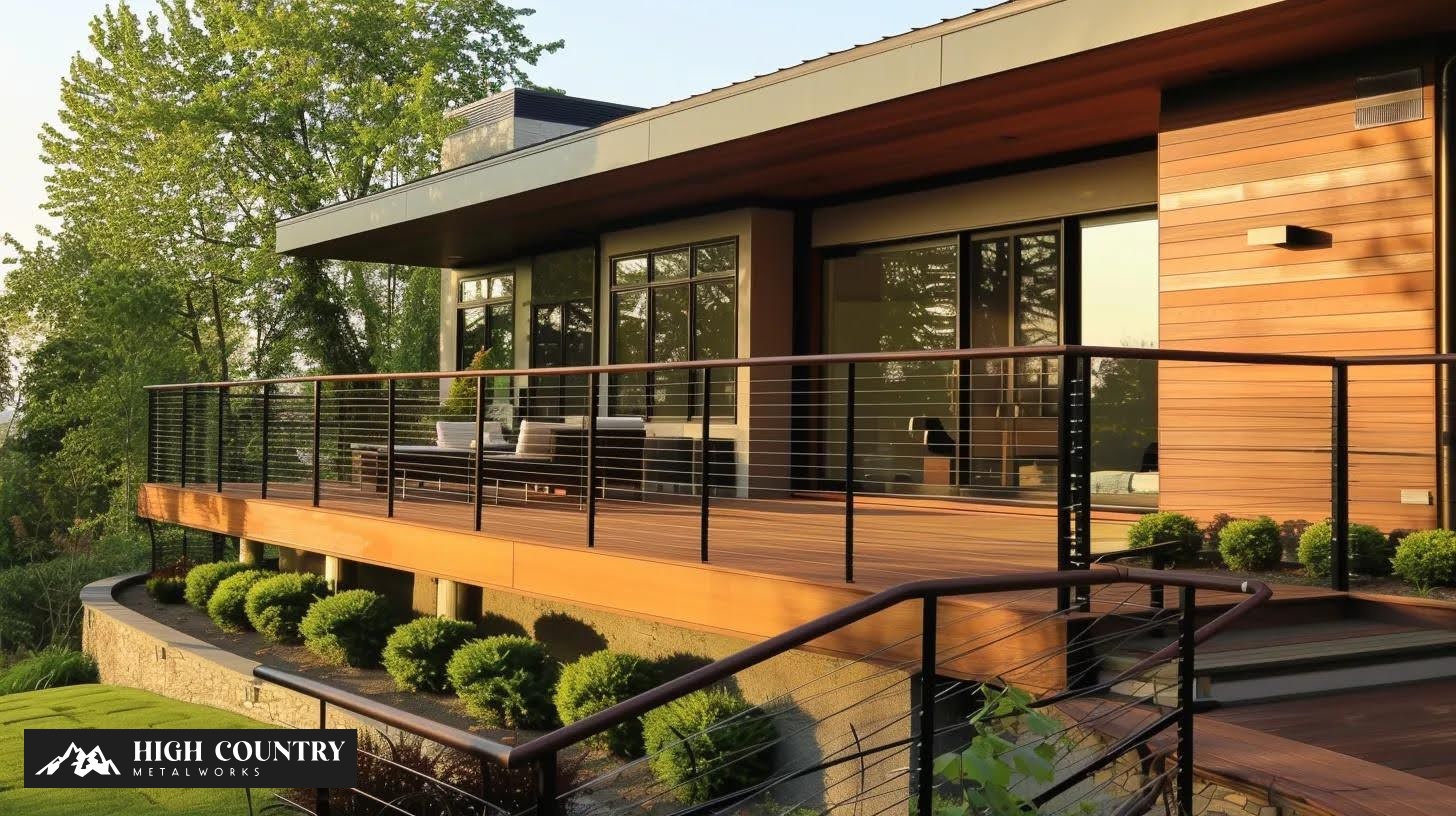
Why Aluminum Deck Railing Works Best for Outdoor Spaces
Aluminum deck railing provides the ideal balance of durability, design flexibility, and low maintenance for any outdoor living area. Its inherent corrosion resistance, paired with advanced powder-coat finishes, ensures long-term performance without the constant upkeep required by wood or the rust issues common to steel.
This guide distills the essential benefits, compares aluminum to other materials, outlines customization options, and explains why it's especially suited to challenging climates like Utah’s mountain region.
1. Durability and Low Maintenance
The core advantage of aluminum deck railing is its superior resistance to environmental damage. As a non-ferrous metal, it chemically resists rust and structural decay, unlike iron-based steel, and does not rot or warp like wood.
Inherent Corrosion Resistance: Aluminum naturally forms a protective oxide layer that shields the substrate from rust and decay, ensuring structural integrity in wet, snowy, or humid conditions.
Powder-Coat Finish: A quality powder coat creates a tough, continuous protective barrier against UV fading, abrasion, and moisture. This finish eliminates the need for frequent sanding and repainting.
Low Maintenance: Care is minimal, typically requiring only seasonal washing with mild soap and water. This saves significant time and money over the railing's lifespan.
Design Versatility and Value: A wide range of profiles and finishes accommodates modern, transitional, and traditional designs, translating to a high long-term value and strong curb appeal.
Aluminum vs. Traditional Materials
When evaluating materials for deck railings, performance across the product lifecycle is key. Below illustrates why aluminum often offers the best balance.
Aluminum is corrosion-resistant and offers a durable finish. Over the long term, it maintains a consistent appearance with minimal upkeep, making it a low-cost option throughout its lifetime.
Wood provides warm, natural aesthetics and is easy to work with. However, it requires regular staining or painting and can be vulnerable to rot, warping, and insect damage over time.
Steel is very strong and allows for slim, sleek profiles. Its downside is that it can rust if not properly protected, so it needs periodic maintenance to prevent structural issues.
Vinyl is affordable upfront and does not rust. On the other hand, it offers limited high-end aesthetics and may become brittle, discolored, or warped as time goes on.
2. Long-Term Value and Lifespan Comparison
While the upfront cost of aluminum deck railing may sometimes be slightly higher than budget wood or vinyl, its total cost of ownership (TCO) is significantly lower over 10-25 years due to minimal maintenance expenses.

Cost and Lifecycle Comparison of Deck Railing Materials
Aluminum
Aluminum is highly resistant to corrosion and UV damage, especially when finished with a powder coat. It requires very little maintenance, just seasonal cleaning and inspections. With a quality finish, aluminum railings can last 20 to 40+ years. While the upfront cost may be moderate, the long-term upkeep is low, making it a smart investment for homeowners who want durability without constant maintenance.
Wood
Wood is naturally vulnerable to rot, insect damage, and UV exposure, so it is less durable than other materials. Maintenance is higher, as wood typically needs staining or painting every few years. Wood railings usually last 10 to 25 years. While the initial cost may be moderate, the ongoing maintenance can make it a more expensive option over time.
Steel
Steel offers high strength but is prone to rust if not properly protected. Maintenance is medium to high, requiring coatings and regular inspections to prevent corrosion. Properly maintained steel railings can last 20 to 50 years. Costs can vary widely, as neglecting maintenance can lead to expensive repairs.
Vinyl
Vinyl has low to medium durability and may discolor or warp over time. Maintenance is minimal, generally limited to cleaning. Vinyl railings last 15 to 30 years. They have a low initial cost but may have limited appeal for resale, making them a budget-friendly but less prestigious option.
For homeowners who want a reliable, long-lasting option that maintains its appearance with minimal effort, aluminum deck railing is often the best choice.
3. Design and Customization Options
One of the great advantages of aluminum deck railing is its adaptability to diverse architectural styles. Custom fabrication allows the railing system to enhance the look of the home, not just serve as a safety barrier.
Profiles: Aluminum can be extruded into slender modern profiles that maximize views or shaped into traditional balusters with decorative touches.
Infill Materials: Pair the aluminum frame with different infill options to achieve the desired effect:Vertical Balusters: Classic and cost-effective.Cable Railing: Ideal for unobstructed panoramic views.Glass Panels: Provides a clean, contemporary look and excellent wind break.
Finishes: Powder coating offers an array of finishes, including:Matte or Gloss colors (e.g., classic black, dark bronze).Textured finishes that conceal minor wear and add tactile interest.Metallic looks that complement stone and wood accents.
Choosing the right style and finish is crucial. A matte black or dark bronze finish often suits modern mountain architecture, while lighter metallics can enhance glass-forward or coastal designs.
4. Performance in Challenging Climates (Utah Focus)
The durability traits of aluminum deck railing make it exceptionally well-suited for environments with dramatic temperature swings, high UV exposure, and heavy snow, such as Utah's mountain climate.
Freeze-thaw cycles can cause cyclic expansion, contraction, and joint failure in wood. Aluminum, being a non-absorbent substrate, paired with engineered fasteners, allows for predictable thermal movement and avoids these issues. High UV exposure at altitude can accelerate color fading and chalking.
Using a high-quality powder coat with UV-stable pigments and proper film thickness helps preserve the aluminum’s appearance. Snow and ice accumulation can create load and moisture buildup. Aluminum railing systems address this with sloped top rails, proper drainage, and engineered post spacing to ensure structural stability.
Aluminum’s low moisture uptake prevents the dimensional cycling, such as swelling and shrinking, that often causes wood to split and joints to fail. When posts, rails, and connections are properly engineered to handle localized loads, the railing system remains structurally sound and visually consistent for decades.
5. Structural Strength and Safety Compliance
Aluminum deck railing is designed for safety and structural integrity using a favorable strength-to-weight ratio. This allows for the use of slimmer profiles that are easier to handle and install than steel, without compromising load capacity.

Meeting Building Codes and Safety Standards
Compliance requires an integrated approach to engineering and installation. Homeowners and contractors must ensure the system meets local load conditions and safety standards.
Engineered Post Details: Posts and mounting flanges must be sized and reinforced to resist lateral loads (e.g., wind, human weight) and rotational forces.
Guard Height and Spacing: The final installation must comply with local code for guard height (typically 36–42 inches) and baluster spacing (typically no opening greater than 4 inches).
Fasteners and Connections: Certified fasteners and brackets designed for exterior use must be specified to prevent galvanic corrosion between the aluminum and other metals.
Always request detailed shop drawings and engineered specifications from your fabricator to confirm compliance and performance.
6. Maintenance and Care Requirements
The simplicity of maintaining powder-coated aluminum railings is a significant benefit. Regular care is primarily preventative.
Easy Three-Step Seasonal Cleaning
Clean: Use a mild soap solution (non-detergent) and a soft brush or cloth to remove dirt, salts, and airborne particulates.
Rinse: Thoroughly rinse the railing with fresh water to remove all soap residue, which can attract dirt if left to dry.
Inspect: Check all fasteners, welds, and finish for any chips or localized wear.
Preventive Maintenance Tips:
Prompt Touch-Ups: Any chips in the powder coat should be touched up immediately with a compatible finish product to protect the aluminum substrate and prevent corrosion around the fasteners.
Drainage: Ensure water drains away from post bases and mounting flanges to prevent standing water accumulation.
Final Verdict: The Aluminum Advantage
Aluminum deck railing is the superior long-term choice, offering unparalleled durability, minimal maintenance, and maximum design flexibility. By resisting rust and rot while providing a stable, aesthetically versatile platform, it delivers excellent lifecycle value. Choosing a quality powder-coated aluminum system ensures years of reliable performance and stunning looks, making it a wise investment for any high-end outdoor space.
Partnering with High Country Metal Works
High Country Metal Works is a Utah-based custom metal fabricator specializing in high-quality powder-coated aluminum railings tailored for mountain homes. We provide comprehensive service from collaborative design to precise installation, ensuring your custom aluminum railing system meets both your aesthetic goals and local performance requirements. Serving areas like Alpine, Provo, Park City, and St. George, we emphasize craftsmanship and clear communication to deliver lasting value.
Frequently Asked Questions
1. What is the typical lifespan of aluminum deck railings?
Aluminum deck railings typically last 20 to 40 years, significantly longer than wood and often requiring less maintenance than steel to achieve that lifespan.
2. Are aluminum railings environmentally friendly?
Yes. Aluminum is highly recyclable without losing its properties. The material's longevity and low maintenance also reduce the need for frequent replacements or chemical treatments (like wood stain/paint).
3. How do aluminum railings perform in extreme weather conditions?
They perform very well. Aluminum resists rot and is non-absorbent, making it immune to freeze-thaw warping. High-quality powder coats protect against the strong UV rays found at high altitudes.
4. Can I customize the look of aluminum railings?
Absolutely. Aluminum can be fabricated with various profiles, combined with glass or cable infill, and finished with a wide spectrum of UV-stable powder-coat colors and textures to match any architectural style.
5. What is the required maintenance for the powder-coat finish?
Maintenance is minimal: seasonal cleaning with mild soap and water, and annual inspections for loose fasteners or chips in the finish. Avoid abrasive cleaners or scouring pads.


