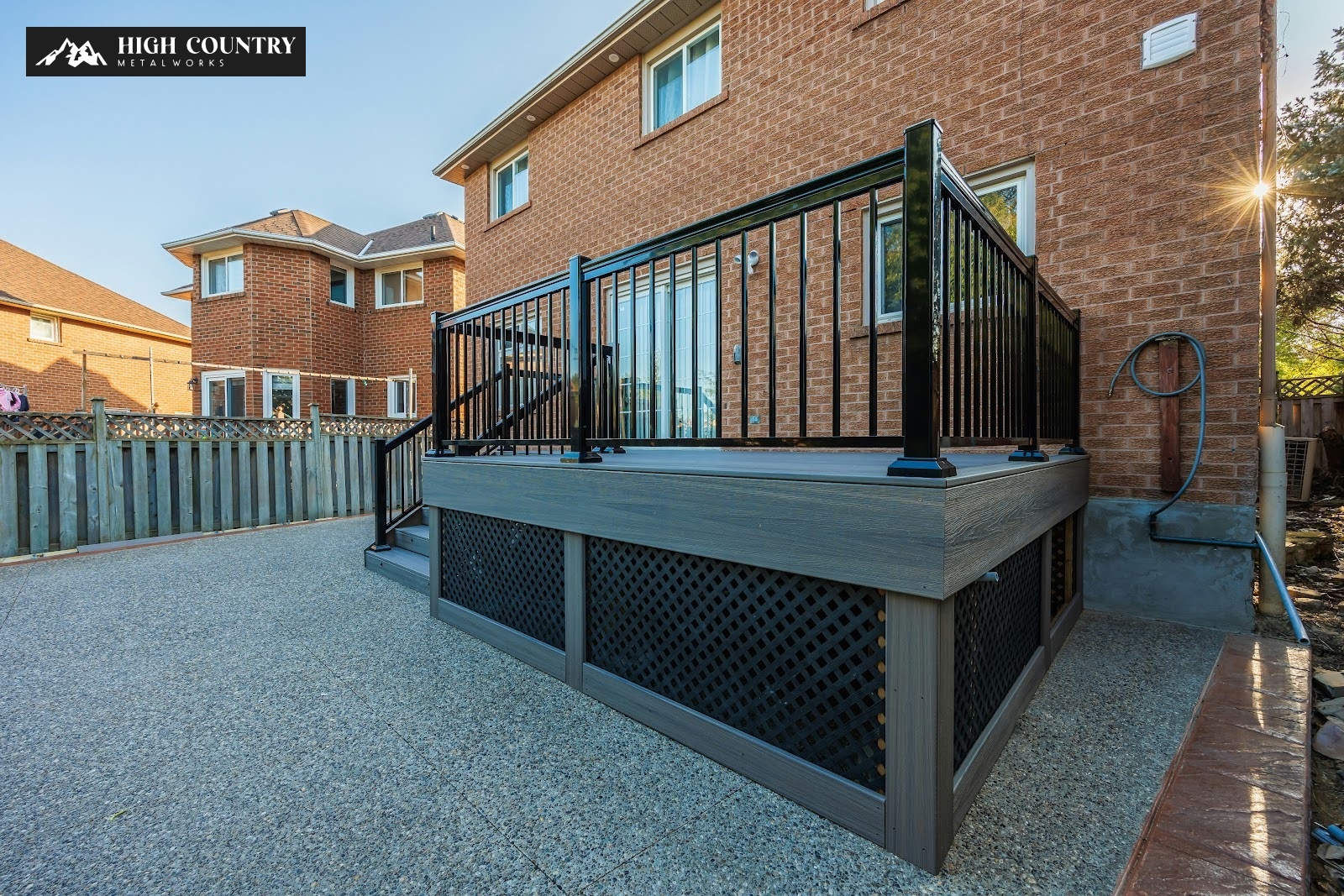
How Tall Should Deck Railing Be? Avoid Costly Code Violations
When homeowners, contractors, and DIY builders ask "how tall should deck railing be," they're seeking to avoid two critical problems: failed building inspections and serious safety hazards. Deck railing height regulations are strictly enforced by local building authorities, and even minor deviations can result in costly violations, mandatory reconstruction, and potential liability issues.
After completing hundreds of deck installations across Utah, we've compiled this guide to help you understand deck guardrail requirements, avoid common pitfalls, and build with complete confidence.
What Is the Standard Deck Railing Height?
The standard deck railing height (also called guardrail height or balustrade height) for residential decks is 36 inches minimum, measured vertically from the finished deck surface to the top of the guardrail cap.
For commercial properties, multi-family dwellings, and public-access structures, the standard guardrail height increases to 42 inches minimum, providing enhanced fall protection in higher-traffic environments.
Quick Reference:
Residential deck railing height: 36 inches minimum
Commercial deck railing height: 42 inches minimum
Measurement point: From deck surface to top of rail
These standardized heights are based on decades of safety research and accident data analysis. The 36-inch residential requirement balances fall prevention with usability and sightlines, while the 42-inch commercial standard accounts for higher traffic volumes and diverse user populations.
What Is Code Height for Deck Railing? Understanding IRC and IBC Standards
International Residential Code (IRC) Requirements
The International Residential Code, which most jurisdictions adopt as their foundation, establishes clear guardrail specifications:
Minimum height: 36 inches for residential decks and porches
Trigger height: Required when deck surface exceeds 30 inches above grade
Baluster spacing: Maximum 4-inch sphere passage (prevents child entrapment)
Load requirements: Must withstand 200 pounds of horizontal force
International Building Code (IBC) Standards
For commercial applications, the IBC prescribes more stringent requirements:
Minimum height: 42 inches for guardrails on elevated surfaces
Application: Commercial decks, balconies, mezzanines, and public walkways
Enhanced structural requirements: Greater load-bearing capacity
Key Difference: Guard Rails vs Handrails
A common source of confusion involves the distinction between guardrails and handrails:
Guardrails (guards): Protective barriers along open deck edges, required at 36" or 42"
Handrails: Graspable rails along stairs, typically 34-38" above stair nosing
Both may be required: Stair systems often need both guardrails and handrails
Deck Railing Height Requirements Based on Elevation

Decks Under 30 Inches Above Ground Level
For low-elevation decks where the walking surface sits 30 inches or less above adjacent grade, building codes typically do not mandate guardrails. However, many homeowners choose to install deck railings for added safety, aesthetic appeal, and property value.
Decks Over 30 Inches Above Ground (Mandatory Railing Zone)
Once your deck surface exceeds 30 inches above the lowest adjacent grade, guardrails become legally required on all open sides:
Minimum railing height: 36 inches (residential) or 42 inches (commercial)
Continuous barrier is required along all exposed edges
No gaps larger than 4 inches between balusters or pickets
Structural integrity must meet load-bearing standards
Multi-Level and Elevated Deck Systems
For complex deck designs featuring multiple levels, each elevation must be evaluated independently. Second-story decks and raised platforms over 30 inches always require full-height guardrails, with each level assessed based on its own height above ground.
Residential vs Commercial Deck Railing Height: Critical Distinctions
Understanding whether your project qualifies as residential or commercial is essential for code compliance.
Residential Deck Classifications
Residential decks include those serving single-family homes, duplexes, individual townhomes, and private patios. These structures follow IRC guidelines with the 36-inch minimum railing height standard.
Commercial Deck Classifications
Commercial decks encompass apartment complexes (3+ units), restaurant patios, retail establishments, office building balconies, hotels, and public recreational facilities. These must comply with IBC regulations requiring 42-inch minimum guardrail height.
Common Misclassification Errors
One of the costliest mistakes in deck construction is applying residential standards to commercial properties. We regularly see failed inspections when apartment buildings receive 36-inch railings instead of the required 42-inch systems, or when short-term rental properties use residential codes despite commercial classification.
Professional Tip: When in doubt about classification, always consult your local building department before purchasing materials or beginning construction.
State and Local Code Variations: Why Location Matters
While the IRC and IBC provide nationwide baseline standards, local building codes always supersede national guidelines. Municipal authorities can adopt stricter requirements or create amendments based on regional conditions like enhanced wind zones, seismic requirements, or snow load considerations.
Essential Pre-Construction Steps:
Contact local building department for current deck construction guidelines
Review municipal ordinances for recent code updates or amendments
Verify permit requirements and inspection schedules
Confirm measurement methods and documentation needs
Keep copies of all approved plans and code references
Standard Deck Railing Height Requirements in Utah

Based on our extensive experience with Utah building departments and successful completion of projects across the state, here's what you need to know:
Statewide IRC Adoption
Utah municipalities, including Salt Lake City, Saratoga Springs, Provo, Park City, and St. George, have adopted IRC-based building codes with consistent guardrail requirements:
Residential deck railing height: 36 inches minimum
Trigger elevation: Decks exceeding 30 inches above grade
Baluster spacing: Maximum 4-inch sphere passage
Commercial/multi-family: 42 inches minimum (IBC-based)
Mountain Community Considerations
Communities like Park City, Sundance, and Alta face unique challenges including heavy snow loads, high altitude winds, steep terrain measurement protocols, and wildfire zone requirements for non-combustible materials.
Permit and Inspection Process
Utah requires building permits for most deck construction projects. The typical process includes plan submission, plan review, permit issuance, rough inspection, and final inspection. Never cover railing posts or structural elements before inspection approval.
Common Deck Railing Code Violations (And How to Avoid Them)

Through years of working with building inspectors, we've identified the most frequent compliance issues:
1. Insufficient Final Height
The Problem: Railings measure 36 inches during construction but fall short after final decking installation.
The Solution: Always measure from the final, installed deck surface. Account for all decking thickness, including any cap boards or trim.
2. Excessive Baluster Spacing
The Problem: Gaps between vertical pickets exceed the 4-inch maximum.
The Solution: Use a 4-inch diameter sphere to physically test spacing before final installation. Many inspectors carry sphere gauges.
3. Confusing Guardrails with Handrails
The Problem: Installing only stair handrails (34-38 inches) along deck edges where guardrails (36+ inches) are required.
The Solution: Understand that deck edges need guardrails at 36/42 inches, while stairs need handrails at 34-38 inches from stair nosing.
4. Decorative vs Structural Compliance
The Problem: Choosing attractive cable rail, glass panel, or ornamental iron systems without verifying code compliance.
The Solution: Work with railing manufacturers who provide ICC-ESR evaluation reports and engineering stamps confirming code compliance.
5. Improper Measurement Points on Sloped Lots
The Problem: Measuring deck height from an arbitrary point rather than the correct "lowest adjacent grade."
The Solution: Measure from the lowest point where ground meets the deck structure, even if that's on the downhill side of a sloped lot.
Why Deck Railing Height Matters: Safety, Liability, and Financial Impact
Proper deck guardrail height extends far beyond simply passing inspection.
Fall Prevention and Safety
According to the Consumer Product Safety Commission (CPSC), deck-related injuries send thousands of Americans to emergency rooms annually. Proper guardrail height is the primary defense against children climbing over low barriers, adults losing balance in low-light conditions, and accidents during social gatherings.
Insurance and Liability Considerations
Inadequate deck railing height creates serious exposure, including claim denial risk, personal liability for guest injuries, contractor exposure years after construction, and property insurance complications.
Real Estate and Resale Value Impact
Code-compliant deck construction protects your investment by preventing home inspection failures, appraisal issues, and disclosure complications during property sales. Non-compliant structures may be assigned zero value or counted as liabilities.
Professional Insight: We've seen homeowners spend $5,000-$15,000 correcting railing violations that could have been avoided with proper planning and professional installation.
Final Pre-Installation Checklist: Ensure Code Compliance
Before finalizing your deck railing project, verify these essential items:
Measurement and Planning
Deck height accurately measured from lowest adjacent grade
Finished deck surface height confirmed (including all decking materials)
Railing height meets minimum: 36" residential / 42" commercial
All measurements taken from final installed surface
Code Verification
Local building code requirements obtained in writing
Permit application submitted and approved
Any municipal amendments or special requirements identified
Railing System Specifications
Baluster spacing verified (4-inch sphere cannot pass through)
Post spacing meets code (typically 4-6 feet maximum)
Structural load requirements confirmed (200 lbs horizontal force)
Materials approved for intended use
Conclusion: Building Safe, Code-Compliant Deck Railings
Understanding how tall deck railing should be is fundamental to safe, legal deck construction. Throughout Utah and across the United States, residential deck guardrails must meet minimum height standards of 36 inches whenever the deck surface exceeds 30 inches above grade, while commercial applications require 42-inch minimums.
These requirements aren't arbitrary rules; they're evidence-based safety standards developed from decades of accident data and engineering research. Proper guardrail height prevents falls, protects your family and guests, maintains property value, and ensures you avoid costly code violations and legal liability.
Professional Metal Deck Railing Installation in Utah
If you're planning a deck railing installation project in Utah, professional expertise makes the difference between a compliant, safe installation and a costly failed inspection. High Country Metal Works specializes in custom metal railing systems specifically engineered to meet Utah building codes while delivering exceptional durability and aesthetic appeal.
Our services include code compliance consultation, custom design services, professional installation, quality materials for Utah's climate, and inspection support. With hundreds of successful deck railing projects across Salt Lake City, Park City, Provo, and surrounding communities, we bring the expertise needed to ensure your project exceeds code requirements while enhancing your property's value and curb appeal.
Frequently Asked Questions About Deck Railing Height
1. How tall should deck railing be in Utah?
In Utah, residential deck railings must be at least 36 inches high when the deck surface exceeds 30 inches above grade, with balusters spaced no wider than 4 inches. Commercial properties require 42-inch guardrails.
2. Does every deck in Utah require a railing?
No, railings are only required when the deck surface is more than 30 inches above the lowest adjacent grade. Below this height, railings are optional but recommended for safety.
3. Are commercial deck railings taller than residential ones?
Yes, commercial deck railings must be at least 42 inches tall compared to 36 inches for residential decks. This applies to apartments, restaurants, and any public-access structures.
4. Do deck stair handrails have different height requirements?
Yes, stair handrails must be 34-38 inches above the stair nosing, which differs from the 36-inch deck guardrail standard. Some stairways require both handrails and guardrails.
5. Can I install a higher railing than code minimums require?
Yes, you can install railings taller than minimum requirements. Many homeowners choose 38-42 inch residential railings for enhanced safety, better views when seated, or aesthetic preferences.


