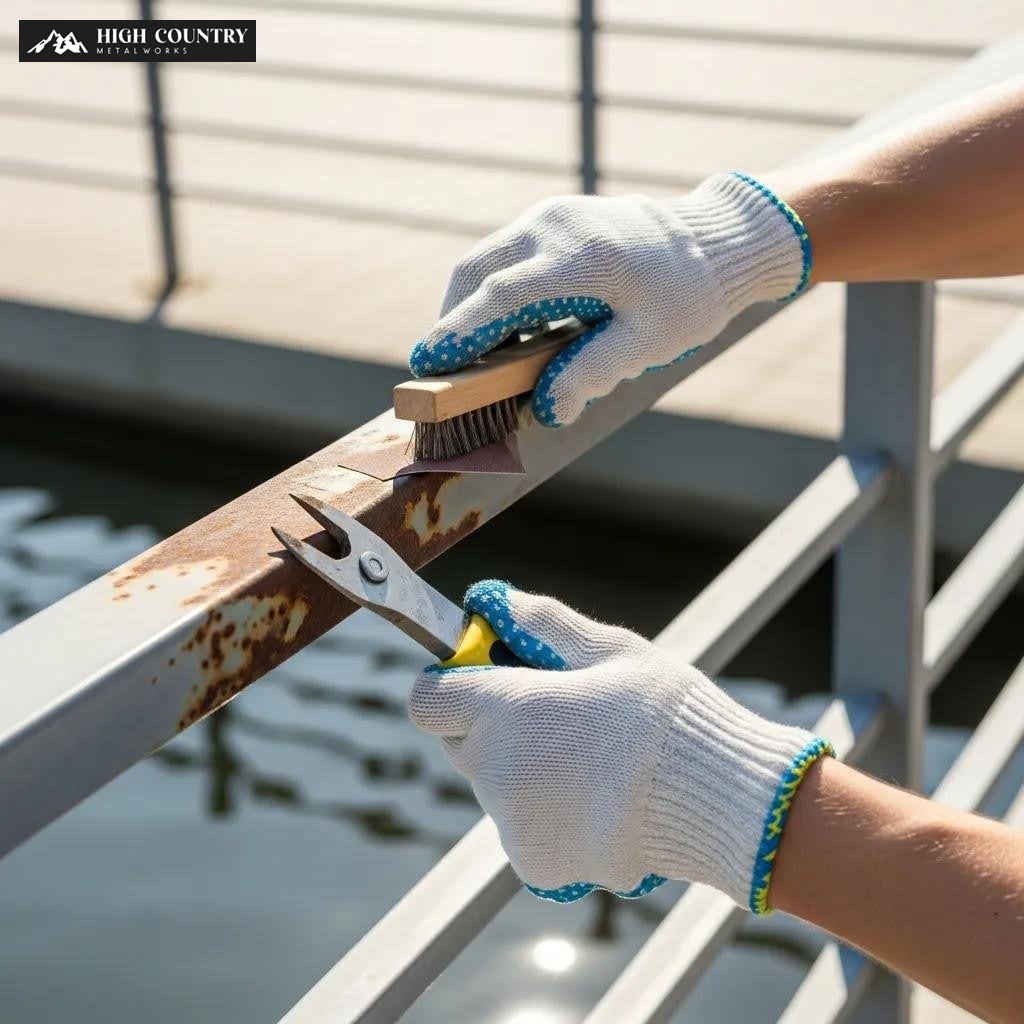
How to Remove Rust from Metal Railings Without Damage
To remove rust from metal railings, start by cleaning the surface, then use mechanical methods like sanding (80 to 220-grit) or wire brushing for surface rust, or apply chemical rust removers for deeper corrosion. After removal, immediately apply rust-inhibiting primer and protective paint to prevent recurrence and extend railing lifespan.
Key Takeaways
Clean and assess the railing before starting any rust removal work to determine corrosion severity and choose the appropriate method
Use mechanical removal with progressively finer sandpaper (80-grit to 220-grit) and wire brushes for light to moderate surface rust
Apply chemical rust removers like phosphoric acid, citric acid, or commercial formulations for stubborn or deep-seated corrosion
Always wear safety gear, including gloves, safety glasses, and respirators, when removing rust mechanically or chemically
Prime immediately after removal with rust-inhibiting primer to prevent flash rusting on exposed metal surfaces
Apply protective topcoat using rust-resistant paint or clear sealant to create a moisture barrier and prevent future corrosion
Inspect railings twice yearly and clean regularly to catch rust early and maintain protective coatings
Consider professional help for severe rust damage, deep pitting, or when structural integrity is compromised
Rust can quickly ruin the appearance of your metal railings and compromise their structural integrity over time. This comprehensive guide provides proven methods to safely remove rust from metal railings while preserving the underlying material.
You'll discover what triggers rust formation, effective removal techniques, recommended products, and practical prevention strategies to keep your railings looking pristine and functioning properly for years to come.
Understanding Why Metal Railings Rust and the Damage It Causes
Rust forms through a chemical reaction when iron in metal combines with oxygen and moisture to create iron oxide. Environmental factors like humidity, rainfall, and salt exposure, particularly in coastal regions, accelerate this corrosive process.
Understanding these underlying mechanisms helps you select the most effective treatment approach and implement lasting prevention measures.
The Science Behind Rust Formation on Metal Railings
Rust develops through oxidation, requiring three essential elements: iron, oxygen, and water. When railings remain damp or face continuous exposure to salty air, corrosion rapidly intensifies.
Even minor scratches, paint chips, or coating imperfections create vulnerable entry points where moisture penetrates the metal surface and triggers the oxidation process.
How Rust Compromises Both Appearance and Structural Integrity
When left untreated, rust progressively eats through metal, creating pitting, surface flaking, and significant loss of structural strength. The visible effects include unsightly reddish-brown discoloration and rough, deteriorating patches that make railings appear abandoned and poorly maintained.
In severe cases, advanced corrosion compromises safety standards and necessitates expensive repairs or complete railing replacement.
Step-by-Step Procedure to Remove Rust from Metal Railings Safely

Removing rust from metal railings requires a systematic approach that protects the base metal while eliminating corrosion. Follow this detailed procedure to achieve professional-quality results, whether you choose mechanical or chemical methods.
Preparation and Safety Steps Before Starting
Gather Your Materials and Equipment, including wire brushes, sandpaper (80-grit through 220-grit), rust remover solution, clean rags, protective primer, and paint or sealant for finishing.
Wear Appropriate Safety Gear, such as safety glasses, work gloves, a dust mask or respirator, and protective clothing to shield yourself from rust particles, chemical splashes, and metal dust.
Clean the Railing Surface by washing with soap and water to remove dirt, grease, and loose debris. Allow the railing to dry completely before beginning rust removal, as moisture can interfere with treatment effectiveness.
Assess the Rust Severity by examining the entire railing to determine whether you're dealing with surface rust, moderate corrosion, or deep pitting. This assessment guides your method selection and helps identify sections requiring extra attention.
Mechanical Rust Removal Procedure
Step 1: Start with Coarse Abrasion using 80-grit sandpaper, a wire brush, or a wire wheel attachment on a power drill to remove loose rust, flaking paint, and heavy corrosion. Work in the direction of the metal grain when possible to minimize visible scratches.
Step 2: Progress to Medium-Grit Sanding with 120-grit sandpaper to smooth the surface and remove remaining rust particles. Apply moderate pressure and work systematically across all affected areas to ensure uniform treatment.
Step 3: Fine-Finish the Surface using 220-grit sandpaper to create a smooth base for primer application. This step eliminates scratches from coarser abrasives and prepares the metal for optimal coating adhesion.
Step 4: Clean Away Debris by wiping the entire surface with a tack cloth or damp rag to remove all rust dust, metal particles, and sanding residue. Allow the railing to dry completely before proceeding.
Step 5: Apply Rust-Inhibiting Primer immediately after cleaning to prevent flash rusting. Use a brush or spray application to cover all exposed metal with an even coat, paying special attention to previously rusted areas and any bare metal.
Chemical Rust Removal Procedure
Step 1: Apply Chemical Rust Remover generously to all rusted areas using a brush, spray bottle, or by soaking smaller removable sections. For vertical railings, gel formulations prevent dripping and provide better contact time.
Step 2: Allow Proper Dwell Time as specified by the product manufacturer, typically ranging from 15 minutes to several hours, depending on rust severity and product type. Monitor the reaction and reapply if necessary for stubborn corrosion.
Step 3: Agitate and Loosen Rust using a wire brush or abrasive pad to help lift converted or dissolved rust from the metal surface. Work the chemical solution into pitted areas and textured sections for complete penetration.
Step 4: Neutralize and Rinse the chemical treatment according to product instructions. Most removers require thorough rinsing with clean water, while some rust converters can be left in place as a primer base. Follow manufacturer specifications precisely.
Step 5: Dry and Inspect the railing completely, checking for any remaining rust spots. Treat persistent areas with additional chemical application or light mechanical abrasion as needed.
Step 6: Seal with Protective Coating by applying rust-inhibiting primer followed by paint or clear sealant. Multiple thin coats provide better protection than single heavy applications.
Post-Treatment Finishing Steps
Apply Topcoat Protection once primer has fully cured according to manufacturer recommendations. Choose rust-resistant paint formulated for exterior metal or apply a clear sealant if maintaining the natural metal appearance.
Inspect All Joints and Connections to ensure no hidden rust remains in crevices, welds, or attachment points. These areas often retain moisture and require extra attention during treatment and sealing.
Document the Restoration by taking photos and noting the date, products used, and techniques applied. This record helps you track maintenance needs and refine your approach for future treatments.
A methodical approach that removes rust while protecting the base metal is crucial for maintaining both the structural soundness and aesthetic appeal of your railings. Conduct small test sections first to identify methods and settings that eliminate loosely adhering mill scale, rust, and paint from cast iron, wrought iron, and steel without damaging the underlying material.
Effective Mechanical Techniques That Won't Damage Your Railings
Mechanical methods eliminate rust without introducing chemicals and excel at treating surface-level corrosion. While these techniques require physical effort, they provide excellent control over material removal.
Sanding begins with coarse-grit sandpaper to eliminate scale and stubborn rust deposits, then progresses to finer grits to create a smooth surface ready for primer or protective paint.
Wire Brushing with a hand-held wire brush effectively reaches corners, joints, and decorative details that power tools cannot access. This technique works ideally for light to moderate rust accumulation in confined spaces.
Power Sanders speed up the process on expansive flat sections. Orbital sanders, rotary tools with appropriate attachments, and angle grinders can dramatically reduce work time, though you must test settings first to prevent gouging or excessive material removal.
Chemical Rust Removers That Protect Metal Surfaces

Chemical products dissolve or convert rust while preserving the integrity of the base metal underneath. Choose products specifically formulated for metal railings and carefully follow all safety precautions and disposal guidelines.
Phosphoric Acid converts iron oxide into a stable black ferric phosphate coating that can be scrubbed clean or painted over once properly neutralized
Citric Acid offers a gentler, environmentally friendly alternative that dissolves rust gradually, making it perfect for treating light to moderate corrosion
Commercial Rust Removers combine various acids with surfactants to accelerate rust dissolution; select formulations rated for your specific metal type, and always follow manufacturer instructions
Rust converters work by chemically transforming rust into more stable compounds, simplifying subsequent cleaning and recoating procedures. Research shows how rust structure affects conversion effectiveness and how specialized coatings enhance adhesion and provide superior long-term protection.
Essential Prevention Tips to Stop Rust from Returning
Once you've successfully removed existing rust, implementing simple preventive measures stops recurrence. Consistent maintenance and protective coatings dramatically extend the lifespan of railings.
Maintenance Practices That Reduce Rust Formation
Regular Cleaning removes dirt, salt deposits, and accumulated grime that trap moisture against metal surfaces and accelerate corrosion.
Routine Damage Inspection helps you identify chips, scratches, or exposed metal early so you can repair vulnerabilities before new rust develops.
Protective Coating Application creates a moisture barrier using rust-inhibiting primers, specialized paints, or transparent sealants that block oxygen and water contact.
Rust-resistant primers specifically designed for decorative fences and exterior railings provide superior corrosion resistance while improving topcoat adhesion, essential factors for achieving long-term protection on outdoor metals.
Most Effective Protective Coatings and Prevention Treatments
Rust-inhibiting paint creates a protective barrier that prevents moisture from reaching the metal. It is typically applied using a brush or a spray.
Galvanization involves coating steel with zinc, which provides sacrificial protection by corroding before the steel does. This process is done through hot-dip galvanizing or electro-galvanizing.
Clear sealants offer transparent protection that preserves the original appearance of the surface while preventing corrosion. They are usually applied by spraying or brushing.
These protective treatments significantly extend railing service life by preventing moisture and oxygen from contacting vulnerable metal surfaces.
When Professional Rust Removal Services Make Sense
DIY approaches work well for many situations, but professional restoration becomes the better choice when rust penetrates deeply, decorative finishes require specialized preservation, or safety concerns arise.
Advantages of Professional Railing Restoration Services
Technical Expertise enables professionals to assess hidden damage, identify underlying structural issues, and recommend optimal repair or replacement strategies.
Advanced Equipment and Techniques, including specialized tools, industrial coatings, and professional-grade rust converters, achieve more durable results with minimal risk to the base metal.
Time and Efficiency mean trained restoration crews complete projects safely and significantly faster than typical DIY attempts, minimizing disruption.
Choosing a Reliable Rust Removal Contractor
Established Reputation matters seek companies with documented positive reviews, comprehensive before-and-after project galleries, and verifiable customer testimonials.
Specialized Experience in metal restoration and railing work ensures the contractor understands material-specific challenges and appropriate treatment methods.
Proper Certifications including current licensing and adequate insurance coverage, protect you financially and indicate professional commitment to quality standards.
High Country Metal Works specializes in metal fabrication and restoration with a particular focus on quality railing repair and refinishing. If you prefer expert service, our experienced team restores railings while protecting underlying metal integrity and existing finishes.
Final Thoughts on Rust Removal and Railing Maintenance
Learning how to remove rust from metal railings properly restores their appearance and significantly extends their functional lifespan. Success requires combining appropriate mechanical or chemical removal methods with quality protective coatings and consistent maintenance routines.
When rust damage exceeds DIY capabilities, partnering with a reputable metal restoration specialist ensures lasting results with minimal risk to your railings. Keep these proven strategies accessible for your next rust removal project, and don't hesitate to consult professionals when expertise makes the difference between adequate repairs and exceptional restoration.
Frequently Asked Questions About Removing Rust from Metal Railings
1. How can I tell if my metal railings have serious rust damage?
Look for reddish-brown staining, paint flaking, rough or pitted surfaces, and any unusual bending or warping. Surface rust is typically cosmetic, but deep pitting with material loss indicates structural compromise requiring immediate professional attention.
2. What household items effectively remove rust from railings?
White vinegar, baking soda paste, and lemon juice work as affordable rust removal options. Vinegar's acetic acid dissolves light rust, baking soda creates an effective scrubbing paste, and lemon juice provides a similar acidic action for gentle, eco-friendly treatment.
3. How frequently should I inspect metal railings for rust development?
Inspect railings at a minimum twice annually, ideally during spring and fall. Also, examine railings after severe weather events or heavy salt exposure to catch developing issues before they escalate into major problems.
4. Does climate affect how quickly railings rust?
Yes, environmental conditions significantly impact corrosion rates. High humidity, frequent precipitation, coastal salt air, and industrial pollutants all accelerate rust formation. Understanding your local climate helps determine appropriate maintenance frequency and coating selection.
5. Can I successfully paint over rust on metal railings?
Never paint directly over active rust. Trapped corrosion continues deteriorating beneath paint, causing premature coating failure. Always remove rust thoroughly, apply rust-inhibiting primer, then finish with protective paint for lasting results.


