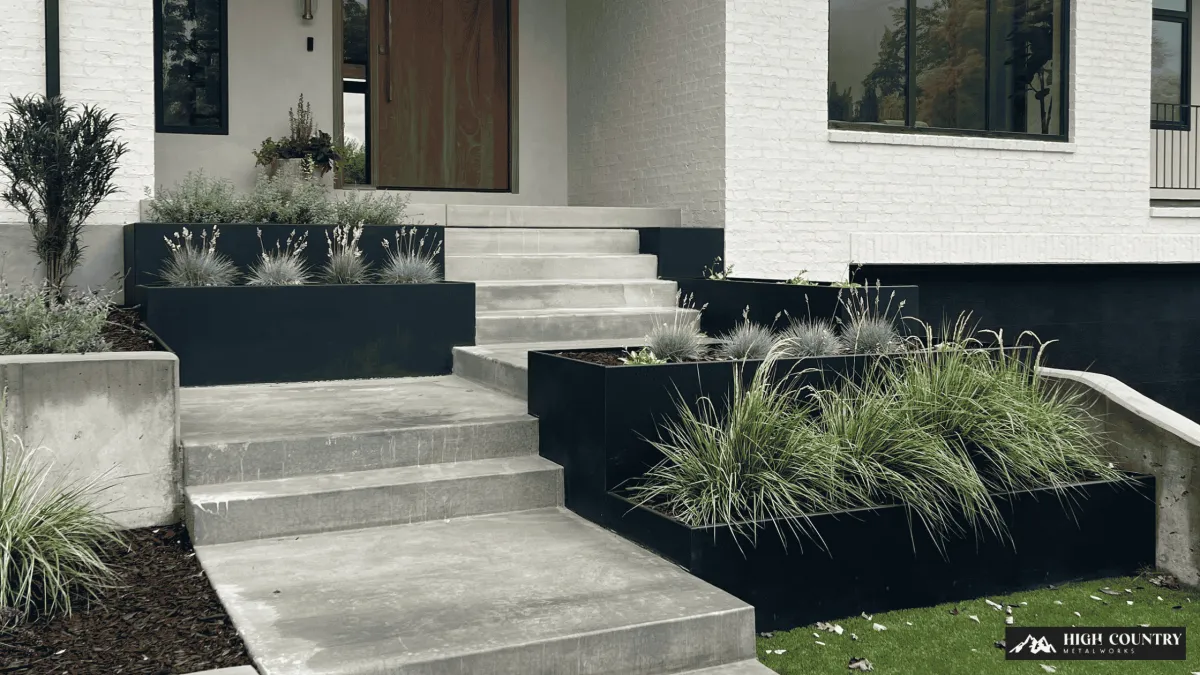
Raised Garden Beds and Planter Boxes Key Differences Explained
Raised garden beds sit directly on the soil with no bottom panel, allowing roots to grow into the native earth below. Planter boxes have a sealed or slatted base that holds soil independently, making them portable for patios, decks, and balconies. That single structural difference determines drainage, placement, and long-term durability.
Key Takeaways
The raised garden bed vs planter box choice starts with the base: open-bottom beds connect to native soil, while planter boxes hold soil independently.
A difference between raised garden bed and planter box setups shows up most in drainage, portability, and where each can be installed.
12 inches is the minimum depth for healthy root development in either a raised-bed garden or a planter box.
Custom steel and Corten weathering steel outperform wood and resin for long-term durability in harsh outdoor conditions.
Renters and balcony gardeners generally get more value from a planter box vs raised garden bed setup, especially with castor wheels added for mobility.
The raised garden beds and planter box difference comes down to one structural detail: what sits beneath the soil. Raised beds sit directly on the ground with no bottom panel, so roots reach straight into native earth. Planter boxes include a sealed or slatted base, holding soil independently on decks, patios, and balconies. After building custom metal garden containers for homeowners for over a decade, I've found this single distinction determines if a raised bed or a planter box actually fits a given space.
The Core Structural Difference Between Raised Beds and Planter Boxes
Every raised garden beds vs planter boxes comparison starts with the frame's relationship to the ground.
Raised Beds: Open to the Ground
A traditional raised bed is essentially an open frame set on soil. There's no floor, so the growing area connects directly to whatever earth sits beneath it. This works well for homeowners with usable yard space who want a permanent, in-ground growing area that behaves like an extension of the native garden bed.
Planter Boxes: Self-Contained Units
A planter box, by contrast, is a self-contained unit. It typically includes a bottom plate or slatted base, which means the soil, moisture, and root zone stay fully enclosed inside the structure. That containment is what makes a planter box functional on concrete, wood decking, or any hard surface where there's no soil to plant into. In our fabrication shop, this is the first question we ask every client: is there ground beneath the container, or does it need to stand entirely on its own?
Custom metal fabrication lets us build either style to precise dimensions, but the underlying engineering differs. Raised beds need corner bracing and ground anchoring. Planter boxes need reinforced bottoms capable of holding wet soil weight without sagging or rusting through over time.
How the Bottom Panel Changes Root Growth and Drainage

The presence or absence of a bottom panel affects far more than installation location. It changes how roots grow, how water moves, and how much long-term maintenance a container needs.
Open-bottom raised beds let roots extend downward into native soil, tapping into existing nutrient cycles, beneficial microbes, and earthworm activity that a sealed box simply can't replicate. Drainage happens passively, since excess water moves straight into the ground below. That's a real advantage for anyone building on decent existing soil.
Sealed planter boxes work differently. Without an opening, water has nowhere to escape unless the builder accounts for it during construction. This is where a difference between raised garden bed and planter box designs really shows: planter boxes need engineered drainage solutions that raised beds get for free from the ground itself.
Drainage Solutions for Sealed Planter Boxes
Fabricators solve the drainage gap with slatted or perforated bottom panels, often paired with a breathable liner. This mimics the natural runoff of an open-bottom bed while keeping soil contained inside the box. Lining the interior with landscape fabric before adding a nutrient-rich soil mix prevents soil from washing out through the drainage gaps while still letting excess moisture escape.
Positioning matters too. A planter box vs raised garden bed decision for a shaded patio should factor in slower evaporation, which means drainage holes need to stay clear and the soil mix should lean lighter and less compact than what works in an open, ground-level bed.
Ideal Depth and Sizing for Healthy Root Development
Twelve inches marks the minimum depth for a raised bed garden or planter box built to support herbs and vegetables. Shallower containers restrict root development and leave plants competing for limited nutrients and water, especially during hot, dry stretches of summer.
Beyond that minimum, a well-proportioned container generally falls in these ranges:
Depth: 12–18 inches
Width: 12–24 inches
Length: 3–6 feet
These proportions accommodate root vegetables, leafy greens, and small shrubs without wasting soil or material. A box built too shallow forces gardeners into a narrow list of compact plants, which limits variety on a patio or balcony.
Extra depth tends to pay off with heavier feeders. Tomatoes, squash, and peppers reward the additional room with fuller yields and stronger root systems. When comparing a raised garden bed vs planter box for vegetable gardening specifically, going a few inches past the 12-inch floor is almost always worth the added material cost.
Renters and small-space gardeners benefit from the same depth standard, even in a compact footprint. Custom metal fabrication allows precise control over depth and width, so a narrow balcony corner still gets a container sized for genuine plant health rather than guesswork.
Best Materials for Long-Term Outdoor Durability
Material choice affects the raised garden bed vs planter box decision as much as structure does, especially in climates with harsh seasonal swings. Rot-resistant wood, custom steel, and Corten weathering steel all hold up outdoors, but they age very differently.
Cedar and Redwood
Both resist decay naturally and give a warmer, traditional look. They still need periodic sealing and eventual replacement.
Fabricated Steel Shrugs off moisture, pests, and stress that break down untreated wood within a few seasons. Higher upfront cost, but far less maintenance over time.
Corten Weathering Steel
Develops a stable rust layer when exposed to weather. That patina isn't decay; it's a protective seal that blocks further corrosion instead of inviting it.
Resin
A lighter-weight alternative that resists warping, rusting, rotting, and splintering, which trims down seasonal maintenance considerably. Renters and balcony gardeners often lean toward resin for low upkeep, though it lacks the structural permanence and load capacity of steel.
Why Material Choice Matters
Wide temperature swings, freeze-thaw cycles, and intense summer heat stress a garden container more than a mild, stable climate would. A planter box built for a temperate region won't necessarily hold up through a hard winter followed by a scorching summer, which is why reinforced seams and weather-rated steel gauges matter for anyone gardening through real seasonal extremes.
At a Glance
Cedar/redwood: Natural rot resistance, but needs periodic sealing
Custom steel: Handles extreme weather, higher upfront investment
Corten steel: Self-protecting patina, visible rust phase at first
Resin: Low maintenance, less structural rigidity
Choosing Between a Raised Bed and Planter Box for Your Space

Space and growing goals determine the right fit more than personal style. Homeowners with open yard space and long-term planting goals usually lean toward in-ground raised beds. Renters, patio dwellers, and balcony gardeners tend to favor freestanding planter boxes instead. The raised bed garden or planter box decision really starts with one practical question: is there usable ground beneath the space, and is it available long-term?
For anyone without that flexibility, container gardening offers real advantages. A well-built metal planter box delivers much of the raised-bed growing experience without any in-ground construction, working equally well on concrete patios, wood decks, or apartment balconies where a traditional bed simply isn't an option.
Mobility and Flexibility with Planter Boxes
One advantage planter boxes hold over raised beds is mobility. Because they're self-contained, planter boxes can be repositioned to chase afternoon sun or reconfigure a crowded patio layout, something an in-ground raised bed can never do. Adding castor wheels is one of the more useful upgrades we build for small-space gardeners, turning a stationary container into a mobile one without lifting heavy, soil-filled boxes by hand.
That flexibility also matters for renters who can't install permanent fixtures, and for anyone testing where plants perform best before committing a full season to one fixed spot. Some gardeners eventually graduate to a permanent, in-ground raised bed; others keep the planter box setup indefinitely for the flexibility alone.
The Bottom Line
The raised garden beds and planter box difference ultimately comes down to what sits under the soil. If there's usable yard space, a raised bed offers permanent, ground-connected growing. If the space is a patio, deck, or balcony, a planter box delivers the same growing potential in a self-contained, portable structure.
Either way, getting the depth, drainage, and material right up front makes the difference between a container that lasts one season and one that lasts for years. Explore our custom planter box options to find a build sized and engineered for your space.
Frequently Asked Questions
What is the main difference between raised garden beds and planter boxes?
Raised beds sit directly on soil without a bottom, letting roots grow into the ground. Planter boxes include a base that holds soil independently for use on patios and decks.
Why do planter boxes work better on patios and decks?
Their sealed or slatted base holds soil, drainage, and structure on its own, making them practical for hard surfaces without existing soil beneath them.
How deep should a raised bed or planter box be?
Twelve inches is the minimum for healthy root development. Depths of 12 to 18 inches support a wider range of vegetables and root crops.
Is metal or wood better for a garden planter?
Metal generally lasts longer, especially in climates with freeze-thaw cycles. Wood costs less upfront but needs more frequent sealing and eventual replacement.
Can a planter box be moved once it's installed?
Yes. Adding castor wheels lets a planter box be repositioned for sun exposure or patio layout changes without lifting the soil-filled container by hand.


