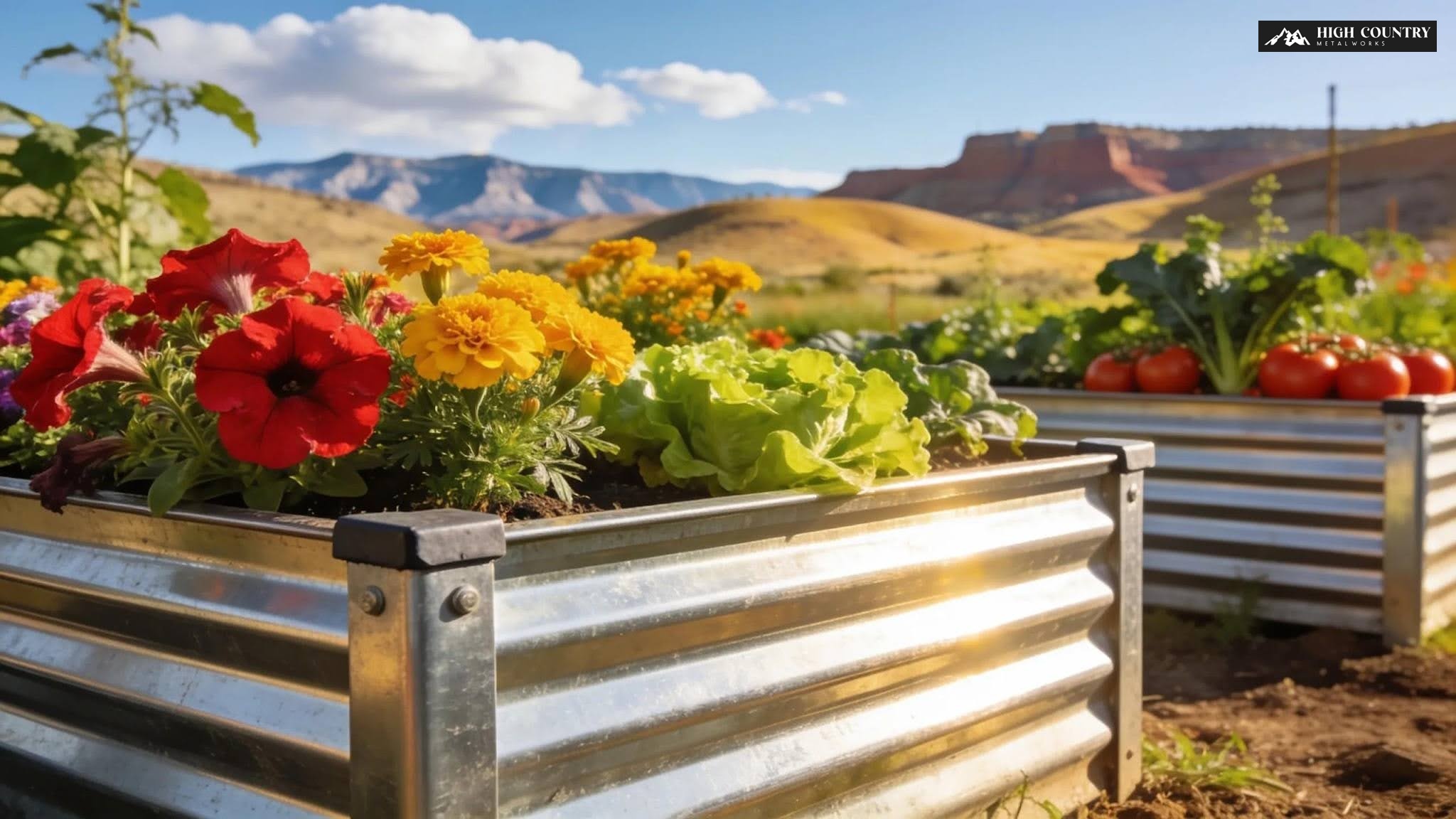
Why Raised Garden Planter Boxes Are Perfect for Utah Gardens
Raised garden planter boxes are perfect for Utah gardens because they solve the state's biggest growing challenges at once: alkaline, compacted soil, intense high-elevation UV exposure, and extreme temperature swings. Elevating the planting zone lets gardeners control soil composition and drainage directly, while metal construction resists the rot, warping, and corrosion that wood and plastic suffer in Utah's climate.
Key Takeaways
Utah's alkaline soil and UV intensity make in-ground gardening difficult. Raised garden planter boxes solve both by elevating the growing zone and enabling full soil control
Metal outperforms wood and plastic in Utah's climate: galvanized steel and aluminum resist rot, warping, UV degradation, and freeze-thaw cycles
Custom fabrication matters: depth, drainage design, and sizing should match your specific crops and site, not a generic template
Installation decisions: site selection, sub-base prep, and soil mix affect long-term performance more than most gardeners expect
Seasonal maintenance is minimal but consistent: annual inspections, soil amendments, and surface protection extend service life significantly
Utah gardeners deal with problems most growing guides ignore: alkaline clay soil, UV intensity that bleaches and dries, temperature swings that crack wood and warp plastic, and a short frost-free window that punishes any inefficiency. Off-the-shelf garden raised planter boxes rarely account for any of that.
Custom metal raised garden planter boxes do.
At High Country Metal Works, we fabricate raised planters specifically for Utah's climate, built from galvanized steel and aluminum, engineered with drainage in mind, and sized to match your site and planting goals. This guide covers why metal is the right material for Utah beds, how to select and install the right box, and what to expect in the long term.
Utah's Gardening Challenges, and Why Standard Beds Fall Short
Utah's gardening conditions aren't just "dry." The combination of factors creates a stacked challenge that standard raised beds aren't built to handle.
Alkaline, Compacted Soil
Much of the Wasatch Front and rural Utah sits on clay-heavy, high-pH soil that drains poorly and locks out nutrients. Roots struggle to penetrate it, and elevated pH levels block iron and manganese uptake even when those minerals are present in the ground.
Extreme UV Exposure
At Utah's elevation, ultraviolet intensity is significantly higher than at sea level. This accelerates surface moisture loss, degrades organic matter faster, and breaks down lower-quality planter materials, especially untreated wood and thin plastic.
Wide Temperature Swings
Utah sees summer highs above 100°F and winter lows well below freezing in the same calendar year. Wood warps and splits under that range. Plastic becomes brittle. Metal handles these swings without structural failure.
Short Frost-Free Windows
Depending on elevation, Utah's growing season can be surprisingly narrow. Raised garden planter boxes warm up faster in spring, extending the effective season on both ends, a real advantage at higher elevations across the state.
Raising the planting zone above native soil bypasses the worst of these problems. But the material your planter is made from determines how well it holds up long enough to matter.
Metal vs. Wood vs. Plastic: Which Material Wins in Utah?
The most common planter materials are cedar wood, composite lumber, and plastic or resin. All three are widely available. None of them is the right choice for Utah's conditions at the high end.
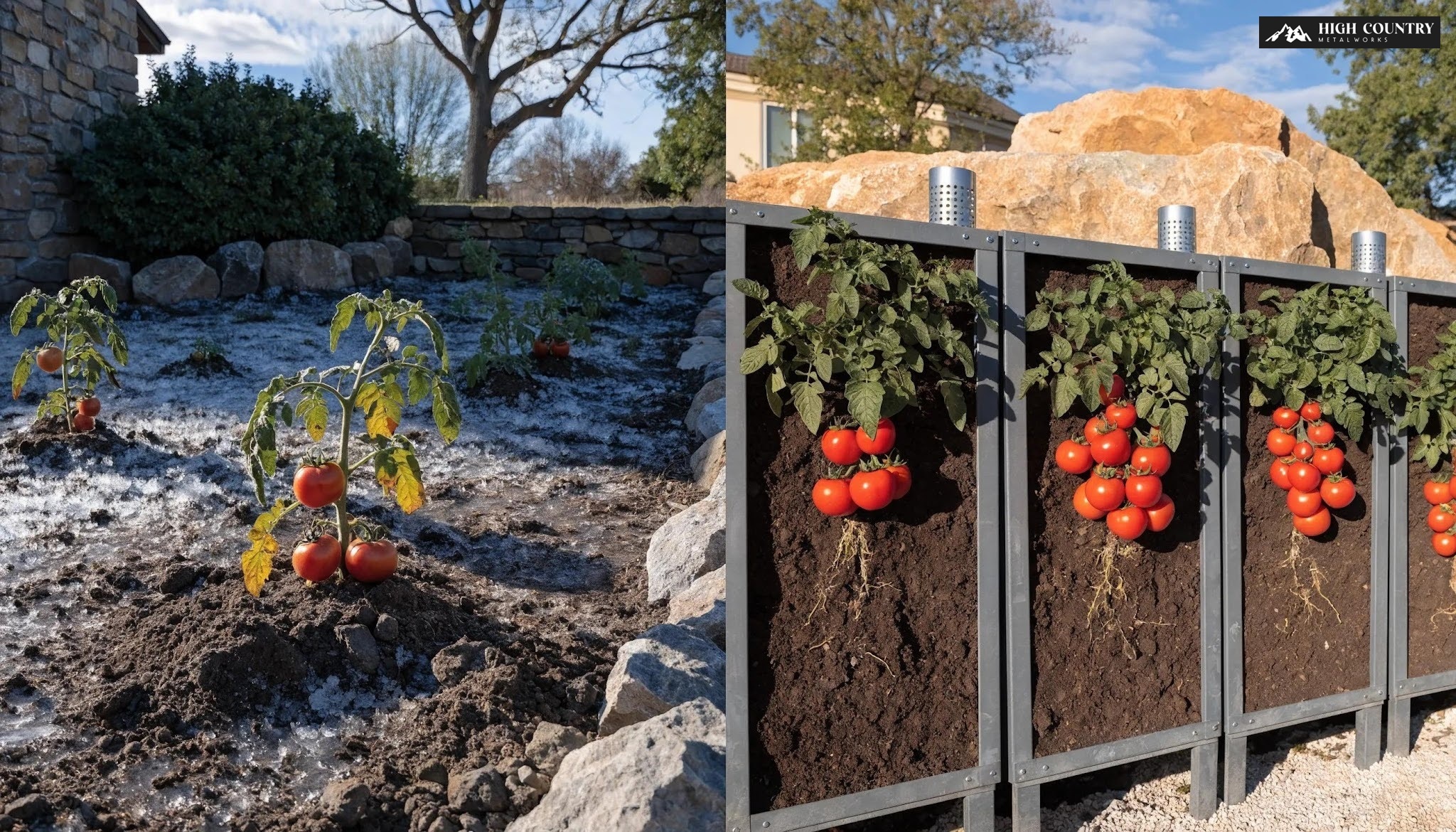
Wood: Looks Good, Degrades Fast
Even rot-resistant cedar shows significant degradation in five to seven years under Utah's UV and moisture cycle
Treated lumber raises legitimate concerns about chemical leaching into edible crops
Composite lumber performs better, but softens over time with ground contact
Plastic and Resin: No Match for Utah UV
UV exposure degrades plastic quickly at Utah's elevation
Thin-walled resin planters crack and fade within two to three seasons
Plastic flexes under soil pressure, compromising structure and drainage
Metal: Built for Utah's Conditions
Galvanized steel resists corrosion and holds structural integrity through freeze-thaw cycles
Doesn't leach compounds into soil, safe for edible gardens
Properly fabricated metal garden raised planter boxes routinely last 20+ years with basic maintenance
Aluminum offers similar corrosion resistance at a lighter weight, ideal for rooftop or deck installations
Metal also conducts heat in ways that benefit Utah gardeners. In early spring, metal planters warm the soil faster, extending your planting window. In peak summer, soil depth manages heat effectively, and deep beds (12 inches or more) naturally insulate roots from surface temperature extremes.
How High Country Metal Works Builds Raised Planter Boxes for Utah
We don't build from templates. Every set of raised garden planter boxes we fabricate starts with a conversation about your site, your crops, and your goals.
Material Selection
We work primarily in two metals:
Galvanized steel — our most popular choice for in-ground or lawn installations; heavy, stable, and reliable through Utah winters
Aluminum — preferred for elevated decks, patios, or any application where weight matters without sacrificing durability
Drainage Engineering
Poor drainage is the most common cause of raised bed failure. Every planter we build includes:
Proper drainage spacing and base design
Guidance on sub-base preparation, gravel layers, and weed barriers so water exits the root zone efficiently
Depth Customization
Root depth requirements vary significantly by crop:
6–8 inches — herbs, lettuce, and compact annuals
12–18 inches — peppers, most vegetables, and flowers
18–24 inches — tomatoes, root vegetables, and deep-rooting perennials
We size each box to match what you're growing, not just what's easy to cut.
Finish and Aesthetics
Raised planter boxes for Utah landscapes should look intentional, not utilitarian. We offer finish options ranging from raw galvanized to custom powder-coated colors that complement both modern and traditional Utah home styles.
Installing Raised Metal Garden Planter Boxes: Utah-Specific Steps
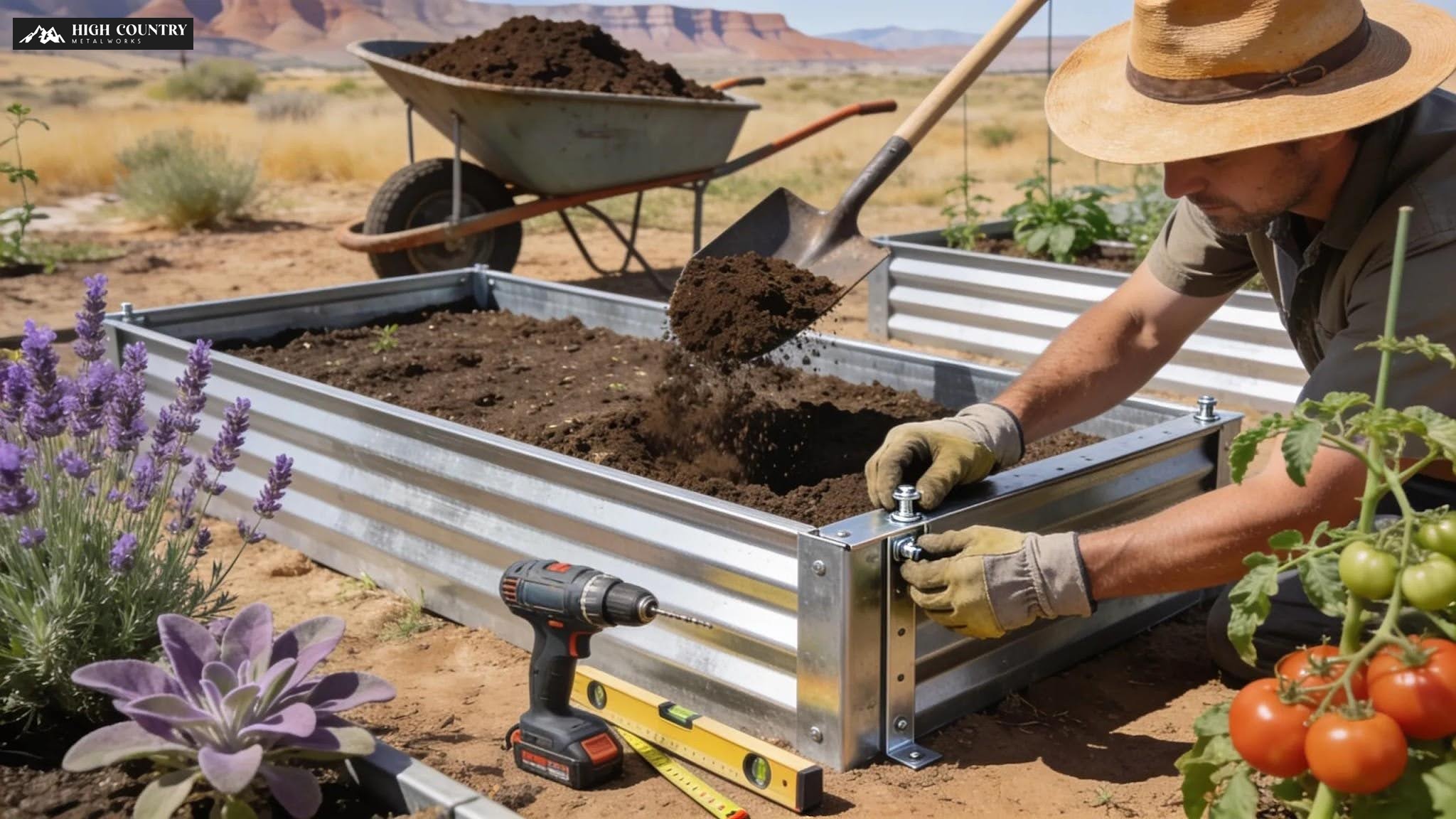
Installation is straightforward, but a few Utah-specific decisions make a real difference in long-term performance.
Step 1: Choose the Right Site
South or east-facing placements maximize morning sun and reduce afternoon heat stress in summer
Avoid locations where the surrounding grade pools water against the planter walls
Step 2: Prepare the Sub-Base
Lay a weed barrier before setting the planter
Add 2–3 inches of gravel at the base before filling with soil
This prevents compaction at the root zone floor and ensures excess water exits efficiently
Step 3: Build the Right Soil Mix
Native Utah soil should not go directly into raised planter boxes. Use:
60% quality topsoil
30% compost
10% perlite or vermiculite for drainage
Adjust pH with sulfur if needed; most Utah vegetable gardens benefit from mild acidification.
Step 4: Level the Planter
Metal planters perform best when level. Uneven bases create low spots where water collects, and soil compresses unevenly. Get this right at installation; it's much harder to correct after the bed is filled and planted.
Seasonal Maintenance Guide for Metal Raised Garden Planter Boxes
Metal is low-maintenance, not no-maintenance. Consistent seasonal care keeps your planters performing for decades.
Spring
Inspect seams for any surface rust and use a wire brush to remove affected areas. Apply a rust-inhibiting coating if needed, and refresh the soil by adding compost or other organic matter.
Summer
Monitor soil moisture regularly, especially during the hottest months of June and July. Keep drainage ports clear to prevent water buildup, and consider installing drip irrigation for more consistent watering.
Fall
Remove spent plants and debris completely. Clean the planter walls, inspect for worn areas, and apply a protective coating if necessary. Testing the soil pH can also help prepare for the next growing season.
Winter
Disassembly is generally unnecessary. In higher-elevation areas, placing a simple cover board over the planter can help minimize moisture exposure and reduce freeze-thaw damage.
Ready to Build? Contact High Country Metal Works
If you're ready to stop fighting Utah's soil and start growing in conditions you control, custom metal raised garden planter boxes are the right investment. High Country Metal Works serves Utah homeowners, contractors, and landscape designers with fabricated-to-order planters built for how this state actually grows.
Visit High Country Metal Works to discuss your project or request a quote.
Frequently Asked Questions
1. What size raised garden planter boxes do I need for vegetables?
Most vegetables need 12–18 inches of depth. Root vegetables like carrots and beets need at least 18 inches; herbs and leafy greens do fine in 6–8 inch beds.
2. Are metal raised garden planter boxes safe for growing food?
Yes. Galvanized steel and aluminum don't leach harmful compounds into soil at levels that affect food safety. High Country Metal Works can add liners if requested.
3. How long do metal garden raised planter boxes last in Utah?
Properly fabricated galvanized steel planters typically last 20–25 years or more. Aluminum has a similar lifespan with virtually no corrosion risk.
4. Can I install raised planter boxes on a deck or patio?
Yes, aluminum is preferred for elevated surfaces due to its lower weight. Always confirm deck load capacity before filling large planters with soil.
5. Do metal raised garden planter boxes overheat plant roots in summer?
At 12 inches or deeper, soil insulates roots effectively even in Utah summers. Avoiding full western afternoon sun exposure reduces surface heat buildup further.


