Best Materials for Planter Box: Expert Picks for Durability
After two decades designing and building custom planters for residential and commercial projects across mountain and coastal climates, we've tested every material under real-world conditions. This guide ranks the most durable planter box materials based on our fabrication experience, client feedback, and performance data from installations in challenging environments.
Why Material Choice Determines Planter Success
The right planter material affects three critical outcomes: how many years you'll get before replacement, how much time you'll spend on maintenance, and whether the design enhances or detracts from your landscape investment. We've seen $200 planters outlast $2,000 options simply because the material matched the climate and use case.
The 7 Best Planter Box Materials, Ranked by Durability
1. Corten Steel: The Gold Standard for Longevity
Expert Rating: 9.5/10
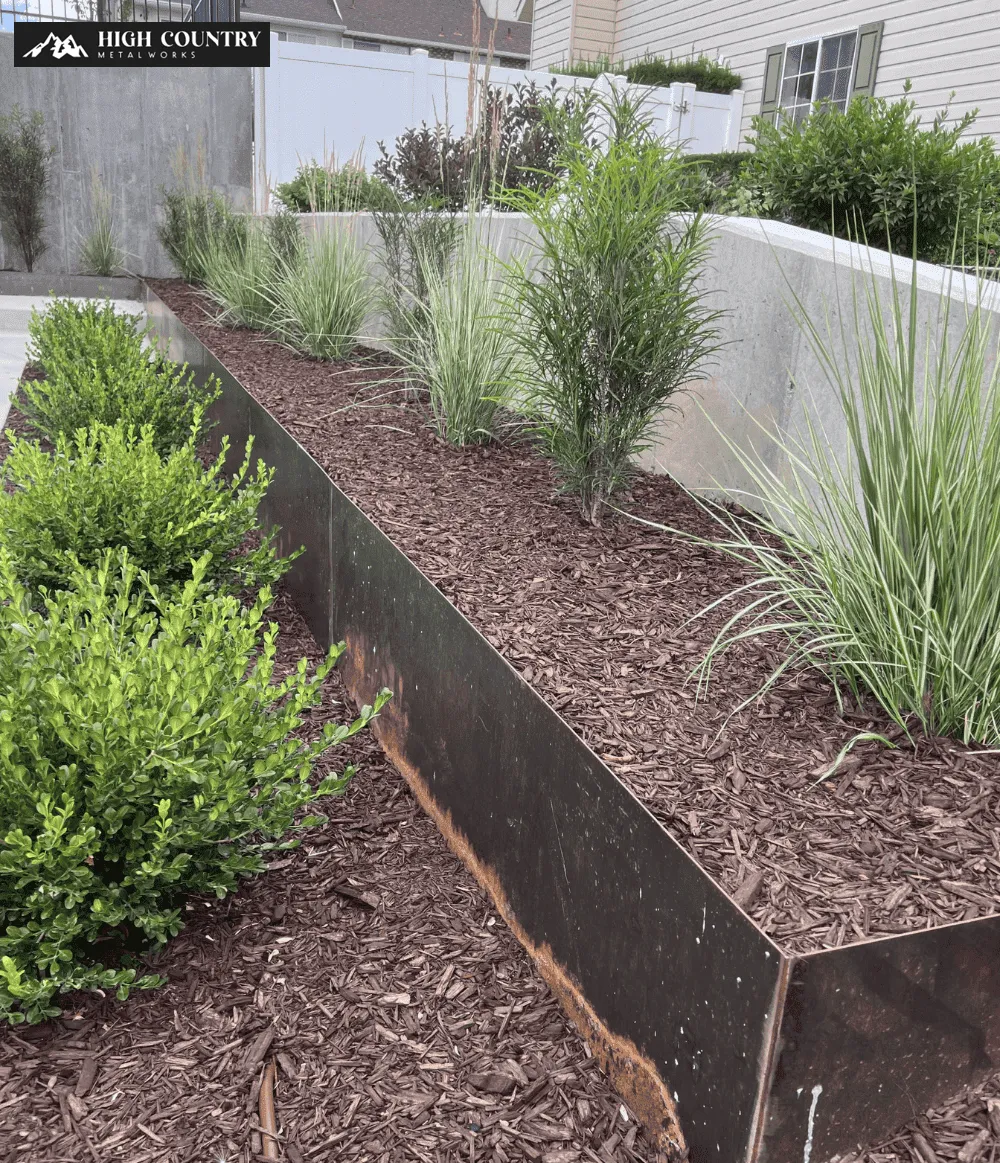
Corten weathering steel develops a stable rust patina that actually protects the underlying metal from further corrosion. In our fabrication shop, we've tracked Corten planters installed in 2005 that still perform flawlessly with zero maintenance beyond occasional cleaning.
Proven Performance: Research published in Corrosion Resistance of Corten Steel–A Review (Palanikumar, 2021) confirms that Corten's low-alloy composition creates a protective oxide layer that continuously regenerates, making it exceptionally resistant to atmospheric corrosion.
Why it works:
Forms protective patina within 6-12 months, depending on climate
No painting, sealing, or coating required
Handles freeze-thaw cycles without cracking
Improves aesthetically over time
Pro Tips from Our Fabricators:
Allow 18 inches of clearance from light-colored hardscaping during the first year while patina stabilizes, and runoff can temporarily stain surfaces
Speed patina development by misting with equal parts water and white vinegar weekly for the first month
Specify 1/8-inch or thicker steel for planters over 36 inches to prevent oil-canning (visible warping)
Add welded steel reinforcement ribs inside planters deeper than 24 inches for structural integrity
Best for: Modern landscapes, commercial installations, harsh climates, low-maintenance luxury projects
Expected lifespan: 30-50+ years
2. Marine-Grade Aluminum: Premium Lightweight Durability

Expert Rating: 9/10
Aluminum planters deliver corrosion resistance similar to stainless steel at a fraction of the weight. We fabricate aluminum planters for rooftop gardens where weight loading is critical and for clients who need to reconfigure layouts seasonally.
Why it works:
Naturally forms a protective aluminum oxide coating
One-third the weight of steel at equivalent thickness
Accepts powder-coat finishes in any color
Won't rust even in coastal salt environments
Pro Tips from Our Fabricators:
Specify 5052 or 6061 aluminum alloy for planters; both resist corrosion better than 3003
Use 1/8-inch minimum thickness for planters over 24 inches; thinner gauges dent easily
Choose powder-coat over painted finishes for 3x longer color retention
Avoid direct soil contact on unfinished interior surfaces. Apply a protective liner or epoxy coating
For coastal installations, rinse exterior surfaces quarterly to remove salt accumulation
Best for: Rooftop gardens, coastal properties, contemporary designs, installations requiring frequent moves
Expected lifespan: 25-40 years
3. Western Red Cedar: Natural Beauty with Proven Rot Resistance

Expert Rating: 8/10
Cedar and redwood planters on a deck filled with plants, highlighting natural warmth and durability
Cedar contains natural preservatives called thujaplicins that repel insects and resist fungal decay. We recommend cedar for clients who prioritize organic aesthetics and are willing to invest in periodic maintenance.
Why it works:
Natural oils inhibit rot and insect damage
Weathers to elegant silver-gray patina or maintains a warm tone with sealant
Readily available from sustainable forestry sources
Complements traditional and transitional architecture
Pro Tips from Our Fabricators:
Source heartwood-grade cedar (darker, tighter grain) rather than sapwood for maximum rot resistance
Apply penetrating oil or sealant within 30 days of installation, then annually
Installing a waterproof liner to separate soil from wood extends lifespan by 40% in our testing
Use stainless steel or coated fasteners; standard hardware corrodes and stains wood
Elevate planters on feet or blocks to allow airflow underneath, preventing moisture accumulation
Orient vertical grain patterns outward when possible to minimize cupping and splitting
Best for: Traditional gardens, organic growing, rustic or craftsman architecture, DIY-friendly projects
Expected lifespan: 15-20 years with maintenance; 8-12 years unmaintained
4. Powder-Coated Steel: Industrial Strength at Mid-Range Cost
Expert Rating: 7.5/10
Standard steel with professional powder-coat finishing offers excellent durability when properly fabricated and finished. We use this specification for commercial projects requiring specific color matching or budget-conscious residential installations.
Why it works:
Industrial powder-coat creates a barrier against moisture and UV
Available in unlimited colors and textures
Strong enough for large soil volumes and mature plantings
Repairable if the coating becomes damaged
Pro Tips from Our Fabricators:
Insist on sandblasting before powder-coating paint or powder-coating over mill scale, which fails prematurely
Specify minimum 3-mil powder-coat thickness; 5-mil coating adds years of protection
Inspect welds annually for coating breaks and touch up immediately with rust-inhibiting primer
Apply automotive-grade wax to powder-coat surfaces annually in high-UV climates
Choose lighter colors in hot climates, dark finishes can reach 160°F, and stress plants
Best for: Color-matched landscape designs, large-scale plantings, commercial properties, transitional styles
Expected lifespan: 15-25 years, depending on coating quality and maintenance
5. High-Pressure Laminate (HPL) & Fiberglass: Modern Composite Performance
Expert Rating: 7/10
These engineered materials deliver impressive weather resistance and design flexibility. We've specified fiberglass for projects requiring custom shapes and HPL when clients want a wood appearance without wood maintenance.
Why fiberglass works:
Resists cracking, fading, and moisture damage
Can be molded into curves and custom forms
Lightweight enough for easy repositioning
Available in gel-coat finishes that mimic ceramic or stone
Why HPL works:
Layers of resin-impregnated kraft paper create dense, weather-resistant panels
Realistic wood grain and stone textures
Won't splinter, rot, or require refinishing
Consistent color and pattern throughout the material
Pro Tips from Our Experience:
Verify UV-resistant gel-coat on fiberglass; budget options fade within 5 years
Choose HPL with phenolic resin core rated for outdoor use (not standard indoor laminate)
Reinforce fiberglass planters over 48 inches with an internal framework to prevent flexing
Install rubber or felt feet on fiberglass planters to prevent surface abrasion during repositioning
HPL edges are vulnerable to aluminum or PVC edge banding for longevity
Best for: Contemporary designs, lightweight requirements, custom shapes, low-maintenance preferences
Expected lifespan: 15-20 years for quality products
6. Pressure-Treated Lumber: Budget-Friendly with Caveats

Expert Rating: 6/10
Modern copper-based preservatives make treated lumber rot-resistant and affordable, but chemical concerns require careful handling, especially for edible gardens.
Why it works:
Significantly lower cost than cedar or metal
Widely available at lumber yards
Resists rot and insect damage effectively
DIY-friendly for basic carpentry skills
Research-Backed Caution: Studies, including Leaching from New Generation Treated Wood: A Chemical approach (Lupsea, 2012), demonstrate that treatment chemicals can migrate from wood into surrounding soil, particularly in new lumber and wet conditions.
Pro Tips for Safe Use:
Age treated lumber outdoors for 6-8 weeks before planting to reduce initial chemical off-gassing
Always line planters intended for vegetables or herbs with a 6-mil plastic sheeting sealed at corners
Choose above-ground-rated treatment (not ground-contact) for planters elevated on decks
Wear gloves during cutting and construction; sweep sawdust immediately
Apply water-based sealant annually to slow degradation and chemical release
Never burn treated lumber scraps, as they release toxic fumes
Best for: Budget projects, ornamental plantings, temporary installations, non-edible gardens
Expected lifespan: 10-15 years
7. Cast Concrete & Natural Stone: Maximum Permanence with Trade-offs

Expert Rating: 8/10 (rated lower despite longevity due to weight and flexibility limitations)
Concrete and stone planters are nearly indestructible and provide excellent insulation for roots, but their weight makes them permanent installations.
Why it works:
Exceptional durability with minimal maintenance
Thermal mass moderates soil temperature fluctuations
Classic aesthetic works in formal and traditional designs
Can be cast in custom shapes and sizes
Pro Tips from Installation Experience:
Plan for 150-300 pounds per cubic foot reinforced decks or concrete pads, often required
Seal concrete annually with penetrating silicate sealer to prevent moisture absorption and freeze damage
Elevate stone planters on hidden shims to allow drainage and prevent staining on hardscaping
For concrete, specify an air-entrained mix design in freeze-thaw climates
Consider hypertufa (lightweight concrete alternative) for reduced weight with similar aesthetics
Install stone or concrete in the final location; moving requires equipment
Best for: Permanent installations, formal gardens, estate properties, large specimen plantings
Expected lifespan: 40+ years for quality construction
Material Selection Overview
Corten Steel
Corten steel is extremely durable, scoring 9.5/10. It requires very little maintenance, has a medium weight, and performs well in all climates. It falls into the high cost category.
Aluminum
Aluminum is highly durable at 9/10, with very low maintenance needs. It is lightweight, works in all climates, and is also considered a high-cost material.
Cedar
Cedar has a durability score of 8/10. It requires moderate maintenance, is lightweight, and performs best in moderate climates. Its cost is medium.
Powder-Coated Steel
This material has a durability score of 7.5/10 and requires low maintenance. It has a medium weight, works well in most climates, and falls into the medium cost range.
HPL / Fiberglass
HPL and fiberglass score 7/10 for durability and need very little maintenance. They are lightweight, suitable for most climates, and cost medium to high.
Treated Lumber
Treated lumber has a durability score of 6/10. It requires moderate maintenance, is lightweight, works in most climates, and is a low-cost option.
Concrete / Stone
Concrete and stone are very durable at 8/10 and require very little maintenance. They are very heavy, perform well in all climates, and fall into the medium-high cost range.
Climate-Specific Material Recommendations
Mountain & Cold Climates (Below 0°F Winters)
Best choices: Corten steel, aluminum, concrete
Why: These materials handle freeze-thaw cycling without cracking. Corten's patina actually develops more beautifully with moisture cycling.
Avoid: Fiberglass (can become brittle), thin-gauge metals (oil-canning from expansion/contraction)
Coastal & High-Humidity Environments
Best choices: Aluminum, Corten steel, HPL
Why: Salt-air corrosion destroys standard steel and accelerates wood decay. Marine-grade aluminum and Corten's protective patina resist salt damage.
Avoid: Untreated steel, pressure-treated lumber (accelerated chemical leaching in high-moisture environments)
Desert & High-UV Climates
Best choices: Powder-coated steel (light colors), concrete, stone
Why: These materials resist UV degradation and handle extreme temperature swings. Light-colored finishes reflect heat.
Avoid: Dark-colored metals (excessive heat), standard plastic (brittleness from UV exposure)
How to Maximize Planter Lifespan Regardless of Material

1. Engineer Proper Drainage from Day One
Standing water is the top killer of both plants and planters. Every planter we fabricate includes:
Minimum 3/8-inch drainage holes spaced every 12 inches
2-3 inch gravel or drainage layer at the bottom
Geotextile fabric separates the drainage layer from the soil
Slight pitch toward drainage holes (1/4 inch per foot minimum)
2. Install Protective Liners Strategically
Liners extend planter life by preventing soil contact and moisture penetration:
Metal planters: Use pond liner or 20-mil plastic with drain cutouts
Wood planters: Install a waterproof membrane along all interior surfaces
Concrete planters: Paint interior with masonry waterproofing to prevent efflorescence
3. Provide Seasonal Protection in Extreme Climates
Insulate planters in winter with bubble wrap or burlap wrapping
Move portable planters to sheltered locations before the first freeze
Empty planters that can't be protected to prevent ice expansion damage
Apply a winter mulch layer 3-4 inches deep to protect roots
4. Implement Maintenance Schedules by Material
Metal: Annual inspection, immediate touch-up of coating damage, quarterly cleaning
Wood: Annual sealing/oiling, bi-annual fastener inspection, immediate replacement of rotted sections
Composite: Quarterly cleaning, annual inspection for UV degradation or delamination
Concrete/stone: Annual sealing, immediate repair of chips or cracks
Custom Fabrication Considerations for High-End Projects

At High Country Metal Works, we've found that custom-fabricated planters outperform off-the-shelf options in three key areas:
Precise sizing for design integration: Standard planters rarely match architectural proportions. Custom dimensions create intentional visual relationships with surrounding elements.
Material thickness optimization: We spec 1/8-inch Corten for planters up to 36 inches, 3/16-inch for larger installations, providing appropriate rigidity without excess weight or cost.
Site-specific detailing: Integrated drainage systems, mounting provisions for irrigation, and weatherproof electrical conduit for landscape lighting can be incorporated during fabrication rather than retrofitted.
Finish customization: Powder-coat matching to architectural elements, custom patina acceleration on Corten, or specialized treatments for unique environments.
Environmental Impact & Sustainability Considerations
Material sustainability involves both embodied energy and lifespan:
Lowest environmental impact: Sustainably harvested cedar or reclaimed wood (low embodied energy, biodegradable, carbon-sequestering during growth)
Best lifespan-adjusted impact: Metals like Corten and aluminum (high initial embodied energy offset by 30-50 year lifespan and 100% recyclability)
Moderate impact: Quality composites using recycled content (medium embodied energy, extended lifespan, limited recyclability)
Higher impact: Concrete (high embodied energy from cement production, extremely long lifespan), treated lumber (chemical processing concerns, shorter lifespan)
Tips for sustainable planter selection:
Prioritize durability to avoid replacement cycles
Source FSC-certified wood from responsible forestry
Choose powder-coat over liquid paint (lower VOC emissions)
Specify recycled-content composites when available
Plan for end-of-life metal recycling, wood composting, and concrete repurposing
Final Recommendations from the Fabrication Shop
After installing planters in different environments, our material recommendations prioritize:
For maximum longevity with minimal maintenance: Corten steel or marine-grade aluminum. The upfront investment pays back through decades of service.
For natural aesthetics with a reasonable lifespan: Western red cedar with annual maintenance. The warmth and texture justify the upkeep for many clients.
For budget-conscious projects: Quality powder-coated steel offers excellent performance at mid-range pricing. Properly maintained, these planters deliver 15-20 years of service.
For custom shapes and contemporary design: HPL or fiberglass provides design flexibility that rigid materials can't match.
High Country Metal Works specializes in custom metal planter fabrication engineered for your specific climate, plants, and design vision. Our planters integrate structural engineering, drainage optimization, and finish durability to deliver installations that enhance landscapes for decades. Contact our fabrication team to discuss your project requirements.
Frequently Asked Questions from 20 Years of Client Consultations
1 How deep should planter boxes be for different plants?
Annuals and herbs need 12 inches. Perennials and small shrubs require 18-24 inches. Dwarf trees and large shrubs need 30-36 inches. We recommend adding 20% to published root depth requirements for container growing.
2. Can I successfully grow vegetables in metal planters?
Yes, metal planters work excellently for edibles. Install a proper liner to prevent soil-metal contact, ensure 18-inch minimum depth, and choose light-colored finishes in hot climates to prevent root overheating.
3. What's the real-world cost difference between materials?
For a 48"L x 24"W x 24"H planter: treated lumber $150-250, cedar $400-600, powder-coated steel $800-1,200, Corten steel $1,200-1,800, aluminum $1,500-2,200. Divide the cost by the expected lifespan for the true value.
4. Should I attempt DIY construction or hire professionals?
Wood planters are excellent DIY projects with basic carpentry skills. Metal fabrication requires specialized welding equipment and powder-coating facilities. We recommend professional fabrication unless you have the necessary equipment in your workshop.
5. How do I prevent soil from overheating in metal planters?
Use light-colored finishes, install an insulating liner, apply 2-3 inch mulch layer, and position planters for afternoon shade in hot climates. These steps keep root zones 15-20°F cooler.


