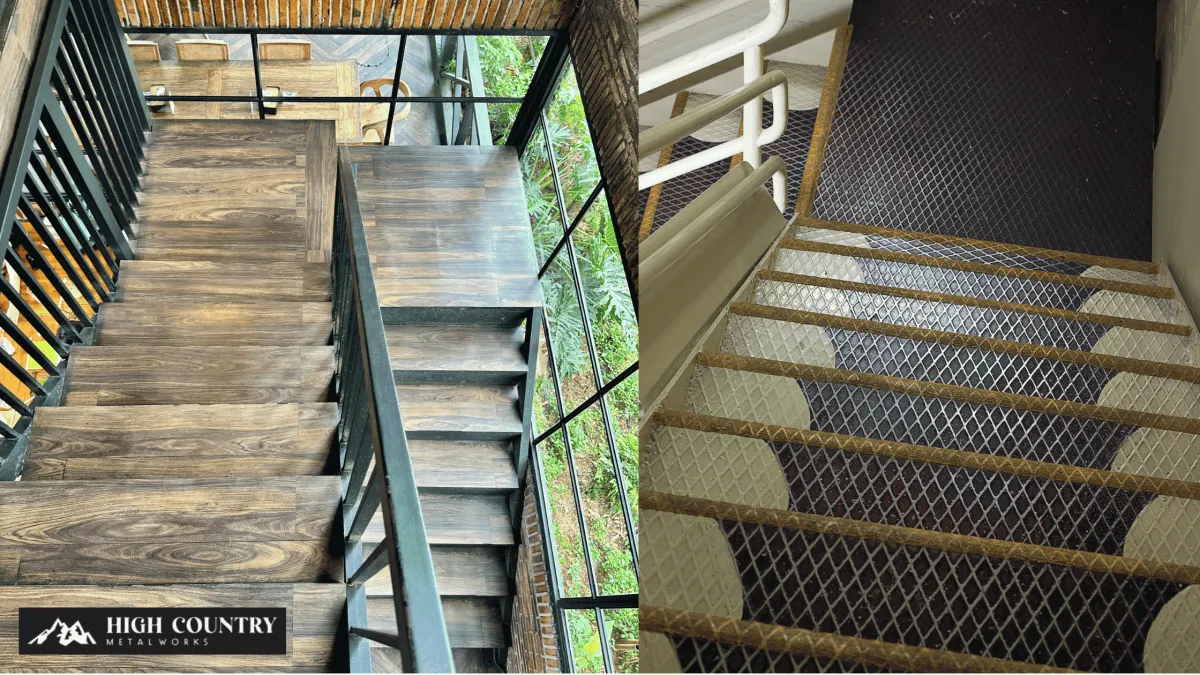
Wood vs Metal Staircase: Which One Is Worth the Investment?
A wood vs metal staircase decision comes down to three things: upfront cost, how much upkeep you're willing to do, and how long you want the stairs to last. Metal staircases generally cost more to install but need less maintenance and last longer. Wood costs less upfront but requires regular refinishing and is more vulnerable to wear over time.
Key Takeaways
Upfront cost favors wood, but lifetime cost often favors metal once maintenance and replacement are factored in.
Durability is metal's strongest selling point; steel and aluminum resist warping, cracking, and pest damage that wood staircases are prone to.
Wood balusters vs steel balusters comes down to warmth versus low-maintenance strength; steel balusters hold their shape and finish far longer.
Maintenance costs add up fast with wood — sanding, sealing, and refinishing every few years is the norm, not the exception.
Resale value tends to favor metal in modern and renovated homes, though wood still wins over buyers looking for traditional character.
Choosing the right staircase material affects your home's look, your maintenance schedule, and your long-term budget. Before deciding, it helps to understand exactly how wood and metal differ, and where each one holds its own.
What's the Real Difference Between Wood and Metal Staircases?
The wood vs metal staircase question isn't just about looks.
Wood staircases bring warmth, grain texture, and a traditional feel that suits farmhouse, craftsman, and colonial-style homes.
Metal staircases, typically steel or aluminum, bring strength, slim profiles, and a modern or industrial look that works in contemporary builds, lofts, and commercial spaces.
How the Materials Behave Structurally
Structurally, the two materials behave differently under load and over time. Wood flexes, absorbs moisture, and can shift with seasonal humidity changes. Metal holds its shape under heavy use. It doesn't expand or contract the way timber does.
That structural stability is one reason metal staircases are increasingly specified for high-traffic homes, rental properties, and commercial buildings. Homeowners renovating a single-family residence, though, may still lean toward wood for its character.
How Do Wood and Metal Staircases Compare on Durability?
Why Metal Has the Durability Edge
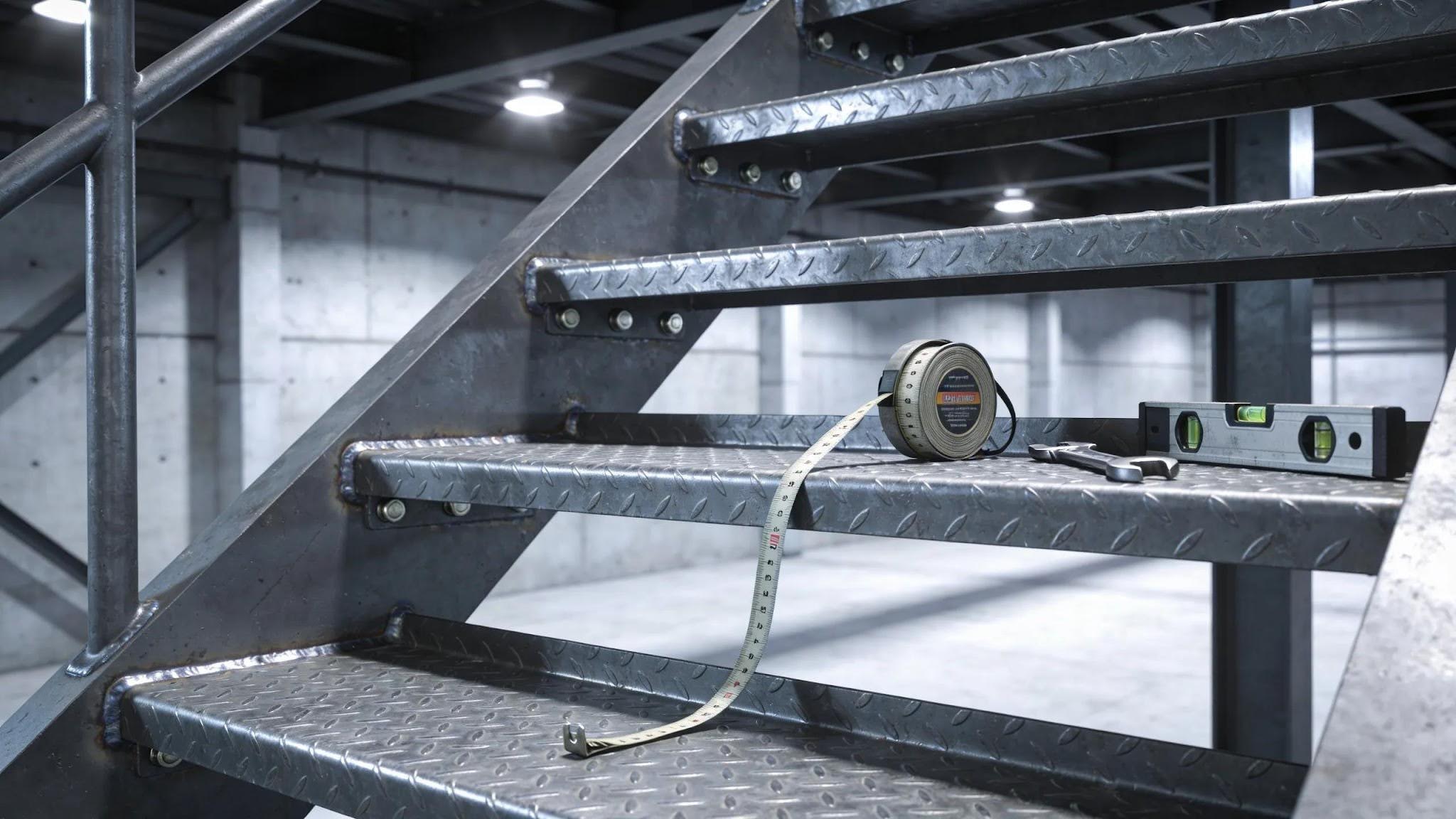
Durability is where the gap between materials shows up clearest. A well-built steel staircase can last 50 years or more with minimal structural decline, resisting moisture, pests, and daily foot traffic without warping. Wood staircases, by contrast, are vulnerable to termites, rot, and cracking, especially in humid climates or homes near water.
That doesn't mean wood is a poor choice. Hardwoods like oak and maple, properly sealed and refinished on schedule, can last decades. But that's the catch: wood durability depends heavily on ongoing care. Metal durability holds up even with minimal intervention.
Wood Staircase Durability vs Steel Staircase Advantages
Steel staircases offer a clear advantage in high-traffic or exterior applications. They don't absorb water, don't attract insects, and don't lose structural integrity from repeated humidity cycles. Wood can perform well indoors with stable climate control.
Steel, though, is generally the safer bet for stairs exposed to moisture, temperature swings, or heavy daily use, like exterior entries, rental units, or commercial stairwells.
How Do Wood vs Metal Staircase Costs Compare?
Cost is usually the first question homeowners ask, and it's also where the comparison gets nuanced.
Wood staircase installation: typically $1,000 to $3,000, depending on the wood species, stair length, and detailing involved.
Custom metal staircase installation: tends to start around $2,500 and can climb past $5,000 for intricate railing work, mixed-material designs, or larger structures.
On the surface, wood looks like the budget-friendly option. Over a 15- to 20-year span, though, the math shifts. Wood staircases typically need refinishing every 3 to 5 years, plus occasional repairs for cracked treads or loose balusters, and those costs accumulate. Metal staircases mostly need periodic cleaning and the occasional touch-up coat, with corrosion checks every few years if exposed to moisture.
For homeowners comparing wood vs metal staircase cost purely on lifetime spend, metal often closes the gap or comes out ahead, particularly in homes with kids, pets, or heavy stair traffic that accelerates wood wear.
Are There Hidden Costs in Either Material?
A few cost factors get overlooked in early planning. Wood stairs in humid basements or near entryways may need pest treatments or moisture barriers added after installation. Metal stairs, especially uncoated steel, can require rust prevention in coastal or high-humidity regions. Factoring these into your budget upfront avoids surprises later.
Wood Balusters vs Steel Balusters: Which Holds Up Better?
Balusters take more wear than almost any other part of a staircase. They're touched, leaned on, and bumped constantly. Wood balusters vs steel balusters is its own mini-decision within the larger wood vs metal staircase choice.
Wood Balusters: Warmth, But More Wear
Wood balusters offer traditional turned profiles, paint or stain flexibility, and a softer visual feel that pairs naturally with wood treads and handrails. They're also the first part of a staircase to show wear. Loose joints, chipped paint, and warping are common after a decade of use.
Steel Balusters: Strength With Less Upkeep
Steel balusters hold their finish far longer and resist denting and warping. They also support more intricate designs, since metal can be bent, welded, and shaped into patterns wood can't replicate without heavy carving. Powder-coated or galvanized finishes mean steel balusters often go 15-plus years without needing attention.
For homeowners who want a low-maintenance railing system with a contemporary look, steel balusters are typically the stronger long-term pick.
What Does Maintenance Actually Look Like for Each Material?
Maintenance is the recurring cost most people underestimate before installation. Wood staircases need:
Routine cleaning to prevent dirt buildup in grain and joints
Periodic sanding to smooth wear patterns on treads
Resealing or restaining every 3 to 5 years to protect against moisture
Inspection for loose balusters, squeaks, or cracked treads
Metal staircases generally need:
Periodic cleaning
Occasional inspection for corrosion at welds or joints, particularly in homes near coastlines or in damp basements
Beyond that, a quality powder-coated or galvanized finish holds up with little intervention for many years.
This difference in upkeep is one of the clearest factors separating the two materials when homeowners are weighing long-term ownership cost, not just the price on day one.
Which Material Offers Better Design Flexibility?
Wood: Stains, Carving, and Species Variety
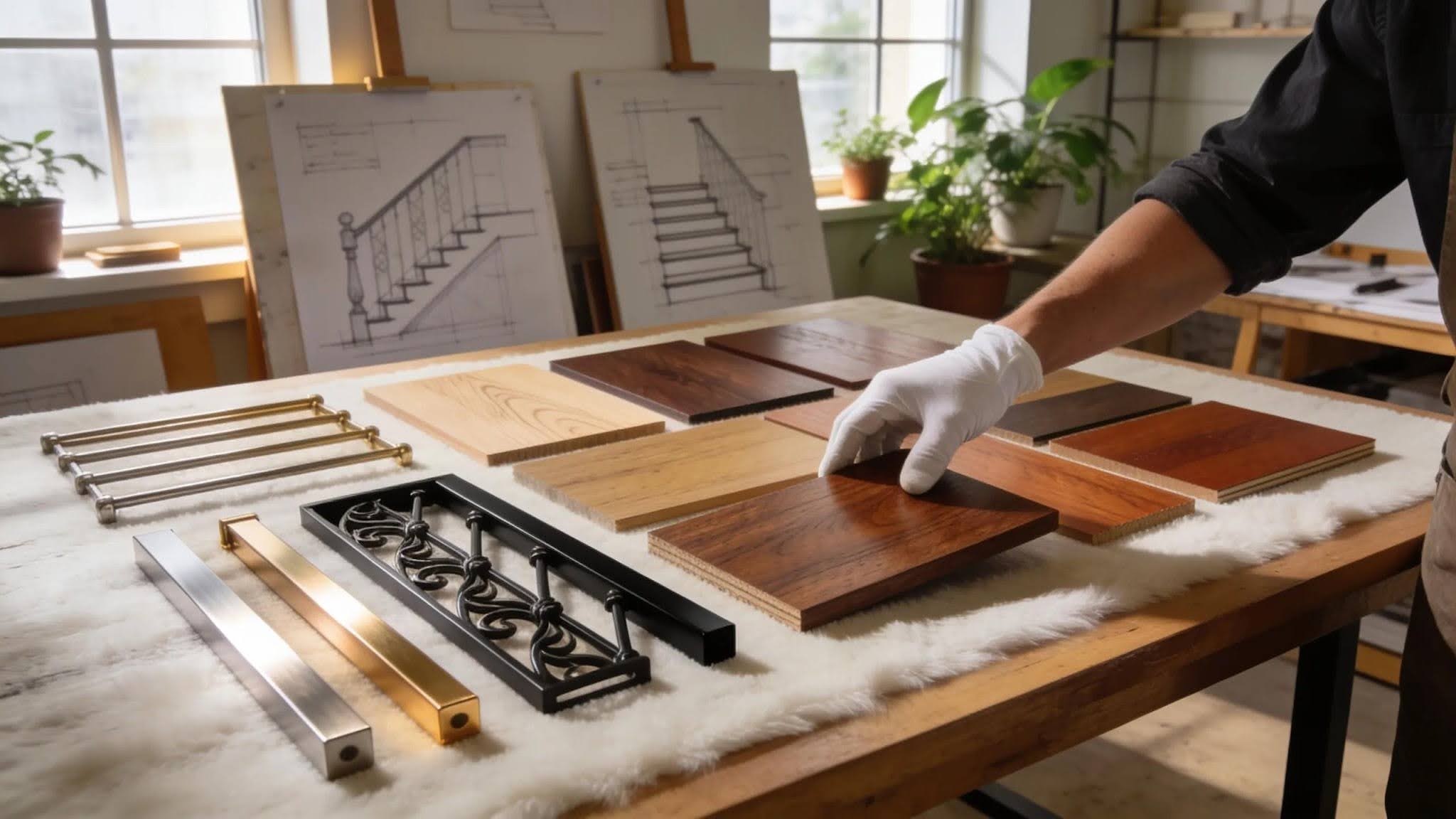
Both materials support strong customization, just in different ways. Wood works well with staining, carving, and a wide range of species. Oak, walnut, maple, and pine all bring distinct grain and tone options that integrate naturally into traditional or transitional interiors.
Metal: Slim Profiles and Architectural Forms
Metal fabrication opens up design options that are difficult or impossible to achieve in wood, like slim floating-stair profiles, cable railing systems, intricate laser-cut panels, and mixed finishes such as brushed steel paired with wood treads. Custom metal staircases also bend and weld into curved or spiral configurations more easily than timber, which makes metal the go-to for architecturally distinctive builds.
For homeowners who want a hybrid approach, wood treads paired with a metal stringer or metal railing system is an increasingly popular middle ground; it combines the warmth of timber underfoot with the strength and slim profile of a metal frame.
How Do Safety Features Compare Between Wood and Metal Stairs?
Safety specifications matter as much as material choice. Metal staircases often come with slip-resistant tread coatings, rigid handrail systems, and consistent geometry that meets code requirements with less variation. Wood stairs can meet the same safety standards but typically need added non-slip treatments, especially on finished or polished surfaces that get slick when wet.
Whatever the material, verify handrail height, baluster spacing, and tread depth against local building code before installation. These specs affect both safety and resale, since stairs that don't meet code can complicate a home sale down the line.
Does Wood or Metal Add More Resale Value?
Resale value depends on the buyer pool and the home's overall style.
Metal staircases tend to perform well in renovation and resale contexts because buyers associate them with durability and lower future maintenance.
In homes with a modern or industrial aesthetic, a custom metal staircase can function as a visual centerpiece that adds to perceived value.
Wood retains strong appeal in traditional and historic homes, where buyers specifically want the character that timber provides.
The strongest resale strategy is matching the staircase material to the home's existing architecture rather than forcing a material that clashes with the overall design.
So, Which One Is Worth the Investment?
There's no universal answer, but there is a clear pattern. If your priority is lower upfront cost and a traditional aesthetic, and you're prepared for ongoing maintenance, wood remains a solid choice. If you're prioritizing durability, low maintenance, and a contemporary look, and you're comfortable with a higher initial investment, metal staircases typically deliver better long-term value.
Many homeowners also land on a hybrid solution, combining wood treads with a metal frame or railing system, getting the visual warmth of timber with the structural reliability of steel.
High Country Metal Works designs and fabricates custom metal staircases, railings, and balusters built around the specific needs of each home. If you're weighing a wood vs metal staircase decision, our team can walk through material options, cost ranges, and design possibilities to help you choose a stair solution built to last.
Frequently Asked Questions
1. Is metal more expensive than wood for staircases?
Yes, upfront. Metal staircases generally start higher in cost, but lower long-term maintenance often closes the cost gap over time.
2. Do wood or metal staircases last longer?
Metal typically lasts longer with less maintenance, often 50-plus years; if well-maintained, wood can also last decades.
3. Are steel balusters better than wood balusters?
Steel balusters resist warping and hold their finish longer, making them lower-maintenance if wood offers more traditional styling options.
4. Can I combine wood and metal in one staircase?
Yes, pairing wood treads with a metal frame or railing is a common hybrid approach that balances aesthetics and durability.
5. Which material adds more resale value?
Metal often adds resale value in modern homes if wood appeals more to buyers seeking traditional, classic interiors.


