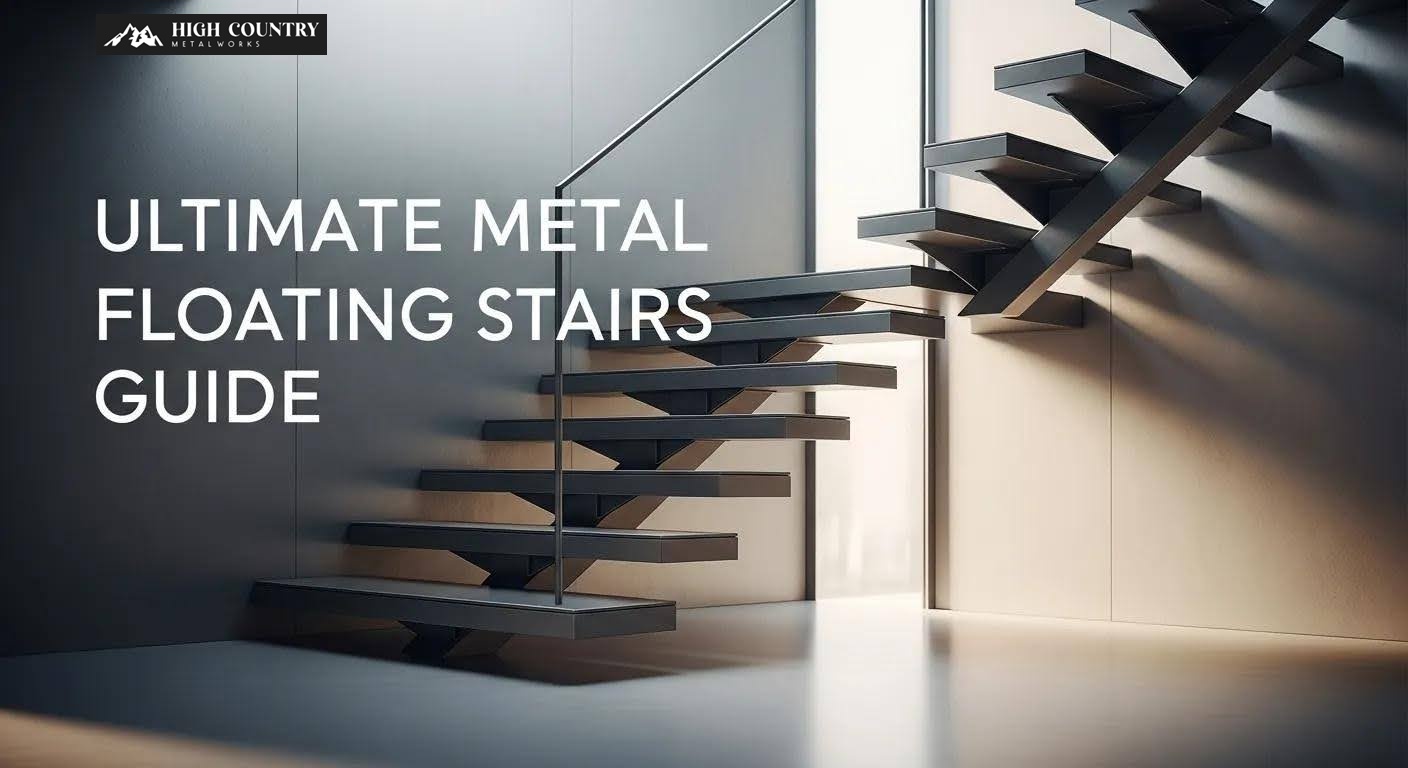
Essential Guide and Types of Metal Floating Stairs Explained
Metal floating stairs are one of the most sought-after architectural features in modern residential and commercial design. With their cantilevered structure and open-riser profile, they deliver a clean, engineered aesthetic that standard staircases simply cannot replicate.
This guide from the fabrication specialists at High Country Metal Works covers every aspect of metal floating stairs, from structural types and material choices to railing options, cost factors, and the measurable advantages of custom fabrication.
What Are Metal Floating Stairs?
Metal floating stairs are structurally supported stair systems that appear to "float" without visible stringers or side supports. Each tread is anchored to a central spine, wall-mounted bracket, or cantilevered steel structure, creating the illusion of steps suspended in mid-air.
Fabricated from steel, aluminum, or wrought iron, these stairs deliver the load-bearing capacity needed for both residential and commercial applications. Their open design maximizes natural light flow, preserves sightlines, and is a natural fit for open-plan interiors, loft conversions, and contemporary commercial spaces.
For architects and homeowners looking for floating stair systems that balance visual impact with structural integrity, metal is the material of choice.
Types of Metal Floating Stairs
Understanding the available configurations helps you select the right system for your space, budget, and code requirements.
Straight Floating Stairs
Are the most common and cost-effective configuration. A single linear run connects two levels cleanly and suits most residential layouts. Their simplicity makes them easier to engineer, fabricate, and install.
L-Shaped and U-Shaped Floating Stairs
Introduce directional changes, a quarter-turn for L-shapes, a full reversal for U-shapes, while maintaining the floating aesthetic. These are common in homes where a straight run isn't feasible or where a landing platform is desired for safety or design purposes.
Spiral Floating Stairs
Use a central column with radiating treads to create a compact, space-saving staircase. They work well in tight floor plan situations and create a strong visual focal point. Steel spiral stairs are especially popular in industrial and loft-style interiors.
Custom Floating Stairs
Are fully bespoke systems engineered to match specific dimensions, load requirements, and design visions. At High Country Metal Works, custom floating metal stairs are designed from first principles; geometry, material specification, finish, and code compliance are all handled in-house.
Materials Used in Metal Floating Stair Fabrication
Material choice directly affects structural performance, maintenance requirements, longevity, and visual character.
Structural Steel is the most widely used material for floating stair fabrication. It offers exceptional tensile strength, weldability, and design flexibility. Steel floating stairs can be powder-coated, painted, or left with a raw industrial finish. Hot-rolled and cold-rolled steel are both common, depending on the structural demands of the design.
Aluminum is lighter than steel and naturally corrosion-resistant, making it a strong candidate for exterior metal floating stairs or coastal environments. Aluminum stairs typically have a lower load capacity than steel, so a structural engineering review is essential for commercial applications.
Wrought Iron suits heritage, transitional, or decorative installations where craftsmanship details matter. Wrought iron is heavier and more labor-intensive to fabricate, which is reflected in cost, but the result is a highly distinctive staircase with lasting character.
Stainless Steel is the preferred choice for outdoor floating metal stairs and high-traffic commercial environments. Its corrosion resistance, hygienic surface, and contemporary finish make it durable in demanding conditions.
Tread materials often combine metal frames with wood, glass, or stone inserts. Timber treads on steel stringers remain one of the most popular combinations; they soften the industrial look and introduce warmth without sacrificing structural performance.
Design Ideas for Floating Metal Stairs
Beyond the structure itself, several design features can enhance both performance and visual impact.
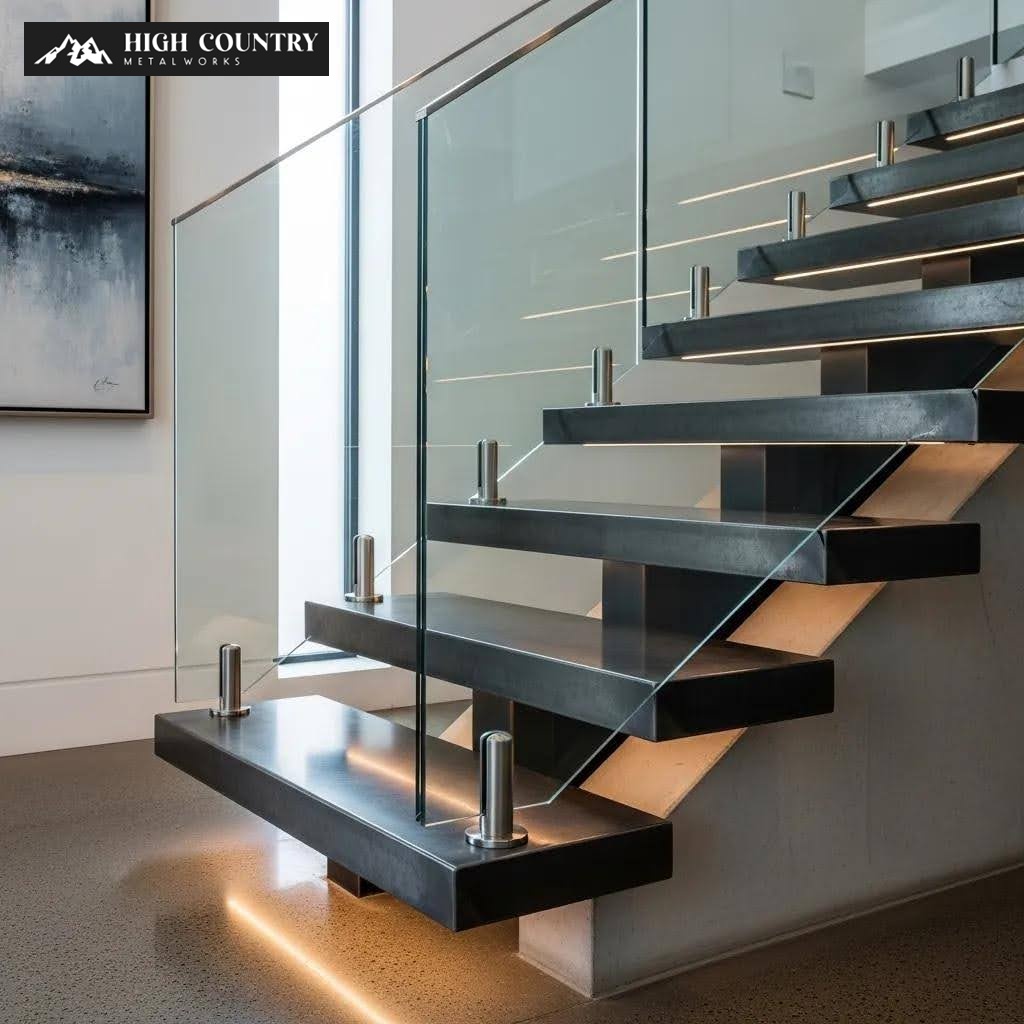
Integrated LED Lighting installed beneath treads or along handrails improves nighttime safety and creates a dramatic effect in low-light interiors. LED strip lighting is often used to highlight the floating quality of the stairs from below.
Mixed Material Treads — steel frames with oak, walnut, or reclaimed timber inserts, are the most requested combination in residential custom metal floating stair projects. The contrast between cold metal and warm wood suits both minimalist and industrial-style interiors.
Glass Railings maintain open sightlines and maximize light transmission. Frameless or semi-frameless tempered glass panels paired with stainless steel hardware are a particularly clean pairing for modern floating stairs.
Smart Home Integration allows stair lighting and safety features to connect to home automation systems, enabling automated illumination, motion-triggered lighting, or app-controlled ambiance settings.
Sustainable Fabrication is increasingly requested by environmentally conscious clients. High Country Metal Works offers options including recycled steel content, low-VOC powder coat finishes, and energy-efficient LED systems.
Railing Options for Metal Floating Stairs
Railings are a safety requirement and a primary design element. The right choice completes the aesthetic of your stair system.
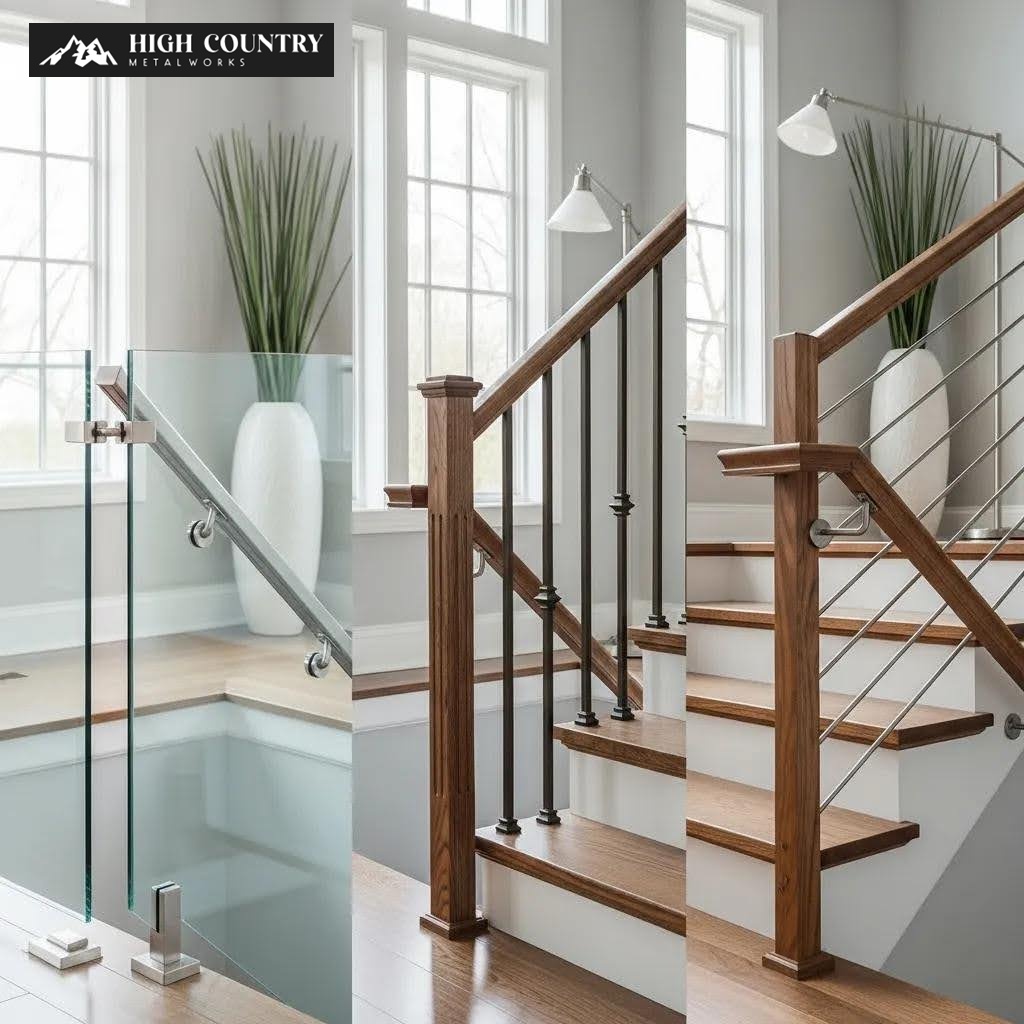
Glass Railings frameless or channel-mounted, are the most popular option for contemporary floating metal stairs. They preserve transparency and suit both residential and commercial installations.
Cable Railings use tensioned horizontal or vertical stainless steel cables within a steel or aluminum post system. They offer an industrial, open look with minimal visual obstruction and are suitable for both indoor and outdoor use.
MetalBar or Tube Railings in steel, stainless, or powder-coated aluminum offer maximum customization. Vertical balusters, horizontal bars, or geometric patterns can be fabricated to any specification.
Wood and Metal Hybrid Railings combine timber handrails with metal posts or balusters, echoing the mixed-material tread approach and adding warmth to an otherwise industrial system.
All railing systems fabricated by High Country Metal Works are designed to meet applicable IBC, IRC, or local building code requirements for handrail height, baluster spacing, and load resistance.
Benefits of Custom Metal Floating Stair Fabrication
Prefabricated stair kits are available at lower price points, but they impose significant limitations on geometry, finish, and structural performance. Custom fabrication offers measurable advantages.
Precise Fit
Custom floating stairs are engineered to the exact dimensions of your space, accounting for floor-to-floor height, slab thickness, ceiling clearance, and structural attachment points. There are no compromises for off-the-shelf sizing.
DesignFlexibility
Every element, from tread depth and width to railing style and surface finish, is specified to your project requirements. Unique configurations, mixed materials, and bespoke details are standard outputs of the custom fabrication process.
Structural Engineering Confidence
At High Country Metal Works, each custom floating metal stair system is structurally verified before fabrication begins. Load calculations, connection details, and material specifications are documented and available for submission with the building permit.
Code Compliance
Custom fabricators design to the local building code from the outset, rather than retrofitting a standard product to meet requirements.
Long-Term Value
A precision-fabricated staircase built from quality materials will outlast budget alternatives and require less ongoing maintenance.
Cost Factors for Metal Floating Stairs
Cost varies considerably based on the scope and specification of the project. Understanding the key cost drivers helps clients set a realistic budget before approaching fabricators.
Material Selection is the most significant cost variable. Structural steel with powder coat is typically the most cost-effective option; stainless steel, aluminum, or wrought iron add cost due to material price and fabrication complexity.
Design Complexity directly affects engineering and fabrication hours. Straight single-run stairs cost less than L-shaped, spiral, or multi-landing configurations. Mixed materials, custom finishes, and integrated features such as LED systems add to the total.
Tread Materials vary widely in cost. Fabricated steel treads are the most economical; solid hardwood, stone, or glass tread inserts add material and fitting costs.
Installation Conditions, including structural attachment requirements, site access, and finish work, affect labor pricing for installation.
Custom Features and Lead Time — bespoke geometric configurations, expedited scheduling, or special-order materials will be priced accordingly. Custom floating metal stairs typically carry a fabrication and delivery lead time of 4 to 12 weeks, depending on project complexity.
To obtain an accurate quote, clients should provide floor-to-floor height, preferred stair type, approximate tread dimensions, railing preference, and any specific material or finish requirements.
High Country Metal Works provides itemized quotations so clients understand exactly what is included.
Work With High Country Metal Works
High Country Metal Works specializes in bespoke architectural metalwork, with floating metal stairs among our most requested custom fabrication projects. Our process covers structural engineering, material specification, fabrication, and installation coordination, from initial design brief through to final handover.
Whether you are an architect specifying custom metal floating stairs for a commercial project or a homeowner planning a residential installation, we provide the technical expertise and fabrication precision to deliver a staircase that performs and endures.
Contact High Country Metal Works to discuss your project and request a detailed quote.
Frequently Asked Questions
1. Are metal floating stairs safe?
Yes, when engineered, fabricated, and installed to applicable building codes, metal floating stairs are structurally safe. Key requirements include correct tread depth and riser height, code-compliant railing height and baluster spacing, non-slip tread surfaces, and verified structural attachment. High Country Metal Works designs all systems to meet local safety standards.
2. Can floating metal stairs be installed outdoors?
Yes. Exterior installations require corrosion-resistant materials, stainless steel or aluminum, along with UV-stable finishes and proper drainage design. All exterior systems should be specified and installed by qualified fabricators with outdoor stair experience.
3. How do I maintain metal floating stairs?
Interior steel stairs require periodic cleaning and inspection for surface wear. Exterior stairs need regular checks for corrosion, tightening of fixings, and reapplication of protective coatings as needed. Stainless steel and aluminum require minimal maintenance in most environments.
4. What interior styles suit metal floating stairs?
Metal floating stairs suit minimalist, industrial, contemporary, and transitional interiors. Timber tread inserts and wood handrails broaden compatibility to warmer, more traditional design schemes. Mixed-material configurations are the most versatile option.
5. How long does custom fabrication take?
Lead time for custom floating metal stairs typically ranges from 4 to 12 weeks, depending on design complexity, material availability, and permit requirements. Early engagement with your fabricator during the design phase is recommended to avoid project delays.


