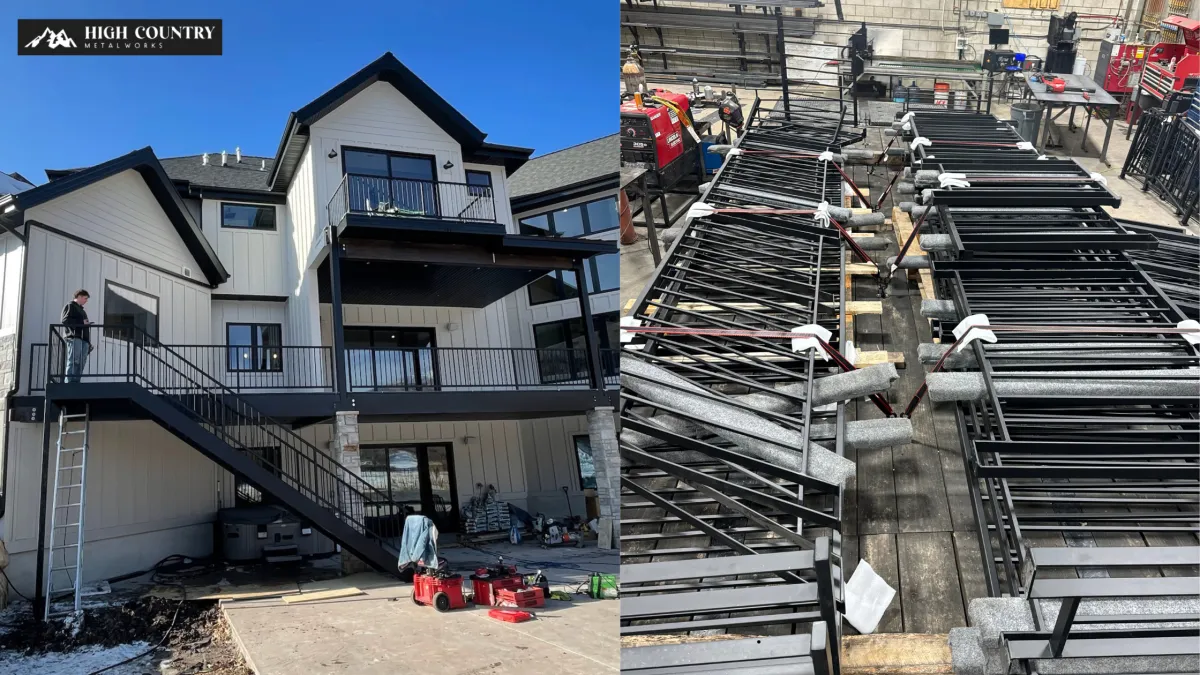
Custom vs. Pre-Fab Metal Railings: Which Fits Your Budget?
Prefab railings cost less upfront: $30 to $150 per linear foot installed for standardized wood, vinyl, or basic metal systems in 2026. Custom metal railings cost more per foot but deliver tailored dimensions, code-compliant engineering, and craftsmanship built around your specific staircase or balcony. Choosing between custom vs. prefab metal railings comes down to three things: budget flexibility, site complexity, and how long you need the railing to perform.
Key Takeaways
Prefabricated railings cost $30–$150 per linear foot installed, making them the budget-friendly pick for standard layouts.
Custom metal railings cost more upfront but give you full design control over material, finish, and structural fit.
Prefab installs faster, trimming labor hours and project timelines on straightforward runs.
Custom railing cost is justified over time through durability, code-compliant engineering, and long-term property value.
What Separates Custom and Prefab Metal Railings
Design origin is the real dividing line. Custom railings start as a sketch built around your structure; prefab ships from a catalog, sized to fit common layouts. That shapes everything downstream: timeline, installation method, and final invoice.
Prefabricated sections arrive pre-cut and pre-finished, so a crew mounts them in a fraction of the time a custom job takes, a solid fit for commercial buildings and residential projects with uniform stair or deck layouts.
Custom fabrication starts with a site visit, not a spec sheet, accounting for a stair pitch that's off standard or a balcony corner that isn't quite square. That's what drives custom railing cost: design and labor scale with job complexity, not a fixed per-foot rate.
Climate Changes: How a Railing Performs
Climate does more to railing lifespan than most homeowners expect, and it's the detail we flag first on every consultation. We engineer custom railings for Utah's seasonal swings: snow load, summer heat, and moisture cycling that drives corrosion at welds and fasteners. Standard prefab sections aren't engineered for any one region's conditions, which can shorten service life in harsher climates.
Custom Fabrication Can Still Fit a Smaller Budget
Budget metal railings don't have to mean prefab-only. In more than two decades of fabrication work, we've adjusted plenty of custom projects around a realistic number, swapping material grade or simplifying a finish, without cutting corners on structural integrity or code compliance.
Prefab Railing Costs by Tier
Prefab pricing generally falls into two clear tiers, depending on the materials, finish, and level of durability you need.
Budget Prefab
Cost: Approximately $70 per linear foot
Typical Use: Standard layouts and cost-conscious renovation projects.
Mid-Range Prefab
Cost: Approximately $150 per linear foot
Typical Use: Projects requiring upgraded finishes, improved durability, and a more refined appearance.
Pricing reflects general 2026 market ranges and will vary by region, supplier, and material availability. Get a project-specific quote before budgeting.
Budget metal railings appeal to developers on tight timelines or fixed-cost contracts. Lower material grades keep the price down, but corners cut during installation shorten the lifespan of even a well-made panel. Mid-range prefab closes part of that gap: composite and metal blends offer better corrosion resistance and a cleaner finish, a real factor at resale.
A Lower Price Doesn't Automatically Mean Lower Quality
We apply the same precision installation practices on budget-focused packages that we do on premium custom work; structural integrity isn't a line item you trade away for savings. The real quality gap shows up in fit and anchoring, not the tier label.
Why Custom Railing Cost Runs Higher
Labor and design complexity drive the higher price tag, not markup. A fabricator building a curved section by hand invests far more shop time than one bolting up straight, factory-made panels.
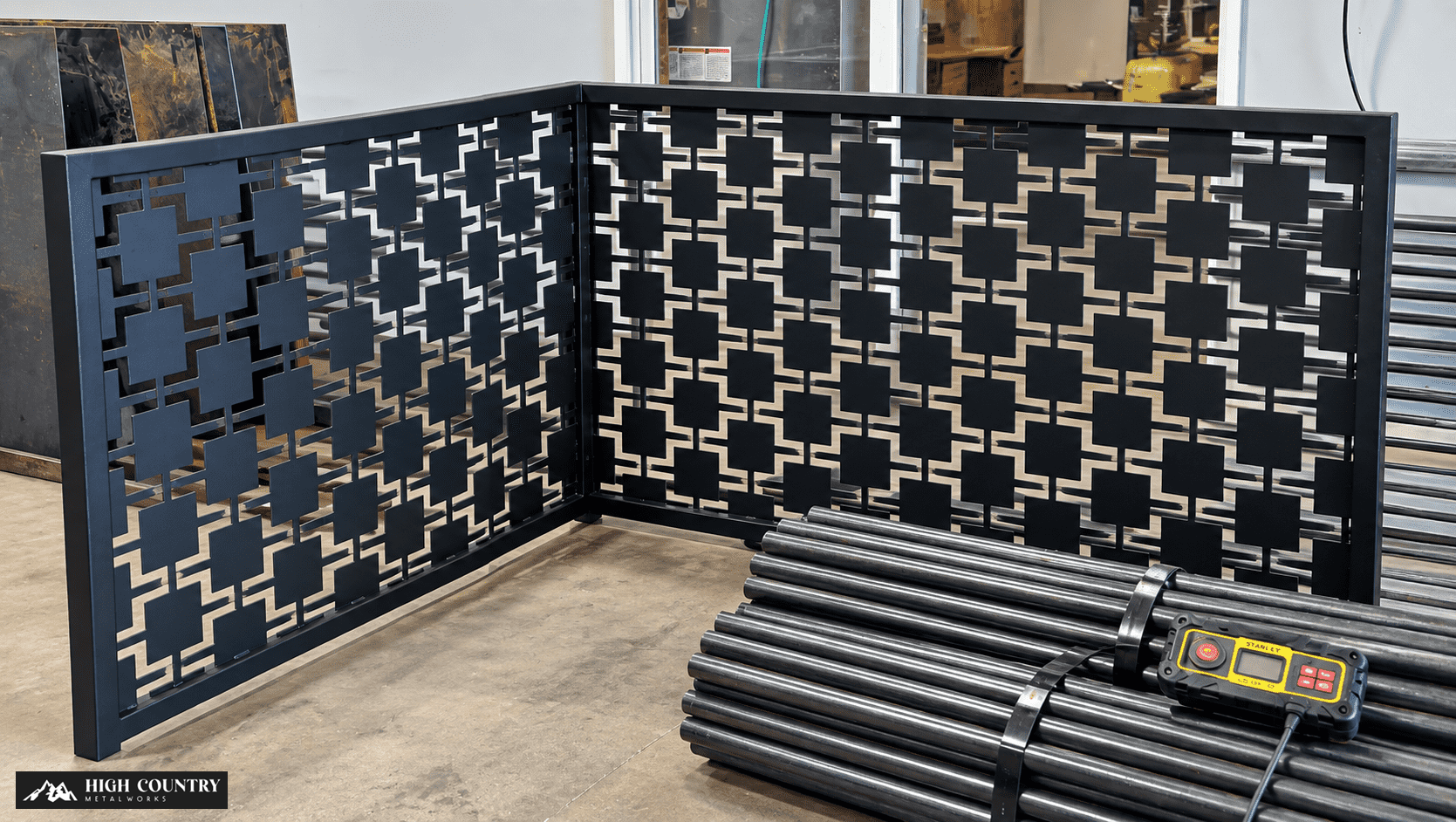
Wrought iron work illustrates the range well: industry pricing typically falls between roughly $700 and $6,000 installed, with many homeowners landing near $2,800, figures that shift with region and material costs. Straight runs sit at the low end; curved or ornamental designs push costs up because bending, welding, and finishing custom shapes take skilled hours a prefab section skips entirely.
Material Choice Compounds the Difference
Prefab railing options come in a limited set of standard finishes. Custom projects open the door to stainless steel accents, tempered glass panels, and wood inlays; each pairing adds a fabrication step, and each step adds cost. That's the price of a railing designed around your home, not a warehouse spec.
What Drives Price Beyond Materials
Design complexity matters as much as material grade. A straight rail run prices lower than a curved, angled, or multi-level configuration, even at the same material grade. Budget metal railings built from prefab components still deliver safety and code compliance; they trade design flexibility for a lower price point, not structural soundness.
Which Choice Protects Long-Term Railing Value
Long-term value comes down to code compliance and durability, not the number on the initial quote. Custom railings tend to hold the edge because a fabricator can match structural requirements to exact site conditions instead of forcing a standard part into a nonstandard opening.
Metal railings are structural guard systems, not decorative trim. A poor fit or an undersized bracket undermines that safety function no matter how polished the finish looks. We build every railing to meet state and local safety codes, with engineering focused on longevity; a code-driven adjustment during fabrication costs far less than a correction after installation.
Prefab Doesn't Automatically Meet Code
Prefab can meet code, but only when stock dimensions align with the site. Mismatched rail heights or baluster spacing on budget metal railings create compliance gaps that surface at inspection, a spec worth confirming before you order.
Maintenance Protects Either Option
Railings need rust treatment and a rust-inhibiting primer applied soon after any corrosion removal, which prevents flash rusting and stretches service life. Custom or prefab, that upkeep step protects the investment long after installation wraps.
How to Decide Between Custom and Prefab
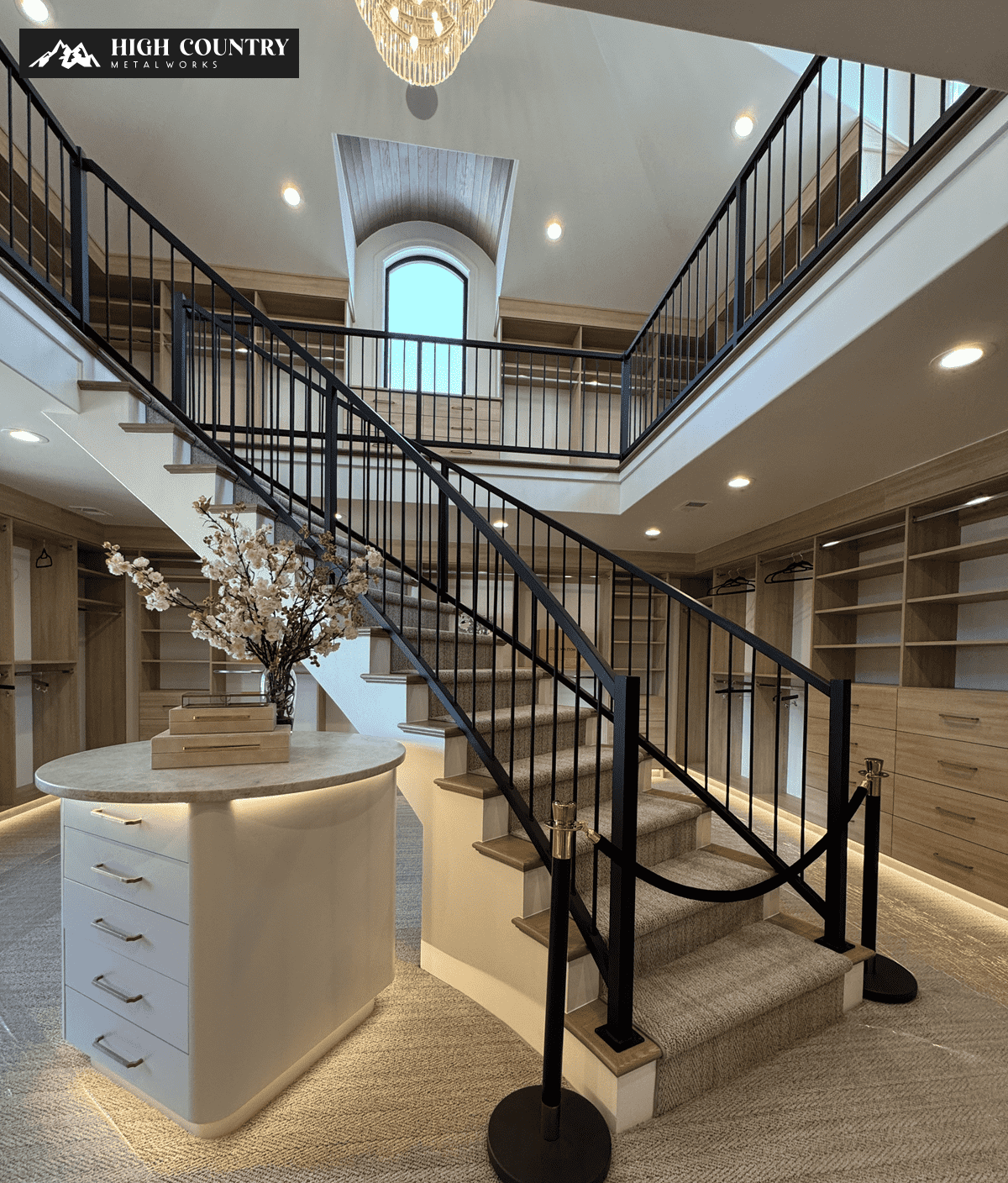
Deciding between custom vs prefab metal railings comes down to three factors: project timeline, architectural complexity, and long-term durability goals. Budget matters, but it rarely stands alone once buyers see the full cost picture. Homeowners and contractors in Provo, Utah benefit from a local fabrication team within reach; custom work doesn't have to mean long lead times.
Consider these factors before choosing:
Timeline — prefab installs faster; custom requires fabrication lead time
Design complexity — curves, custom finishes, or architectural matching favor custom work
Longevity goals — durable, regionally engineered materials support decades of performance
Local support — our 8-person team in Provo means direct access to fabrication expertise throughout the project
For most Utah properties, durability and design fit outweigh upfront savings once you factor in full service life, not just installed price.
Conclusion
The choice between custom and prefab metal railings comes down to priorities, not right answers. Prefab options offer convenience and predictable pricing. Custom fabrication delivers precision engineering built around your structure's actual dimensions and your region's climate. Weigh your timeline, budget, and design goals honestly, and let the project's scope point you to the approach that fits.
FAQ
Which railing option costs less upfront?
Prefab railings cost less upfront, with 2026 installed pricing running roughly $30 to $150 per linear foot for standardized wood, vinyl, or basic metal systems.
How much more does custom railing cost than prefab?
Custom railing cost depends on design complexity and material choice, but curved or ornamental work commonly runs into the thousands, well above standard prefab per-foot pricing.
Does a tighter budget rule out custom metal railings?
No, a fabricator can tailor material choice and design detail to a realistic budget without cutting corners on structural integrity or code compliance.
Are prefab railings code-compliant?
Prefab railings can meet code, but only if the stock rail height and baluster spacing already match the site; mismatched dimensions create compliance gaps at inspection.
Why do prefab railings underperform in Utah's climate?
Standard prefab sections aren't engineered for any one region, so Utah's snow load, heat, and moisture cycling can shorten their service life faster than a custom-engineered railing.


