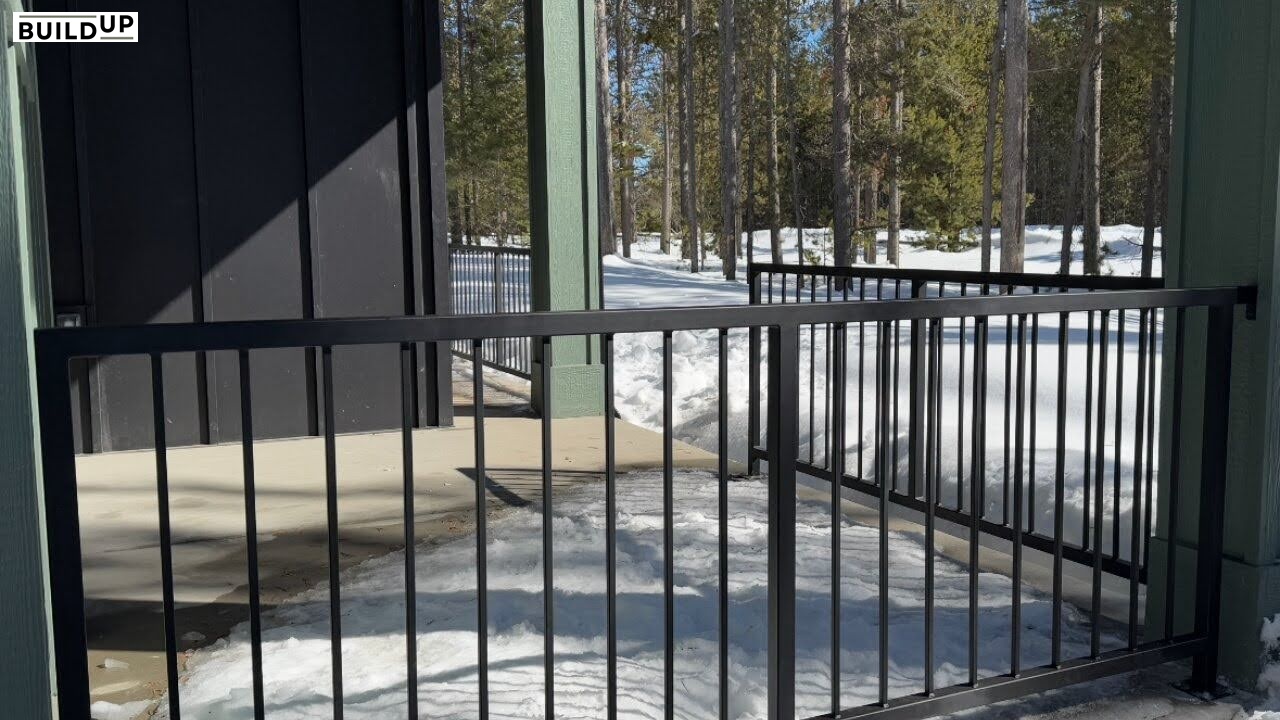
Common Metal Railing Mistakes Utah Homeowners Should Avoid
The most common metal railing mistakes Utah homeowners make are skipping local building code checks, spacing posts incorrectly, and choosing materials that can't handle Utah's freeze-thaw climate. Each of these installation mistakes can trigger a failed inspection, forcing homeowners into costly, avoidable rework. Here are the 10 mistakes we see most often, and how to avoid each one.
Key Takeaways
Skipping a pre-installation code check is the single most expensive mistake; it's the one most likely to force a full teardown and rebuild.
Utah requires a minimum 36-inch guardrail height on residential decks, and 42 inches on commercial or multi-family properties. (Confirm this against the current Utah-adopted IRC/IBC edition and your local jurisdiction before publishing code cycles and local amendments change.)
Post anchoring into structural framing, not surface decking, is what actually keeps a railing from loosening through Utah's winter freeze-thaw cycles.
Material choice affects lifespan more than most homeowners expect; the wrong finish can lead to visible corrosion within a couple of winters in high-UV, high-altitude locations. (Verify this timeframe against our own field records before publishing.)
Working with a fabricator who builds specifically for residential metal railings Utah homeowners rely on, not a generic out-of-state supplier, catches most of these errors before installation day.
Most railing problems we're called out to fix started as small, avoidable decisions made early in the project, not as bad design. Here's where those mistakes tend to happen, and how to catch them before they cost you a rebuild.
1. Skipping a Local Building Code Check Before You Build
The most expensive mistake we see is homeowners ordering materials and scheduling installation before confirming their local code requirements. A railing that doesn't meet the required standard isn't flagged with a warning; it's treated as an enforceable violation, typically resulting in removal and reconstruction at the owner's expense, on top of the original build cost.
A five-minute call to your local building department before fabrication starts is the cheapest insurance on the entire project.
We've seen homeowners order a full custom railing run, get it fabricated and delivered, only to find out at inspection that the spacing or height doesn't match what their specific jurisdiction requires. At that point, the cost isn't just the rebuild; it's the wasted material, the second installation labor, and the delay on any related project timeline, like a deck resurfacing or staircase build happening at the same time.
2. Applying the Wrong Guardrail Height for Your Property Type
Metal railing safety starts with using the correct height standard for your specific property classification, and this is where we catch the most confusion, especially on properties that straddle residential and commercial use.
Residential decks: Minimum guardrail height of 36 inches
Commercial, multi-family, and public-access properties: Minimum guardrail height of 42 inches
Note to verify: confirm these figures against the current edition of the International Residential Code as adopted in your specific Utah county/city, since local amendments can adjust minimums.
Residential guardrails are measured vertically from the finished deck surface to the top of the guard. A duplex, mixed-use build, or any property with public access should default to the stricter 42-inch threshold unless your local authority confirms otherwise.
3. Getting Post Spacing Wrong
Post spacing that's too wide reduces the railing's lateral load capacity, the very thing that's supposed to stop a fall. It's a common mistake in metal railing installations because it doesn't look wrong to the eye; a railing can appear evenly spaced and still fail a load test. Spacing needs to be set against your local code minimum, not eyeballed during layout.
4. Anchoring Posts Into Decking Instead of Structural Framing
Posts anchored only into surface decking will loosen faster under Utah's freeze-thaw cycles than posts anchored into structural framing. We've pulled apart railings that looked solid at installation but had already started working loose within a couple of seasons because the anchoring never reached the framing underneath. This is one of the most common causes of railing failure we're called out to repair.
5. Choosing the Wrong Material for Utah's Climate

Heavy winter snow loads, intense summer UV exposure, and periodic hail all accelerate wear on the wrong alloy or finish. This matters just as much for outdoor metal railing installation projects as it does for the structural components underneath.
Aluminum: High corrosion resistance and low maintenance.
Stainless Steel: High corrosion resistance and low maintenance.
Steel: Moderate corrosion resistance and moderate to high maintenance.
Wrought Iron: Low to moderate corrosion resistance and high maintenance.
Aluminum resists oxidation without a protective coating, which is why it holds up well through Utah's moisture-heavy winters with minimal upkeep. Steel and wrought iron offer greater structural strength for the same cross-section, but they require a proper protective finish to withstand repeated freeze-thaw cycles without rusting from the inside out.
6. Ignoring Snow and Salt Exposure at the Base
In our experience, unprotected steel railings near roads, driveways, or walkways treated with de-icing salt corrode noticeably faster at the base than the same material in a dry, low-traffic location. A climate-matched material choice, paired with a basic seasonal maintenance routine, is the most reliable way to extend service life.
A simple rinse-down after major salt exposure, plus an annual check for surface pitting near the base of each post, catches early corrosion before it spreads into a structural issue. This is a small habit that costs almost nothing but makes a real difference over a railing's lifespan in high-salt or high-elevation locations.
7. Miscalculating Handrail Measurements
Handrails cut too short leave a section of stairway without lateral support, an immediate fall hazard. Handrails cut too long are harder to position correctly, which increases the odds of improper anchoring during a rushed install. Measuring twice before any cut is still the single most effective way to eliminate this error category.
8. Ignoring Manufacturer Fastener and Bracket Specifications
Most railing systems specify fastener types, bracket hardware, and installation sequence for a reason; they're engineered to work together as a load path. Substituting an unapproved fastener or bracket, even one that looks equivalent, can quietly compromise the load-bearing integrity of the whole run.
9. Misaligning Posts or Leaving Joints Poorly Fitted
Posts that fail plumb and level tolerances put uneven stress on the entire railing system, and it's usually the result of rushing the layout stage rather than a materials problem. A joint with even slight play introduces movement that gets worse over time, especially with Utah's seasonal temperature swings. A properly fitted joint should feel rigid immediately after installation, with no flex.
10. Hiring a Contractor Without Local Utah Experience
Contractors without Utah-specific experience are the ones most likely to produce every mistake on this list. Choosing a reliable custom metal railings Utah fabricator comes down to matching their experience to your codes, climate, and project scope, not picking the lowest bid. An out-of-state supplier or general contractor subcontracting the railing work may not know which code applies to your property type, or which material actually performs well at your elevation, and that gap is exactly where the mistakes above tend to originate.
Before hiring, ask:
Do you fabricate custom work in-house, or subcontract it out?
How do you handle permit documentation and inspection scheduling?
Which materials do you recommend for our elevation and exposure?
What's your typical timeline from fabrication to install?
Can you show examples of similar residential or commercial projects?
A Quick Vetting Checklist
Licensing and insurance — confirm current Utah contractor credentials
Code knowledge — ask about local guardrail height and post spacing requirements specifically
Material expertise — they should be able to match metal type to your site's elevation and exposure without prompting
Timeline accountability — ask for a realistic completion window, not just a start date
Custom fabrication capability — confirm the shop can handle non-standard designs, not just stock kits
Building It Right the First Time

Avoiding these 10 mistakes turns a metal railing project from a liability risk into a long-term investment in both safety and curb appeal. Code compliance, the right material for your elevation, and installation done by someone who's fabricated for Utah's climate before that combination is what keep a railing looking and performing the same way in year ten as it did on install day.
If you're also planning other exterior metalwork for the same property, our guides on cantilever staircase design and powder-coated aluminum deck railing cover two of the most common follow-up projects homeowners tackle alongside a railing upgrade.
At High Country Metal Works, we fabricate and install custom railings, staircases, gates, and structural steel built specifically for Utah's codes and climate, not adapted from a generic catalog spec. If you're planning a railing project, contact our team for a code-compliant design consultation before you order materials.
FAQ
What are the most common metal railing mistakes Utah homeowners make?
The most frequent errors are skipping a code compliance check, spacing posts incorrectly, and selecting a material that isn't suited to Utah's climate extremes.
How high does a residential deck railing need to be in Utah?
Residential decks generally require a minimum guardrail height of 36 inches, while commercial and multi-family properties require 42 inches; always confirm against your local jurisdiction's current adopted code.
Where should metal railing posts be anchored?
Posts should be anchored into structural framing rather than surface decking alone, since surface-only anchoring loosens faster under Utah's freeze-thaw cycles.
What's the best metal for outdoor railings in Utah's climate?
Aluminum and stainless steel offer the highest corrosion resistance with the lowest maintenance, making them strong choices for Utah's snow, UV, and elevation exposure.
Can a non-compliant metal railing pass inspection later after installation?
No, a railing that doesn't meet the required height or spacing standard is treated as a code violation and typically requires removal and reconstruction, not just a minor adjustment.


