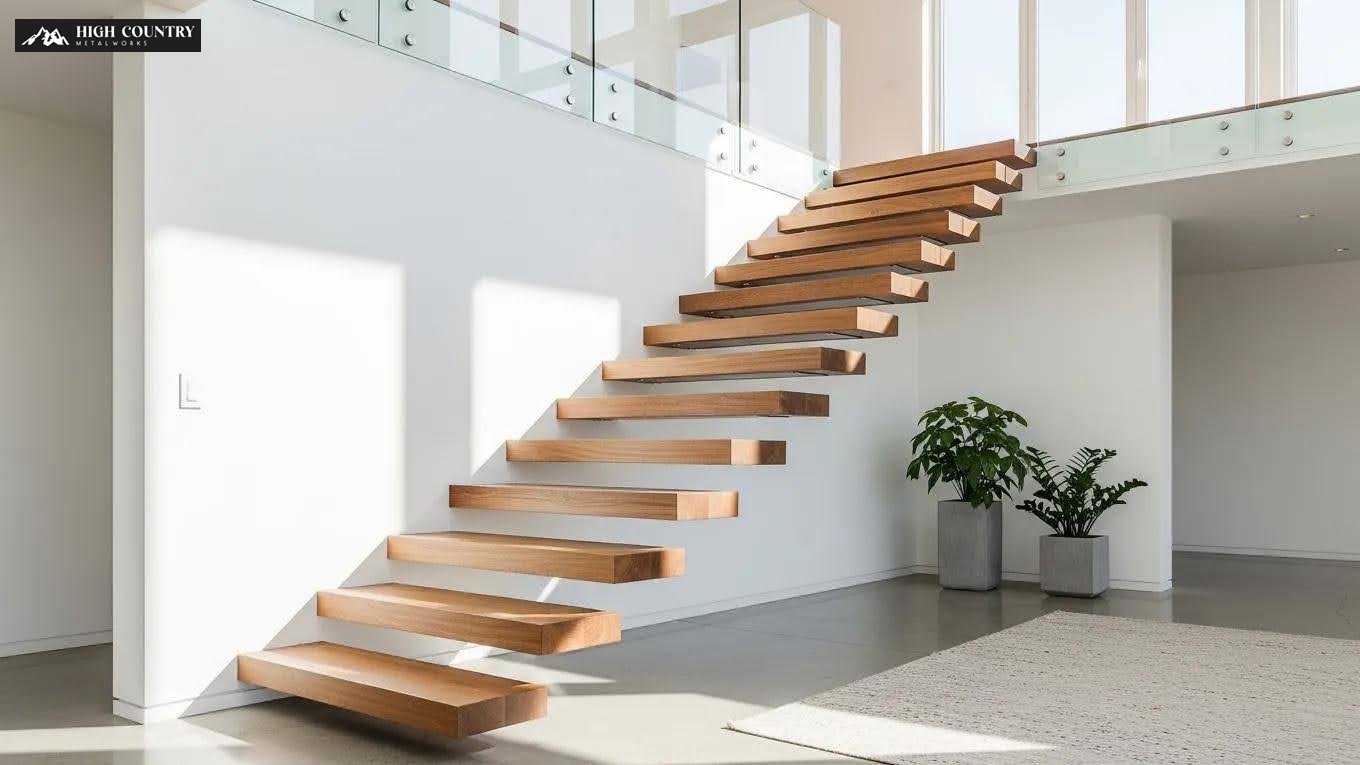
What Is a Cantilever Staircase and How Does It Work?
A cantilever staircase is a stair system in which each tread is fixed at one end, anchored to a structural wall or a central steel spine, while the opposite end projects freely. This creates the floating appearance with no visible support beneath. Structural steel, precise engineering, and quality welding make it safe and durable.
Key Takeaways
A cantilever staircase (also called a floating staircase) eliminates visible stringers by anchoring treads to a wall or central spine
Treads experience torsional forces, not just bending, making structural engineering essential, not optional
Structural steel is the preferred material for the support system due to its strength, weldability, and slim profile
Common configurations include straight, L-shaped, U-shaped, and spiral, each with different costs and engineering requirements
Tread surfaces can be wood, glass, stone, or concrete mounted on a steel frame for a mixed-material look
Proper finishing (powder coat, clear coat, or galvanizing) is critical to prevent corrosion on exposed steel components
Annual inspections of anchor points, weld connections, and railing attachments keep the staircase safe long-term
Custom fabrication timelines typically run 4–8 weeks from finalized drawings to delivery
A cantilever staircase is one of the most striking architectural features you can add to a home or commercial space. Its treads appear to float in mid-air with no visible legs or stringers beneath them, an effect that opens up sightlines, maximizes floor space, and signals a distinctly modern sensibility. But behind that effortless visual is a precise structural system that demands expert engineering and quality fabrication.
This guide covers exactly how a cantilever staircase works, what materials perform best, and what to expect from design through installation.
What Is a Cantilever Staircase?
A cantilever staircase, sometimes called a floating staircase or cantilevered staircase, is a stair system in which each tread is fixed at one end only, either anchored into a structural wall or connected to a hidden central spine. The opposite end of each tread projects freely, creating the signature floating effect.
Unlike conventional stair designs that rely on visible stringers running along both sides of the staircase, a cantilever design conceals or eliminates lateral support. The result is an open, airy structure that feels architectural rather than purely functional.
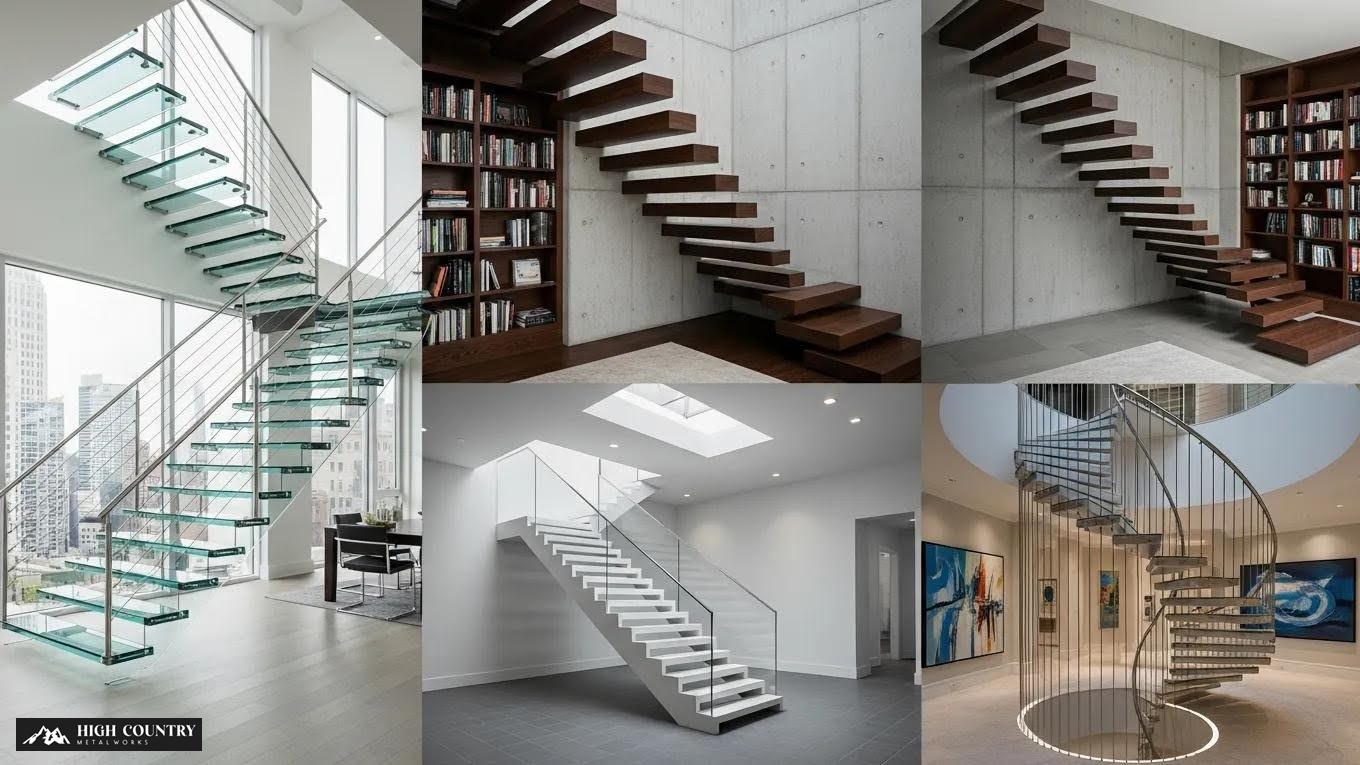
Common cantilever staircase configurations include:
Straight stairs — the most prevalent design; clean, linear, and cost-effective
L-shaped stairs — a 90-degree turn adds visual depth and fits corner layouts
U-shaped stairs — two parallel flights connected by a landing; ideal for tighter vertical rises
Spiral stairs — a compact, dramatic option that wraps around a central post
Each configuration has distinct structural requirements and cost implications. More complex geometries require additional engineering, custom fabrication, and precise installation tolerances.
How Does a Cantilever Staircase Work Structurally?
The structural principle behind a cantilevered staircase is relatively straightforward. Each tread acts as a horizontal beam fixed at one end, with the load from each user transferred along that beam back into a rigid support, either the wall assembly or a central spine.
What makes the engineering more nuanced is torsion. Research published by structural engineer K. Bagi (2018) using discrete element modeling found that the term "cantilever stair" is technically misleading. Tread members experience significant torsional (twisting) forces in addition to bending, and in spiral configurations, manual calculation methods can dangerously underestimate those torsional moments. This is one reason why proper structural engineering, not rule-of-thumb sizing, is essential for any cantilevered staircase project.
Key Load-Transfer Mechanisms
Central spine support: A single structural beam, typically heavy-gauge steel, runs vertically through the staircase. Treads bolt or weld to this spine at intervals. The spine transfers all stair loads down to the floor and foundation. This system is especially common in a steel cantilever staircase because steel's strength-to-weight ratio keeps the spine profile slim and visually minimal.
Wall-mounted bracket system: Treads are embedded into or bolted to a load-bearing wall using heavy steel brackets or threaded rod assemblies. The wall acts as the fixed end of the cantilever. This system requires a structurally adequate wall, often a concrete or steel-reinforced assembly, and precise anchor placement.
Combined systems: Many custom designs use both a central spine and wall anchors to manage loads across longer tread spans, add redundancy, or satisfy code requirements.
The connection type matters significantly. Bagi's research confirms that simply supported connections (allowing some rotation) and partially clamped connections produce very different internal force distributions. A structural engineer must specify the correct connection detail for the load conditions of each project.
Materials for Cantilever Staircase Construction
Material selection is one of the most consequential decisions in any floating staircase project. It affects structural performance, maintenance requirements, visual character, and long-term cost.
Structural Steel
Structural steel is the dominant choice for the support system in a steel cantilever staircase. It offers exceptional strength in both bending and torsion, weldability that enables custom profiles and connections, and long-term durability when properly finished. High Country Metal Works fabricates spine assemblies, wall brackets, and tread frames from structural steel sections sized to project-specific engineering requirements.
Steel can be finished with powder coating, paint, or a clear coat to protect against corrosion. In exposed or outdoor applications, galvanizing or weathering steel grades provide additional protection.
Aluminum
Aluminum is roughly one-third the weight of steel and naturally corrosion-resistant, making it well-suited for outdoor staircases or installations in humid environments. It cannot match steel's structural depth for a given profile size, so aluminum is more commonly used for treads, railings, and decorative elements than for primary cantilever support structures.
Wrought Iron and Mild Steel Railings
Custom railings are a critical design element in any cantilever staircase. Wrought iron and mild steel both offer excellent formability for fabricated railing profiles, balusters, and newel posts. These materials can be forged, welded, and finished to complement the aesthetic of the staircase, from industrial to refined contemporary.
Tread Materials
Steel tread frames are commonly surfaced with hardwood, glass, concrete, or stone to meet aesthetic and slip-resistance requirements. Mixing materials, for example, a white oak tread on a blackened steel frame, is one of the defining features of modern cantilever staircase design.
Design Considerations for Floating Staircases
A successful floating staircase design balances architectural intent, structural requirements, building code compliance, and budget.
Span and tread depth directly determine structural demand. Longer treads cantilevered farther from their support generate larger torsional and bending moments, requiring heavier steel sections or additional support points.
Riser treatment — open risers versus closed risers affects both aesthetics and code compliance. Open-riser designs maximize the floating visual but must meet local code requirements for opening sizes to prevent falls.
Railing design plays a major structural role in addition to its aesthetic one. Glass panel railings, cable railings, and welded steel rod systems all transfer lateral loads back into the stair structure and must be engineered accordingly.
Finish and surface treatment on metal components determine maintenance frequency and long-term performance. Powder-coated finishes offer good durability and a wide color range. Blackened or patinated steel finishes suit raw, industrial aesthetics, but typically require a protective clear coat to prevent ongoing oxidation.
LED lighting integration has become a standard feature in modern floating staircase design. Strip lighting recessed into the underside of treads or along wall stringers highlights the floating effect and improves safety in low-light conditions.
Metal Staircase Fabrication: What the Process Looks Like
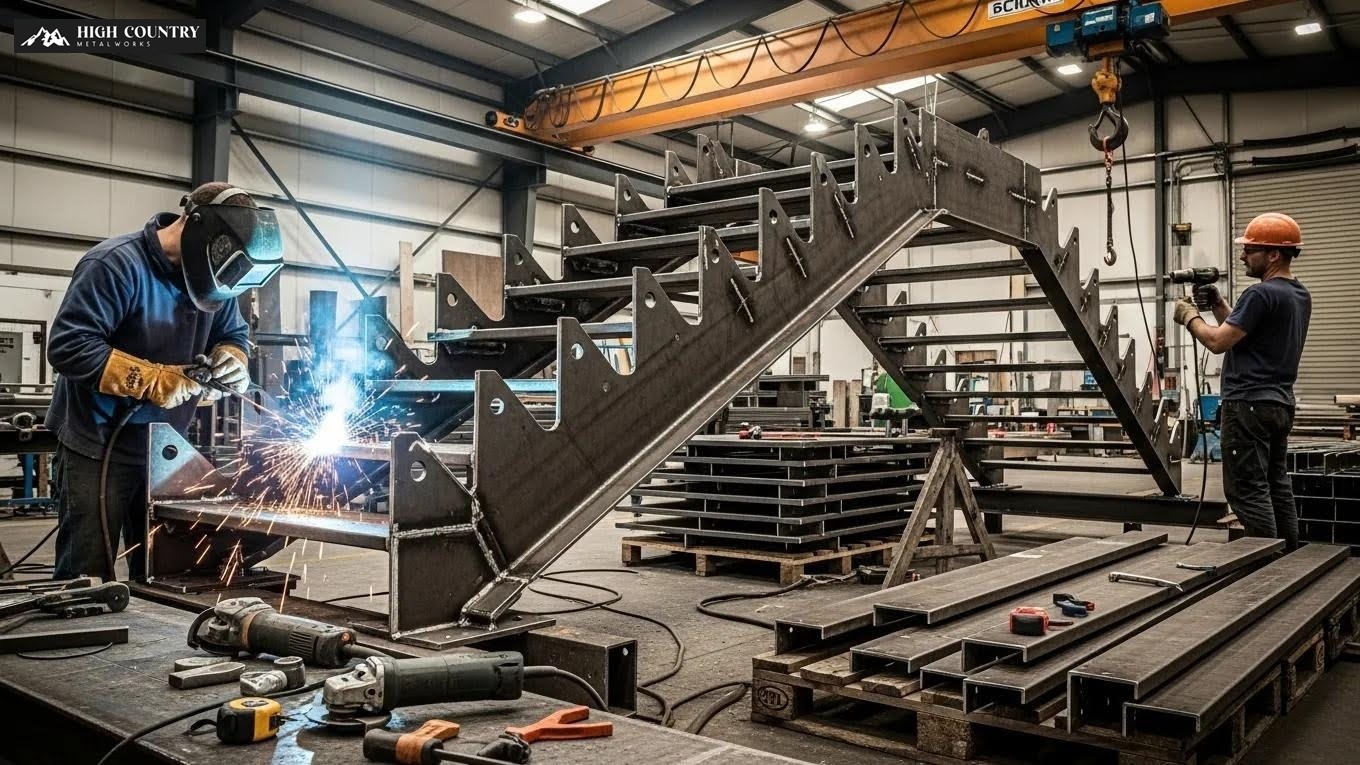
Custom metal staircase fabrication follows a controlled sequence from design drawings through finished installation.
Engineering and detailing — Structural drawings establish member sizes, connection details, anchor locations, and deflection limits. For a steel cantilever staircase, this step is non-negotiable; field-guessed sizing creates long-term safety risk.
Material procurement and cutting — Steel sections are cut to length per fabrication drawings using plasma cutting, saw cutting, or waterjet methods, depending on profile and tolerance requirements.
Fit-up and welding — Components are jigged and welded to drawing dimensions. Weld quality directly affects both structural performance and finished appearance. Full-penetration welds are specified at primary structural connections; fillet welds are used at secondary joints per the engineer's specifications.
Grinding and surface preparation — Welds are dressed, surfaces are ground smooth, and the assembly is cleaned and prepared for finishing. This step is particularly important where welds will be visible in the finished installation.
Finishing — Powder coating, paint, clear coat, or galvanizing is applied per the project specification.
Delivery and installation — The fabricated assembly is delivered to the site. Spine systems are typically set first and plumbed; treads are then attached and adjusted for level. Final inspection confirms compliance with drawings and applicable codes.
Cost Factors in Cantilever Staircase Projects
Several variables drive the cost of a custom cantilevered staircase:
Material selection — Structural steel varies in cost by grade and section size. Tread surface materials (hardwood, glass, stone) add cost above the steel frame alone.
Design complexity — Straight single-flight stairs are the most economical. Curved, spiral, or multi-flight designs require additional engineering and fabrication time.
Tread span — Longer treads require heavier sections and more robust connections, increasing both material and labor cost.
Railing system — Glass panel systems, custom-welded railings, and cable rail systems each carry different material and fabrication costs.
Site conditions — Wall construction, floor type, and access all affect installation time and complexity.
Getting an accurate quote requires detailed measurements of the installation space, clarity on material and finish preferences, and any specific design requirements. Providing these upfront allows fabricators to price the project accurately rather than relying on rough estimates that tend to change.
Maintenance for Long-Term Performance
Metal cantilever staircases are durable by design, but regular maintenance preserves both appearance and structural integrity.
Routine cleaning — Remove debris and moisture from tread surfaces and exposed steel components. Avoid abrasive cleaners on powder-coated finishes.
Annual inspection — Check tread connections, spine or bracket anchors, and railing attachment points for any signs of movement, corrosion, or wear.
Protective recoating — Touch up paint or powder coat any chips or areas of mechanical damage to prevent corrosion from establishing under the coating.
Fastener inspection — For bolted connections, verify torque periodically, especially in the first year after installation, as components settle.
Addressing minor issues early prevents them from becoming structural problems. A well-maintained steel cantilever staircase should perform reliably for decades.
Conclusion
A cantilever staircase is an investment in both architecture and everyday experience. When designed with structural rigor and fabricated with precision, it becomes one of the most enduring features of a space. If you are considering a custom floating staircase for your project, to discuss design options, materials, and next steps. Contact High Country Metal Works.
Frequently Asked Questions
1. How much weight can a cantilever staircase hold?
A properly engineered cantilever staircase meets or exceeds the live load requirements of local building codes, typically 100 lbs/sq ft for residential use. Actual capacity depends on the structural design and materials specified.
2. Are cantilever staircases safe?
Yes, when engineered, fabricated, and installed to code by qualified professionals. Key factors include correct structural sizing, quality welding, proper anchor installation, and compliant railing design.
3. What is the difference between a cantilever and a floating staircase?
The terms are used interchangeably in practice. Both describe stair systems in which treads appear unsupported from below, achieved through wall anchoring or a central spine.
4. Can a cantilever staircase be added to an existing home?
Yes, but it requires a structural assessment of the wall or floor assembly that will receive the loads. A structural engineer should evaluate the existing construction before design begins.
5. How long does custom cantilever staircase fabrication take?
Timelines vary by complexity, but most custom steel cantilever staircases require 4–8 weeks from finalized drawings to delivery, with installation typically completed in one to two days.


