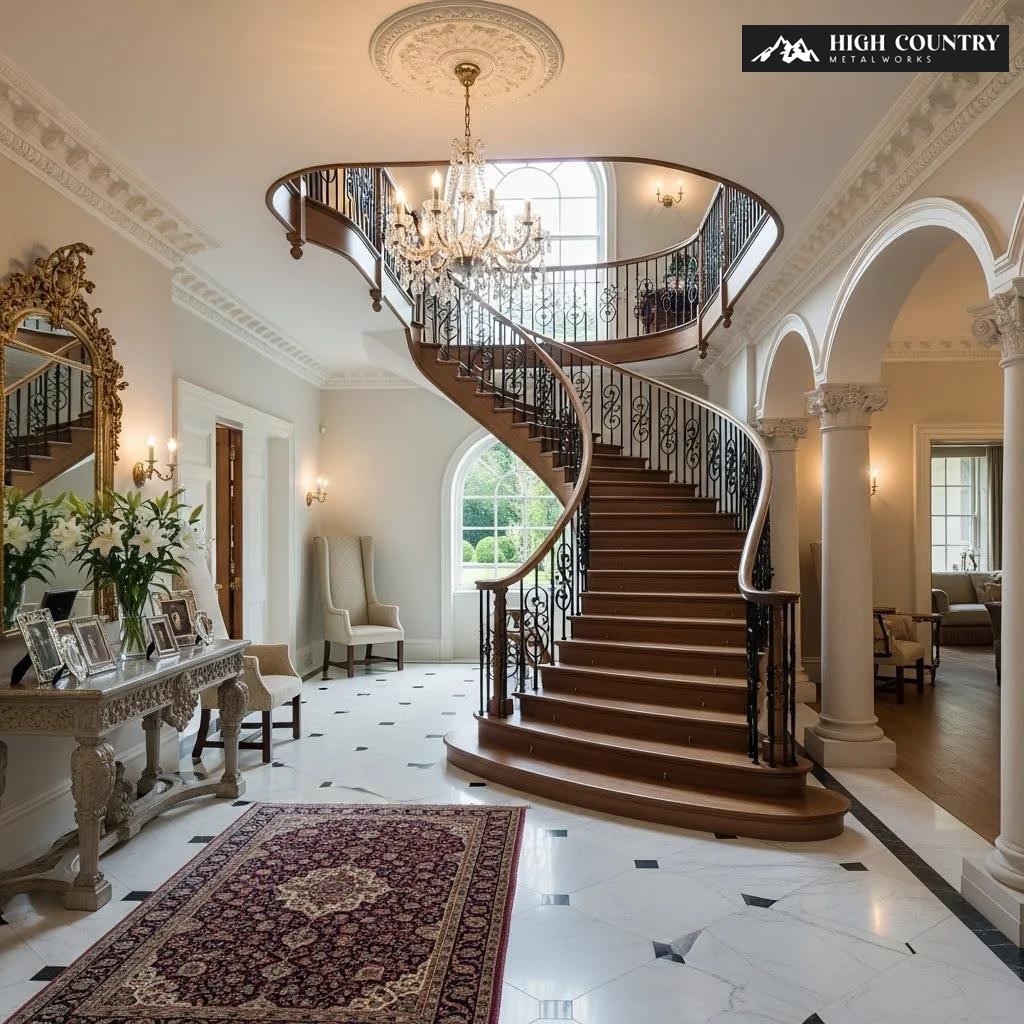
10 Innovative Staircase Ideas for Small & Big Spaces
Staircases serve as functional connectors and powerful design statements that define your home's character. Whether you're working with a compact urban dwelling or a spacious luxury residence, the right staircase design can transform circulation into architecture.
This expert guide presents 15 practical staircase ideas backed by 20+ years of custom metal fabrication experience. We'll explore space-efficient solutions, high-end luxury designs, material selection strategies, and professional installation considerations that help homeowners and architects make informed decisions.
Space-Saving Staircase Ideas for Compact Homes
1. Spiral Staircases: Maximum Style, Minimum Footprint

Spiral stairs remain the gold standard for space optimization in small homes, lofts, and multi-level apartments. Their circular footprint typically requires only 4-6 feet of floor space compared to 9-12 feet for traditional straight-run stairs.
Key Benefits:
Occupy 30-40% less floor area than conventional designs
Available in steel, aluminum, wrought iron, or hybrid metal-wood combinations
Ideal for corners, narrow shafts, and transitional spaces
Code-compliant when engineered to IRC standards for tread width and handrail height
Design Consideration: While spiral staircases excel at saving space, their tighter radius makes moving large furniture between floors more challenging. Reserve them for secondary access points or homes where a compact footprint outweighs furniture mobility.
2. Floating Staircases: Open Risers for Visual Expansion

Floating stairs (also called cantilever or suspended staircases) use hidden structural supports to create an illusion of weightlessness. Steel stringers anchored to walls or concealed beneath treads carry loads while maintaining clean sightlines.
Performance Advantages:
Permit natural light transmission throughout vertical spaces
Create perceived volume increases of 15-25% in compact areas
Support contemporary, minimalist, and industrial interior aesthetics
Combine seamlessly with glass balustrades or cable railings
Our engineering team calculates precise load paths and anchorage requirements so floating stairs meet structural codes while delivering that signature open aesthetic.
3. Alternating Tread Stairs: Steep Space-Savers

Photo by: Gibraltarhi
Alternating tread designs (sometimes called paddle stairs or space-saver stairs) feature treads that alternate left-right, reducing run length by 30-50% compared to standard stairs. Each step accommodates one foot, requiring users to ascend in a specific rhythm.
Best Applications:
Attic access and loft conversions
Secondary staircases in workshops or storage areas
Tiny homes and micro-apartments
Commercial mezzanines with light traffic
Important Note: Building codes typically restrict alternating tread stairs to areas serving fewer than 5 occupants or as a secondary means of egress. Their steeper pitch (50-70 degrees versus 30-35 degrees for standard stairs) makes them inappropriate for primary household circulation.
4. Under-Stair Storage Integration

The triangular void beneath staircases represents valuable cubic footage, often 40-80 square feet of recoverable space. Smart integration transforms this area into:
Pull-out drawer systems for shoes, tools, or linens
Built-in wine storage with climate control
Home office nooks or reading alcoves
Concealed pet spaces or mudroom storage
Our fabrication process includes custom metalwork for drawer slides, framing, and structural reinforcement that supports storage loads while maintaining stair integrity.
5. L-Shaped and U-Shaped Landing Stairs

L-shaped (quarter-turn) and U-shaped (half-turn) configurations with intermediate landings reduce run length while providing rest points. These layouts fit efficiently into corners and along walls, making them ideal for two-story homes with limited floor plans.
Functional Benefits:
Landing platforms break vertical travel into manageable segments
Turn geometry reduces horizontal footprint by 40-60%
Improved safety through reduced fall distances
Natural locations for windows or art displays
Luxury Staircase Designs for Expansive Residences
6. Custom Curved Staircases: Sweeping Elegance

Curved staircases feature continuous, gradual arcs that flow organically between floors. Unlike spiral stairs with tight central columns, curved designs offer wider treads and gentler radius options (typically 6-12 foot radius) for comfortable ascent.
Architectural Impact:
Create graceful, sculptural focal points in grand entryways
Accommodate customized tread widths from 36-60+ inches
Pair beautifully with wrought iron scrollwork, brushed stainless railings, or wood accents
Require precise engineering for helical stringers and distributed loads
Curved staircase fabrication demands advanced metalworking skills; our team uses CNC bending, template welding, and precision grinding to achieve smooth, consistent curves that meet structural requirements.
7. Double Staircases: Symmetrical Grandeur

Photo by: Pinterest
Twin staircases flanking a central landing deliver dramatic symmetry and improved traffic flow in luxury foyers, estates, and hospitality environments. This classic configuration appeared in European palaces and remains popular in high-end residential design.
Design Features:
Create bilateral circulation for large gatherings
Frame architectural elements like chandeliers, artwork, or windows
Support elaborate balustrade systems with custom balusters
Typically span 12-20 feet in width with individual runs of 4-6 feet
Cost Consideration: Double staircases require approximately twice the material and labor of single-run designs. Budget $40,000-$150,000+ depending on materials, finishes, and decorative complexity.
8. Helical Staircases: Column-Free Curves

Photo by: Pinterest
Helical stairs curve continuously around an open center without a central support pole. This freestanding geometry creates dramatic sculptural forms that appear to float in space, a signature element in contemporary luxury homes.
Engineering Complexity:
Self-supporting helical stringers require advanced structural calculations
Typically constructed from structural steel with architectural finishes
Accommodate glass panels, wood treads, or metal mesh infills
Span heights up to 20+ feet between floors
Helical designs represent our most technically demanding fabrication work, often requiring 8-12 weeks from engineering to installation.
9. Glass Balustrade Systems: Transparency and Light

Frameless or minimally-framed glass railing systems maximize visibility and light transmission while meeting code-required 42-inch guard heights. Tempered or laminated glass panels (typically ½-inch thick) mount to metal posts or shoe channels.
Aesthetic Advantages:
Preserve sightlines in open-plan homes
Create seamless indoor-outdoor transitions
Pair effectively with any tread material or stringer style
Available in clear, frosted, or tinted glass options
Maintenance Note: Glass balustrades require weekly cleaning to maintain clarity, especially in homes with children or pets. Consider hydrophobic coatings to reduce fingerprints and water spotting.
10. Mixed Material Combinations: Warmth Meets Structure

Combining metal stringers, wood treads, and glass panels creates layered visual interest while leveraging each material's strengths. This design approach dominates contemporary residential architecture.
Effective Pairings:
Steel stringers + white oak treads + cable railings (modern farmhouse)
Blackened steel frame + walnut treads + clear glass guards (industrial loft)
Brushed stainless structure + maple steps + frosted glass panels (minimalist contemporary)
Material selection should consider wear patterns, maintenance requirements, and acoustic properties. Wood treads reduce footstep noise compared to all-metal designs.
Metal Material Selection for Custom Stairs

Structural Steel: Strength and Versatility
Hot-rolled or fabricated steel provides maximum load-bearing capacity with minimal profile thickness. Steel stringers, posts, and frames support heavy loads while enabling slender, modern aesthetics.
Technical Specifications:
Typical yield strength: 36,000-50,000 psi
Finish options: powder coat (250+ colors), hot-dip galvanizing, brushed, painted, or raw with clear coat
Indoor and outdoor applications with appropriate corrosion protection
Weldable for custom fabrication and on-site adjustments
Cost Factor: Steel fabrication typically costs $150-300 per linear foot for standard stringers, increasing with complexity and finish requirements.
Wrought Iron: Ornamental Detailing
Wrought iron (more accurately, mild steel with decorative forging) brings Old World craftsmanship to balustrades, handrails, and decorative panels. Custom scrollwork, twisted balusters, and forged details add personality to traditional and transitional homes.
Design Applications:
Hand-forged balusters in traditional or contemporary patterns
Decorative newel posts and finials
Ornamental guard panels with geometric or organic motifs
Suitable for interior applications or exterior with proper coating
Wrought iron requires skilled artisans for forging and assembly. Budget 20-40% more than standard steel railings for hand-crafted ornamental work.
Aluminum: Lightweight and Corrosion-Resistant
Aluminum offers excellent strength-to-weight ratios (approximately one-third the weight of steel) with natural corrosion resistance, ideal for exterior stairs, coastal environments, and contemporary designs emphasizing lightness.
Performance Characteristics:
Naturally corrosion-resistant (no rust)
Anodized or powder-coated finishes in numerous colors
Excellent for outdoor stairs, balconies, and deck access
Lower structural capacity requires larger profiles than steel for equivalent spans
Aluminum stairs typically cost 10-25% more than comparable steel designs due to material costs and specialized fabrication requirements.
Enhanced Features and Modern Trends

Integrated LED Lighting: Recessed tread lights, illuminated handrails, and riser strips improve nighttime safety while creating dramatic ambient effects. LED systems consume minimal energy and last 50,000+ hours.
Smart Home Integration: Motion-activated lighting, automated color-changing systems, and app-controlled scenarios integrate stairs into whole-home automation platforms.
Sustainable Materials: Reclaimed wood treads, recycled steel content, and low-VOC finishes address environmental concerns while maintaining performance and aesthetics.
Acoustic Considerations: Rubber tread inserts, isolation pads, and damping coatings reduce footstep noise, especially important in multi-story homes with bedrooms above living areas.
Transform Your Space with Expert Staircase Design
Whether you need a compact spiral stair for a 600-square-foot loft or a sweeping curved masterpiece for a 6,000-square-foot estate, thoughtful design transforms vertical circulation into architectural expression.
High Country Metal Works combines two decades of metal fabrication expertise with contemporary design sensibilities to create custom staircases that balance beauty, function, and code compliance. Our Utah-based shop serves residential and commercial clients throughout the Intermountain West.
Ready to explore custom staircase options for your project? Contact our design team for a consultation and discover how professional metalwork can elevate your interior spaces.
Frequently Asked Questions
1. How much do custom metal staircases cost?
Budget $15,000-$40,000 for standard residential stairs; $40,000-$100,000+ for luxury curved or helical designs. Material choice, finish complexity, and regional labor rates significantly impact final costs.
2. What maintenance do metal stairs require?
Annual inspection of welds and fasteners, periodic cleaning with appropriate products for the finish type, and touch-up of scratches or chips to prevent corrosion on steel components.
3. Can custom staircases increase home value?
Quality architectural staircases can increase perceived value and marketability, particularly in higher-end homes where they serve as defining features. Return on investment varies by market.
4. How long does custom staircase installation take?
Complete projects typically require 8-16 weeks from initial consultation to final installation, depending on design complexity and shop workload.


