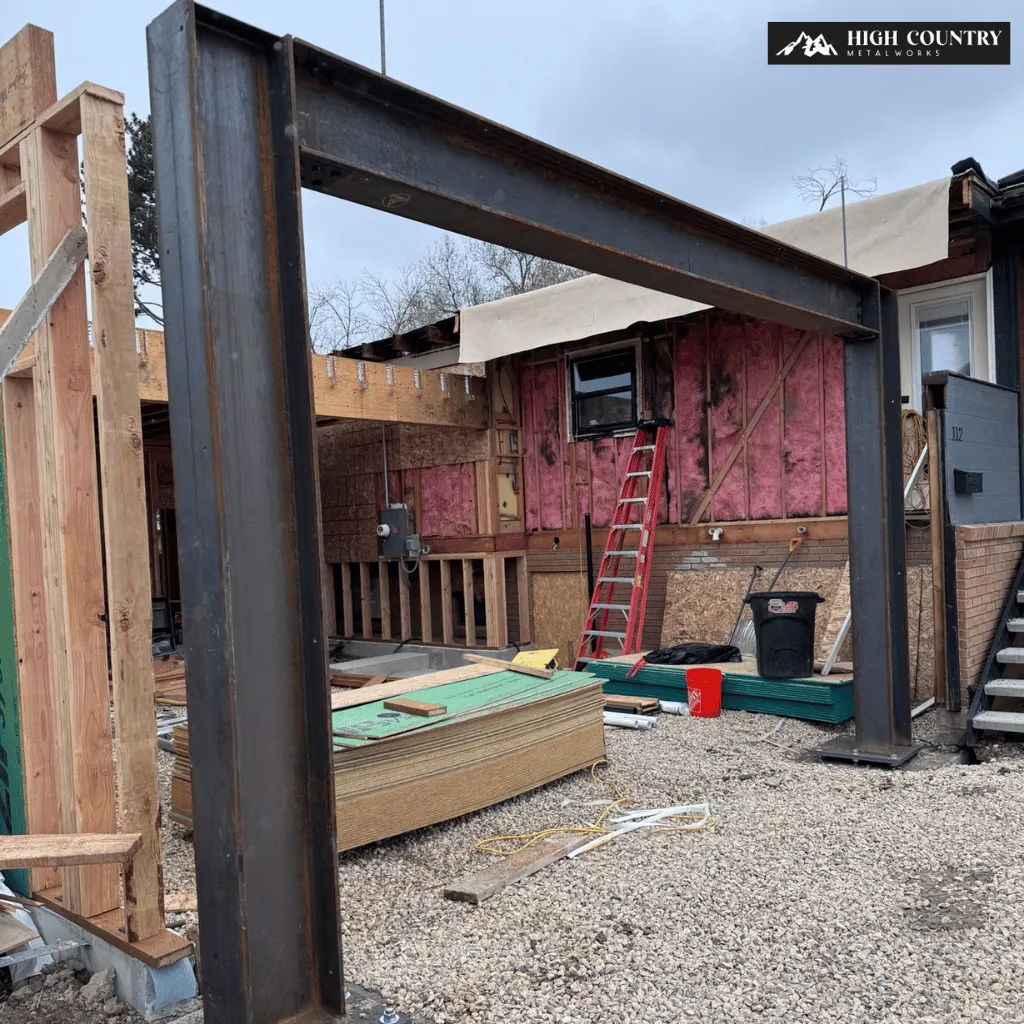
What Makes Steel Frame Structure Ideal for Residential Projects
A steel frame structure offers superior tensile strength, fire resistance, and immunity to pests and rot that wood framing cannot match. It supports larger open spans, requires minimal maintenance, and delivers lower total ownership costs over time, making it a durable, code-compliant choice for residential construction in demanding climates.
Key Takeaways:
Non-combustible and pest-resistant by nature
Larger clear spans enable open floor plans
Lower lifetime maintenance costs offset higher upfront price
Predictable material properties simplify engineering and permitting
Steel frame structure construction has become the preferred building method for homeowners and contractors who need lasting performance over comfort and convenience. When you evaluate structural steel frame systems against conventional wood framing, the differences in strength, longevity, fire resistance, and design flexibility are measurable and significant.
This guide covers the principal advantages of residential steel framing, expert perspectives, a direct comparison with wood, and answers to the questions Utah homeowners ask most.
The Core Benefits of Steel Frame Structure Construction
A steel frame structure residential build delivers advantages that show up from day one and compound over the life of the home. Here is what sets steel apart.
1. Superior Structural Strength
Steel's tensile strength far exceeds that of dimensional lumber. This matters in several practical ways: larger clear spans without intermediate columns, thinner structural members for usable square footage, and higher load capacity for wind, snow, and seismic forces. Utah's snowpack and intermittent high-wind events make this load-bearing advantage especially relevant for mountain and foothill construction.
Unlike wood, steel does not warp under moisture changes, shrink seasonally, or lose section capacity as it ages. A well-fabricated structural steel frame performs predictably across the full design life of the building, which is why engineers favour it for complex or high-load residential applications.
2. Long-Term Durability
Steel does not rot, and it is inherently resistant to termites, carpenter ants, and other wood-destroying pests that cause costly hidden damage in timber-framed homes. This biological resistance eliminates an entire category of maintenance and repair that wood-frame homeowners routinely face.
Combined with corrosion-resistant coatings and proper detailing, a steel frame structure can remain structurally sound for well over 50 years with only basic inspections and routine cleaning. The material simply does not degrade in the same ways wood does.
3. Fire Resistance
Steel will not ignite, and when properly detailed, it maintains structural capacity under elevated temperatures long enough to allow occupant evacuation and suppression. This characteristic is critical in Utah's wildland-urban interface zones, where wildfire risk is a real and growing concern for residential construction.
Research evaluating the use of steel sheets as protective shields against dry grass fires found that typical high-temperature fire regimes produced no significant structural damage to test samples, a finding that underscores steel's suitability in fire-prone environments (The fire-resistant construction for building safety, 2019). For homeowners in fire-exposed areas, building with a steel frame structure is a practical risk-reduction strategy.
4. Low Maintenance Over the Building's Life
Timber-framed homes require ongoing treatment, staining, sealing, pest inspection, rot remediation, and periodic structural repairs. A steel-framed home dramatically reduces this maintenance burden. Regular visual inspections and basic cleaning are generally sufficient to keep steel components in service. Over a 30- to 50-year horizon, the cumulative labor and material savings are substantial.
5. Environmental Sustainability
Steel is 100% recyclable and can be reprocessed indefinitely without loss of material quality. Modern production methods have significantly reduced the energy intensity of steel manufacturing compared with earlier generations of the industry. Selecting a steel frame structure for your residential project supports reduced construction waste, longer building lifecycles, and alignment with green-building principles.
6. Design Flexibility and Aesthetic Range
Steel's high strength-to-weight ratio enables large, open floor plans with minimal interior columns, a key advantage for contemporary residential design. Long spans, cantilevered sections, and dramatic roof forms are all more achievable in steel than in wood framing. The structural frame can be left exposed for an industrial or modern aesthetic, or concealed behind conventional finishes for a traditional look.
Surface coatings, custom profiles, and mixed-material combinations give designers and homeowners broad latitude to achieve distinctive architectural results without compromising the frame's structural function.
Expert Perspective: Why Builders Specify Structural Steel Frame Systems
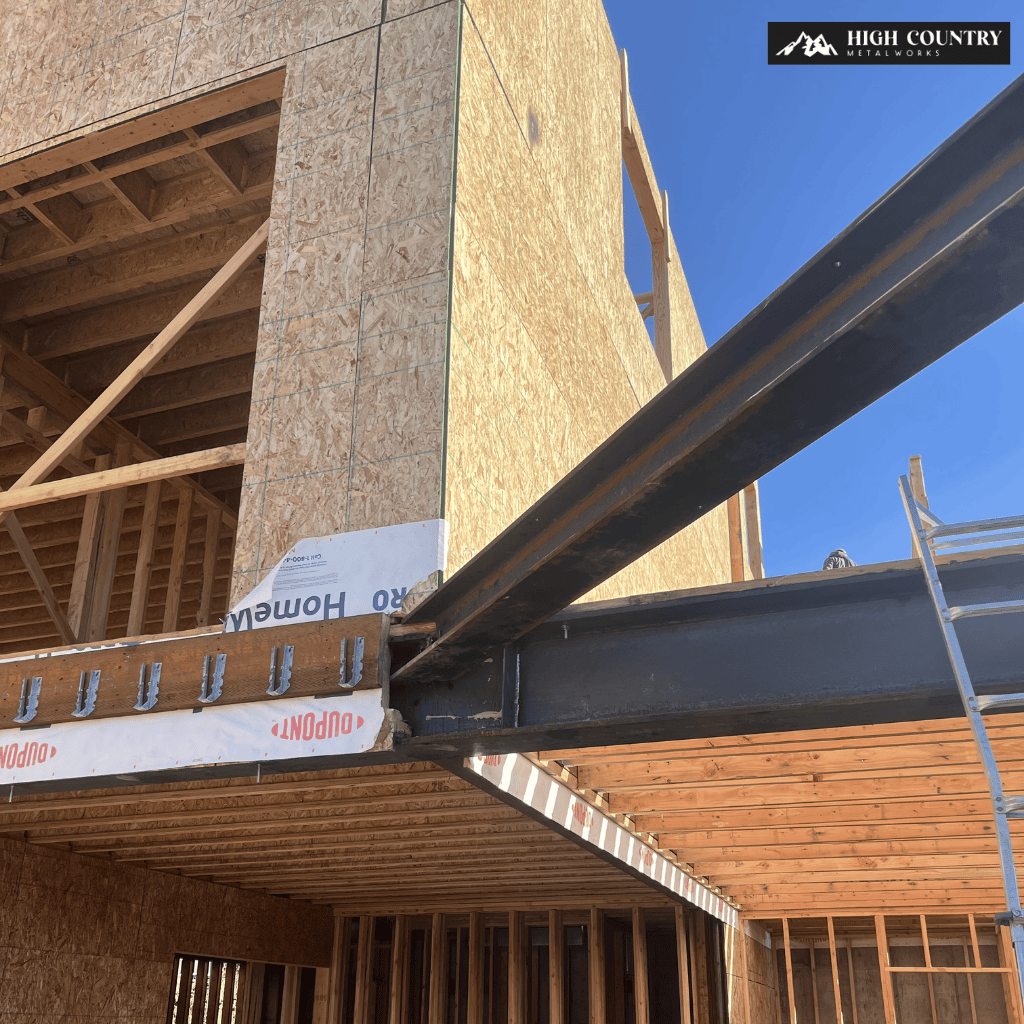
Construction specialists consistently note that steel's predictable material properties simplify structural engineering and code compliance compared with wood, where species, grade, moisture content, and installation variables all affect performance. A steel member's yield strength, modulus of elasticity, and dimensional stability are specified by manufacturing standards, reducing uncertainty in the design process.
For residential builders working in Utah's varied terrain and climate zones, this predictability translates directly into more reliable project timelines, fewer field corrections, and greater confidence that the finished structure will perform as designed.
Steel Frame Structure vs. Wood Framing: A Direct Comparison
Steel frame structures and wood framing differ in several important ways:
Strength: Steel is very strong and consistent, whereas wood strength varies by type and quality.
Fire safety: Steel does not burn and can meet fire codes with proper design. Wood is combustible and needs extra protection.
Durability: Steel resists pests and rot naturally. Wood can be damaged unless it is treated.
Maintenance: Steel requires little maintenance, usually just inspections. Wood needs more frequent upkeep, including treatments and repairs.
Design flexibility: Steel allows for larger open spaces and longer spans. Wood is limited by material size.
Sustainability: Steel is fully recyclable. Wood has more limited recyclability.
Cost: Steel usually costs more upfront, but can be cheaper over time due to lower maintenance. Wood is cheaper initially but may cost more in the long run.
Seismic performance: Steel performs well in earthquakes because it can bend without breaking. Wood performance depends on the design and construction quality.
The upfront cost difference is real, but homeowners who evaluate the total cost of ownership over a 30-to-50-year horizon consistently find that steel's reduced maintenance, longer service life, and superior durability offset the initial premium.
Steel Frame Structure Residential Applications in Utah
Utah's construction environment presents specific conditions that make steel framing particularly well-suited for residential projects:
Heavy snow loads. Mountain and foothill regions accumulate significant snowpack. Steel's load capacity and predictable performance under sustained gravity loads make it a strong choice for high-elevation residential construction.
Wildfire exposure. Large portions of Utah's residential development occur in wildland-urban interface areas. A steel frame structure provides meaningful fire resistance compared with wood-framed alternatives.
Seismic activity. Utah sits in a seismically active region. Steel's ductility allows controlled deformation under seismic loads, dissipating energy without catastrophic structural failure.
Extreme temperature swings. Utah's climate includes significant temperature variation. Steel performs consistently across this range, without the seasonal movement and moisture-related degradation that affects timber framing.
Custom Steel Frame Fabrication at High Country Metal Works
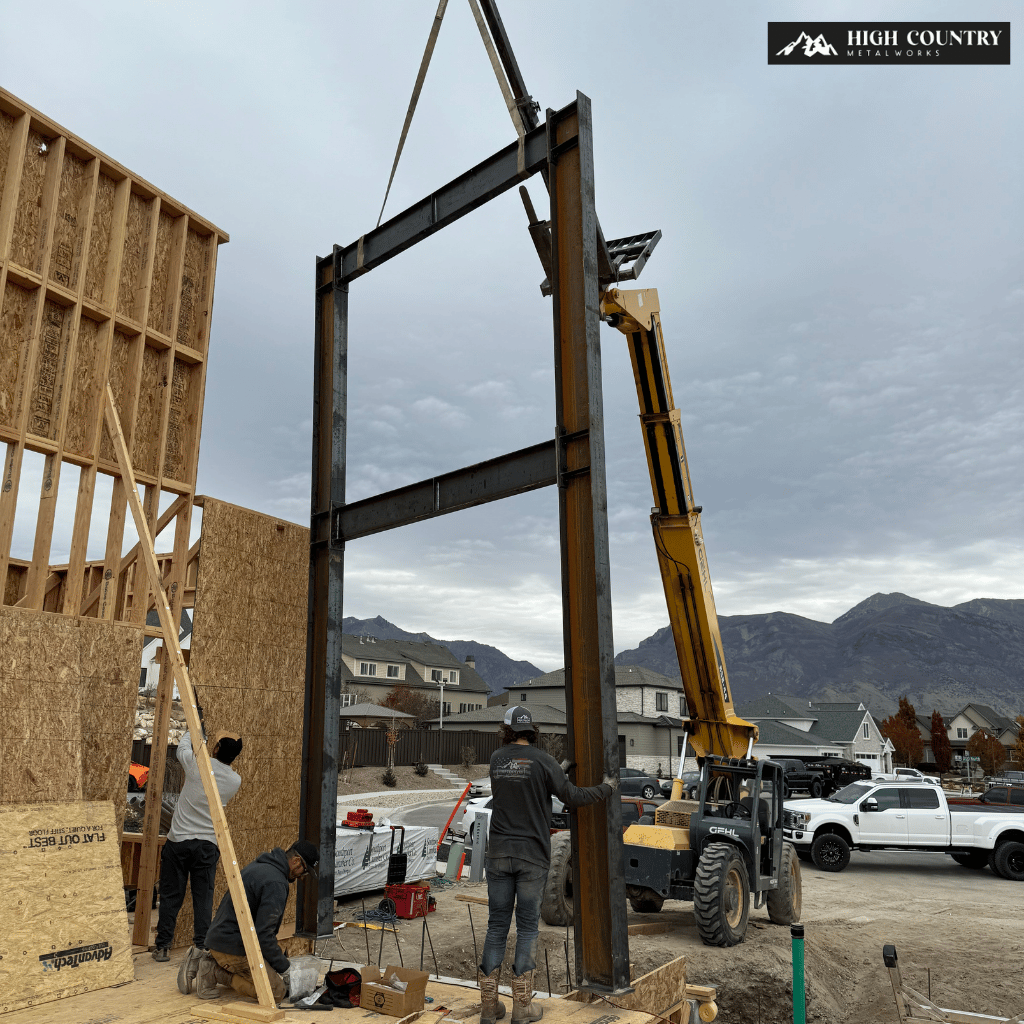
High Country Metal Works designs and fabricates custom steel frame structure components, beams, columns, connection plates, and complete structural assemblies for residential projects throughout Utah. Our process includes:
Engineered design coordination. We work directly with project engineers and architects to develop fabrication drawings that meet structural requirements and design intent. Every component is engineered for the specific project, not produced from generic catalog sections.
Utah building code compliance. Our fabrication process incorporates current Utah residential building code requirements covering structural integrity, fire protection, and energy performance. We coordinate with local authorities to support timely permitting and inspection.
Precision fabrication. Advanced fabrication equipment, experienced welders, and formal inspection protocols ensure that every steel member meets dimensional and performance specifications before it leaves our shop. Quality control is built into the process, not applied after the fact.
Transparent project quoting. Homeowners and contractors can submit project details and design preferences to receive a detailed, itemized estimate. We build estimates to support informed decision-making, not to obscure cost drivers.
Conclusion
A steel frame structure offers measurable advantages in strength, durability, fire resistance, low maintenance, and design flexibility, making it a prudent long-term investment for Utah residential construction. When you factor in the region's snow loads, wildfire risk, and seismic activity, the case for structural steel framing becomes even clearer.
High Country Metal Works brings custom fabrication expertise, local code knowledge, and precision metalwork to every residential project. Contact us today to discuss how a custom steel frame structure can be engineered for your home.
Frequently Asked Questions
1. What is the lifespan of a steel frame structure in a residential home?
A properly detailed and maintained steel frame structure can exceed 50 years of service life. Steel's resistance to rot, pests, and fire contributes significantly to this longevity.
2. Is a steel frame structure more expensive than wood framing?
Initial material costs are typically higher for steel, but lower maintenance and longer lifespan generally result in a lower total cost of ownership over the life of the home.
3. How does a structural steel frame perform in earthquakes?
Steel's ductility allows the frame to flex and absorb seismic energy without brittle failure, making it well-suited for Utah's seismically active regions.
4. Can a steel frame structure residential build achieve traditional aesthetics?
Yes. Steel framing supports a full range of exterior and interior finishes. The structural frame can be fully concealed behind conventional cladding and drywall for any architectural style.
5. How do I get a quote for a custom steel frame from High Country Metal Works?
Submit your project details and design specifications through highcountrymetalworks.com. We review the scope and provide a detailed, transparent estimate.


