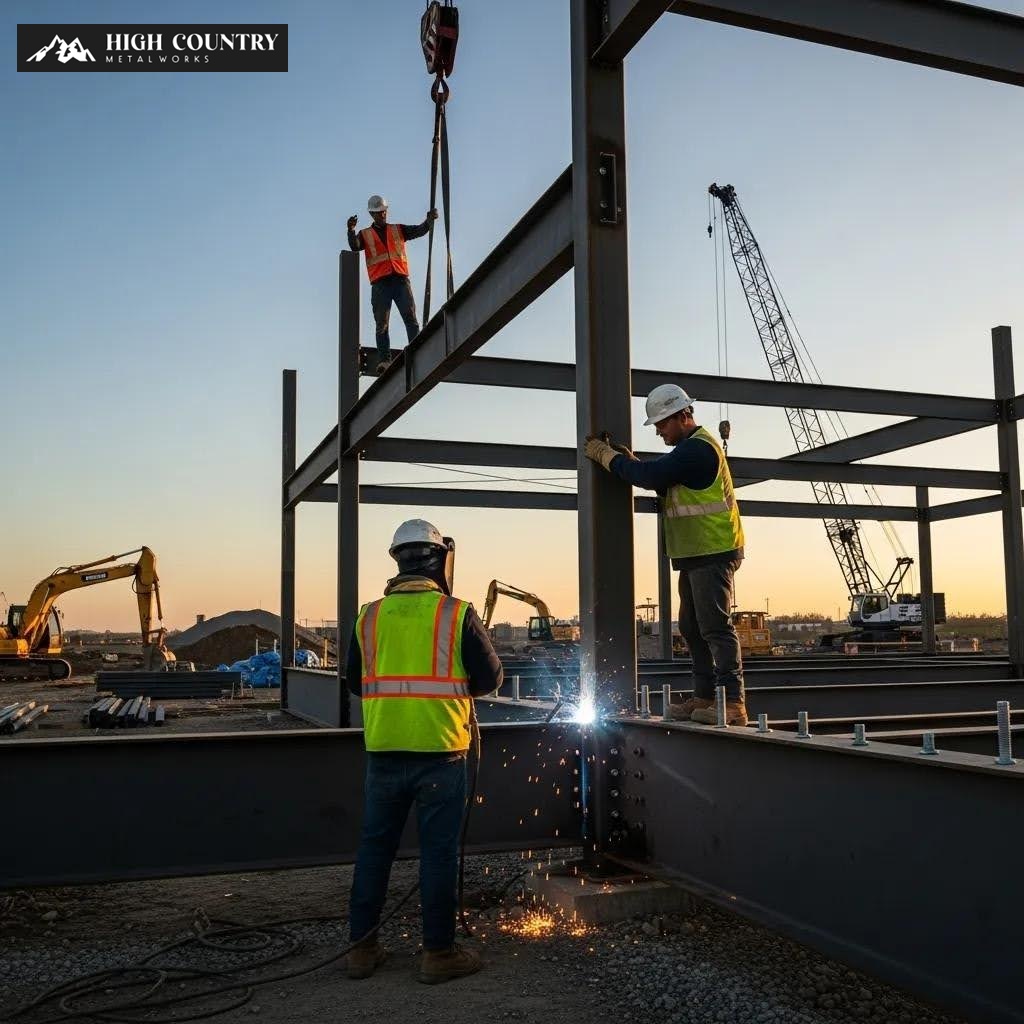
What Are Steel Load Calculations and Why Provo Builders Use Them
Steel load calculations are among the most critical steps in any construction project, yet they're often misunderstood or underestimated. Whether you're framing a commercial warehouse in Provo or adding a load-bearing beam to a residential addition in Utah County, understanding how to calculate steel beam load capacity is essential to building safely, legally, and efficiently.
This guide explains what steel load calculations are, how they work, why precision matters, and how local code requirements shape every decision we make on the fabrication floor.
What Is a Steel Load Calculation?
A steel load calculation is an engineering process used to determine the maximum weight or load that a steel beam can safely support under defined conditions. The result tells builders, engineers, and fabricators whether a chosen beam size and grade is adequate for its intended application, or whether a different section is required.
Performing a steel load calculation involves analysing several variables at once: the type and magnitude of forces acting on the beam, the beam's cross-sectional geometry, the steel's material grade, and the span between supports. Get any one of these wrong, and the entire structural system can be compromised.
For Provo builders working on projects subject to Utah's seismic and snow load requirements, the stakes are particularly high. Steel load calculation in Provo must account for regional environmental forces that many out-of-state design templates don't reflect accurately.
Why Accurate Steel Load Calculations Matter
Incorrect or incomplete load analysis is one of the leading causes of structural failure in construction. The consequences range from visible deflection and cracking to catastrophic collapse, all of which carry legal liability, costly remediation, and most critically, risk to human life.
From an operational standpoint, accurate calculations also protect your bottom line. Over-engineered beams waste material and inflate costs. Under-engineered members create rework, delays, and potential code violations. Getting the numbers right from the start is the most efficient path forward on any steel project.
For projects in Utah, compliance with the International Building Code (IBC) as adopted and amended by the state, including provisions for seismic design category and ground snow loads, isn't optional. Accurate steel load calculations are the foundation of that compliance.
Key Load Types in Steel Beam Design
To calculate the load capacity of a steel beam correctly, engineers and builders must identify and separate the types of forces acting on the structure.
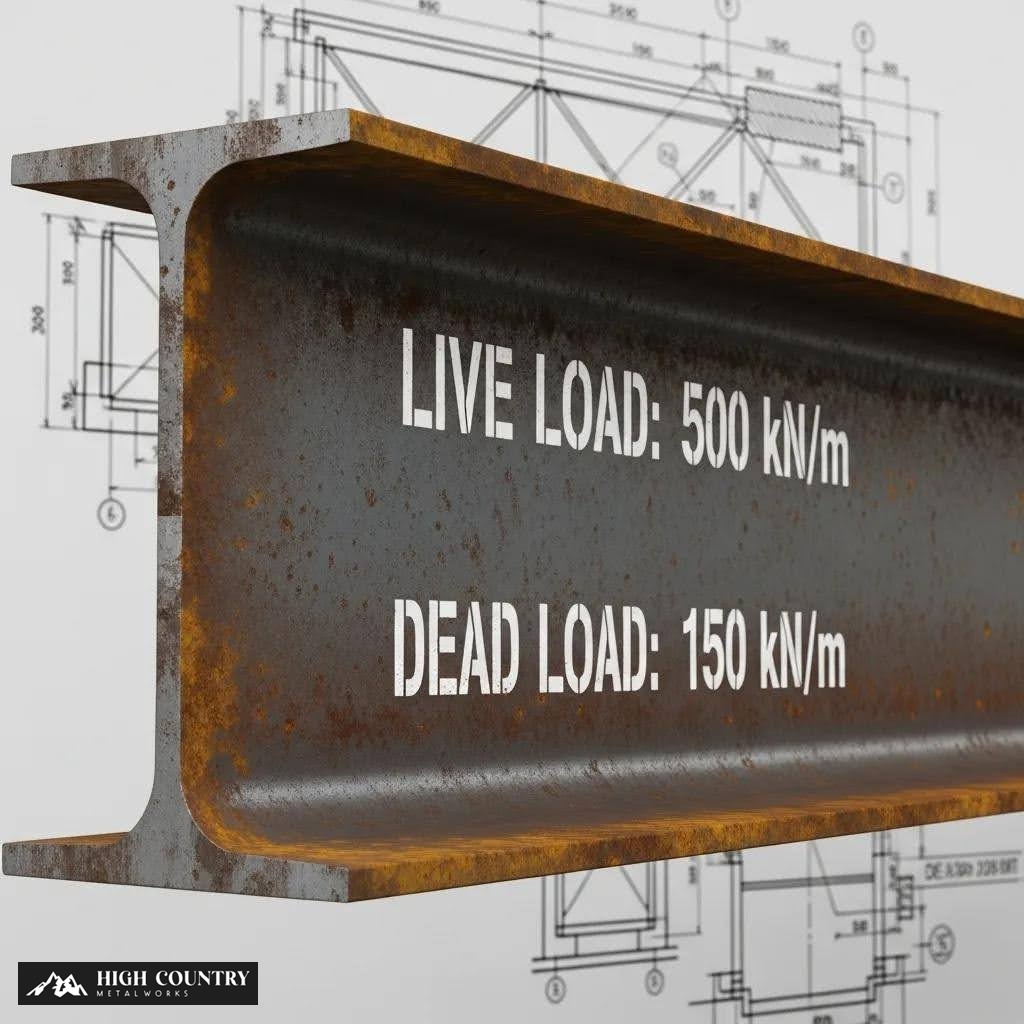
Dead loads are the permanent, static weights built into the structure itself, such as concrete slabs, roofing materials, mechanical systems, and the beam's own self-weight. These are predictable and consistent over the life of the building.
Live loads are temporary and variable forces introduced by occupants, furniture, inventory, or equipment. A warehouse floor supporting forklift traffic carries a very different live load than a residential second floor.
Environmental loads, including snow accumulation on roofs and lateral seismic forces, are especially relevant in Provo and the greater Wasatch Front. Utah's mountainous geography and proximity to active fault systems mean both snow and seismic load provisions apply to most commercial and many residential projects.
Dynamic loads come into play when heavy equipment or machinery is operational. Vibration and impact forces can exceed static calculations and must be accounted for separately in industrial applications.
Failing to distinguish between load types is a common source of calculation errors, which is why design-build teams in Provo benefit from working closely with both a licensed structural engineer and an experienced local fabricator like High Country Metal Works.
How to Calculate Steel Beam Load Capacity: Common Methods
There is no single universal formula for steel beam load capacity. The method selected depends on project complexity, regulatory requirements, and the level of precision required.
Allowable Stress Design (ASD)
One of the most widely used approaches in residential and light commercial work. ASD establishes a safety factor typically defined in the American Institute of Steel Construction (AISC) Steel Construction Manual that limits working stress to a fraction of the steel's yield strength. It's conservative by design and straightforward to apply.
Load and Resistance Factor Design (LRFD)
A method preferred in modern structural engineering for commercial and industrial projects. Rather than applying a single safety factor, LRFD separately factors the loads (increasing them) and the beam's resistance (reducing it) to account for statistical variability. This produces a more precise result and aligns with current IBC provisions.
Finite Element Analysis (FEA)
A computational method used for complex geometries, non-standard loading conditions, or high-consequence applications. FEA models the beam as a mesh of small elements and simulates structural behaviour under load, allowing engineers to identify stress concentrations that simplified hand calculations might miss.
For most steel load calculations in Provo on standard commercial builds, LRFD is the preferred starting point. ASD remains common in residential work and smaller structural applications.
Reading Steel Beam Load Tables and Sizing Guides
Steel beam load tables published in the AISC Steel Construction Manual and from major steel producers provide pre-calculated safe load values for standard wide-flange (W-shape), HSS, and channel sections. They are a practical first step in beam selection when project conditions match the table's assumed parameters.
To use load tables effectively, builders need to know the beam's unbraced length, the total factored load (or allowable load under ASD), and whether the load is uniformly distributed or concentrated at a point. Tables are organised by section designation and span, making it relatively straightforward to cross-reference a required load capacity against available beam sizes.
However, tables have limits. Non-standard spans, combined loading, or connection details that affect lateral-torsional buckling may require calculations beyond what pre-published tables cover. That's when close coordination between the structural engineer of record and the steel fabricator becomes essential.
How Custom Steel Fabrication Depends on Precise Load Data
Custom steel fabrication in Provo isn't just a manufacturing process; it's the physical translation of engineering calculations into structural components. At High Country Metal Works, every fabricated beam, column, and connection plate begins with load data provided by the project's structural engineer.
That data drives decisions throughout the fabrication process: the steel grade specified (A36, A572 Gr. 50, A500, etc.), the weld procedure used at connections, the hole patterns drilled for bolted connections, and the dimensional tolerances held during cutting and assembly.
When load calculations are imprecise or incomplete, fabrication tolerances tighten, shop drawings require revision, and field installation may require costly modifications. Precise load data, delivered early in the design process, allows our team to fabricate to spec the first time, reducing lead times and eliminating rework.
Utah Building Code Requirements for Steel Load Calculations
Steel load calculation in Provo must comply with the Utah State Construction Code, which adopts the IBC with local amendments. Several provisions are especially relevant to builders and fabricators working in Utah County and surrounding areas.
Ground Snow Load: Provo sits in a region with significant roof snow load requirements. The Utah Division of Occupational and Professional Licensing (DOPL) and local building departments require that roof structures be designed to handle documented ground snow loads, which must be converted to roof snow loads using appropriate exposure and thermal factors.
Seismic Design Category: The Wasatch Front is one of the most seismically active zones in the continental United States. Buildings in Provo are typically assigned to Seismic Design Category C or D, requiring that steel framing systems be designed and detailed for lateral resistance in accordance with AISC 341 (Seismic Provisions for Structural Steel Buildings).
Material Certification: Utah code requires that structural steel used in permitted projects meet ASTM material standards and, in many cases, be accompanied by mill certifications. Fabricators like High Country Metal Works maintain documentation to support the permit and inspection process.
Builders unfamiliar with these regional requirements risk permit denials, failed inspections, and redesign costs, all of which are avoidable with proper upfront coordination.
The Role of AISC and AWS Certifications in Fabrication Quality
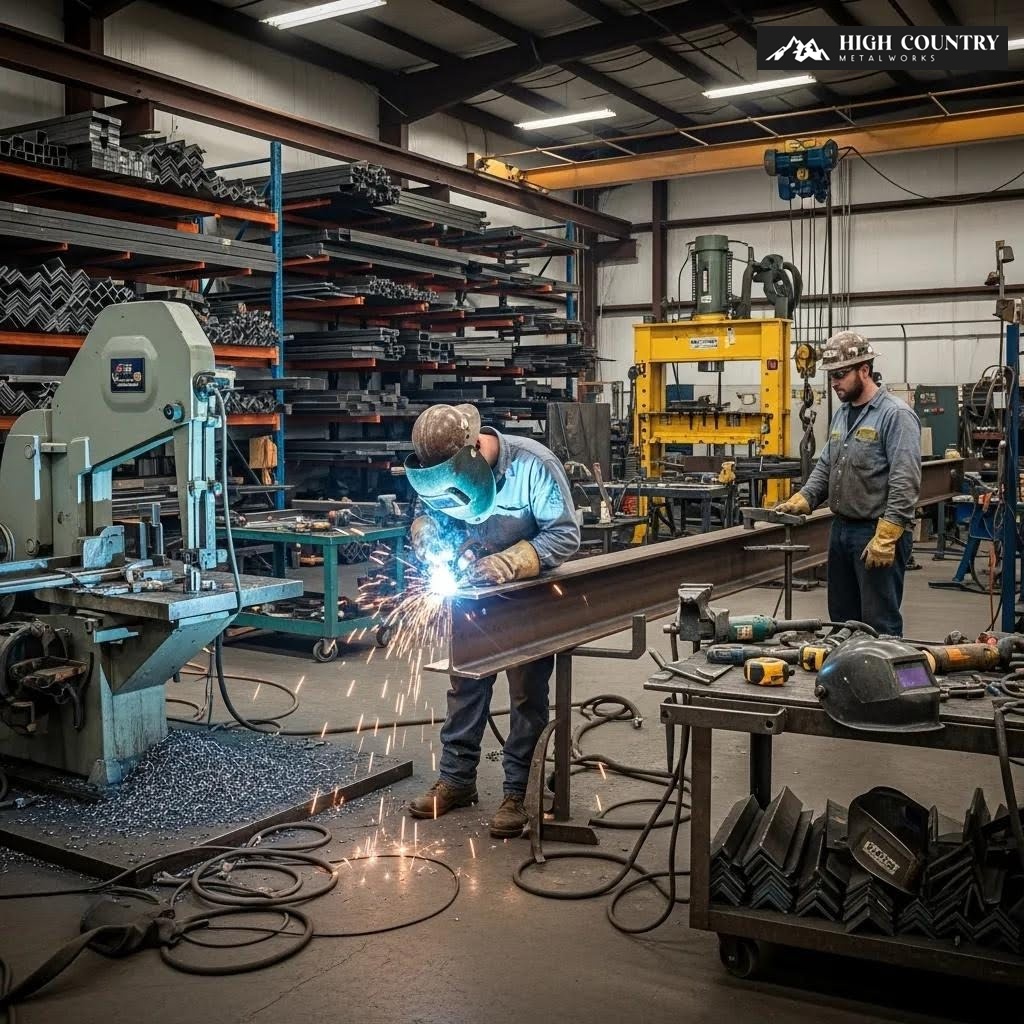
Not all steel fabricators operate under the same quality standards. When selecting a fabrication partner for projects requiring precise load compliance, certifications matter.
The American Institute of Steel Construction (AISC) certification program evaluates fabricators on quality management systems, personnel qualifications, and fabrication processes. AISC-certified fabricators have demonstrated their capacity to produce structural steel that meets specified tolerances and material requirements.
The American Welding Society (AWS) provides certification for welding procedures and individual welders. AWS D1.1, the Structural Welding Code for Steel, establishes the minimum requirements for welds in structural applications. Fabricators whose welders hold AWS credentials provide a measurable quality assurance baseline that supports engineer and inspector confidence.
At High Country Metal Works, our fabrication processes are built around these standards. When Provo builders bring us into a project, they can trust that the steel leaving our shop has been fabricated to the specifications that the structural engineer calculated.
Work With Provo's Trusted Steel Fabrication Team
Accurate steel load calculations protect structures, occupants, and investments. For builders, developers, and contractors in Provo and across Utah County, that accuracy depends on a fabrication partner who understands both the engineering and the local code environment.
High Country Metal Works brings precision fabrication, material expertise, and deep familiarity with Utah's building requirements to every project. Whether you need custom structural steel for a commercial build or need help coordinating with your structural engineer on load specifications, our team is ready to help.
Contact High Country Metal Works to discuss your next project.
Frequently Asked Questions
1. What factors most affect steel beam load capacity?
The primary factors are the beam's cross-sectional shape and size, the steel's yield strength (grade), the unbraced span length, and the type of load applied, distributed vs. point load, static vs. dynamic.
2. What's the difference between ASD and LRFD for steel load calculation?
ASD applies a single safety factor to keep working stress within allowable limits. LRFD applies separate factors to loads and beam resistance, providing a statistically more precise margin of safety and aligning with current IBC requirements.
3. How does Utah's seismic risk affect steel beam design in Provo?
Buildings in Provo typically fall into Seismic Design Category C or D, meaning steel framing must be designed and detailed to resist lateral seismic forces under AISC 341 requirements that go beyond gravity load calculations alone.
4. When should a builder hire a structural engineer for steel load calculations?
Always — for any beam carrying structural loads, a licensed structural engineer should perform or review the calculations. Load tables and online calculators are useful for preliminary sizing but are not substitutes for engineered design on permitted projects.
5. What certifications should I look for in a Provo steel fabricator?
Look for AISC fabricator certification and AWS-certified welders. These credentials indicate that the shop operates under documented quality systems and that welds meet structural code requirements.
A note on methodology: The calculation methods, code references, and certification standards cited in this article reflect current industry practice under the IBC, AISC 360, AISC 341, and AWS D1.1. Always engage a licensed structural engineer for project-specific design.


