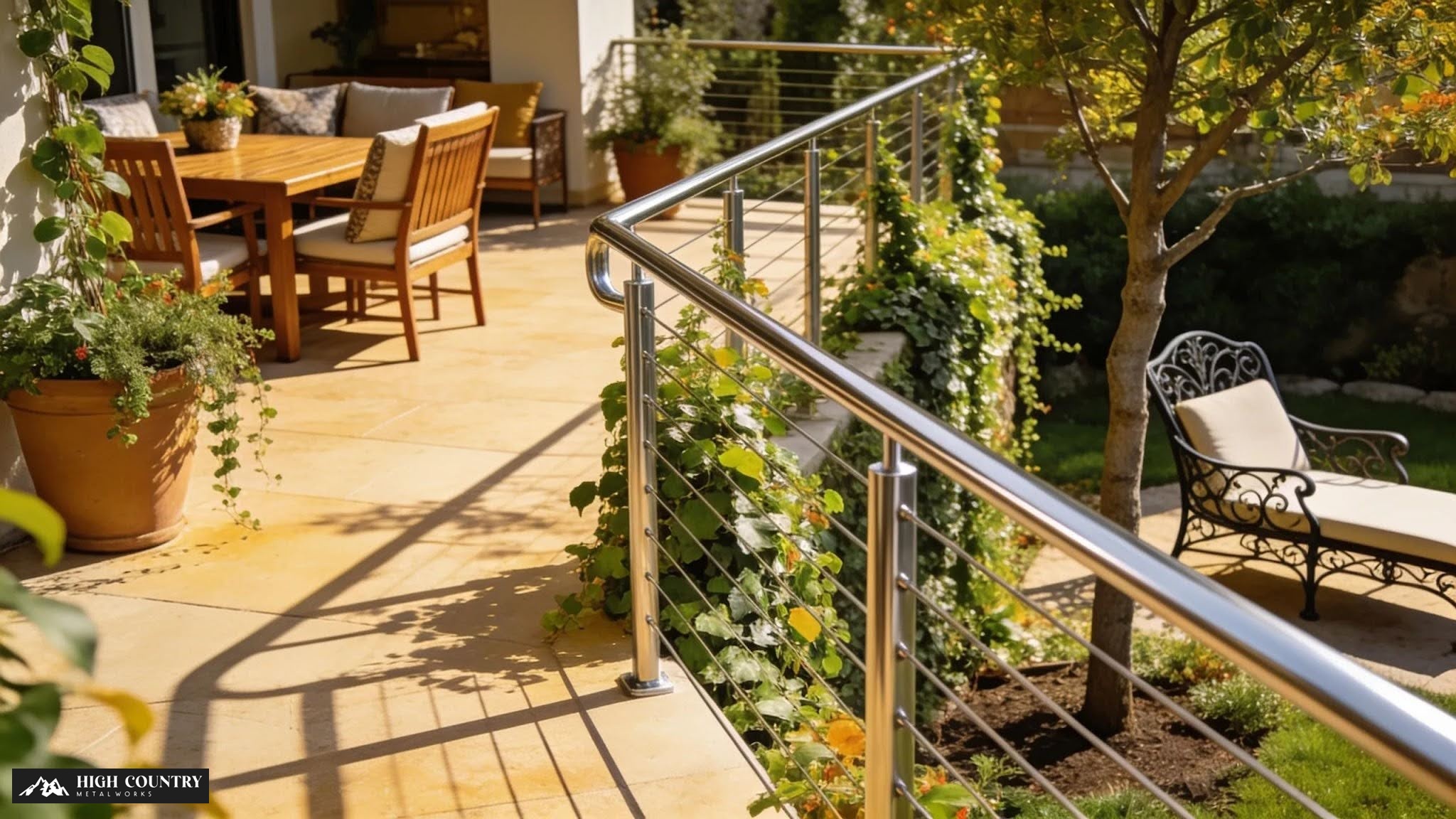
How Patio Handrails Improve Outdoor Safety and Style
Patio handrails prevent falls on steps and elevated surfaces, meet residential building code requirements, and enhance curb appeal when fabricated from durable metals like aluminum, steel, or wrought iron. Proper installation and routine maintenance are required to preserve both safety performance and visual appearance over time.
Key Takeaways
Patio deck handrails must meet local building codes for height (typically 36–42 inches), baluster spacing (no more than 4 inches apart), and load capacity
Metal options, such as aluminum, wrought iron, and steel, each offer distinct advantages in strength, corrosion resistance, and design flexibility
Custom fabrication allows railings to match the home's architectural style rather than default to generic hardware store profiles
Routine inspection twice per year extends service life and preserves structural integrity
Professional installation reduces the risk of code violations and anchoring failures that compromise safety
Patio handrails serve two essential functions: keeping people safe on elevated outdoor surfaces and shaping the visual character of a home's exterior. Whether you're adding a handrail for patio steps, replacing a deteriorating system on an elevated deck, or specifying railings for a multi-level outdoor living area, the right metal railing delivers lasting protection and lasting aesthetic value.
This guide breaks down everything homeowners need to know about selecting, installing, and maintaining metal patio railings, from material comparisons and building code basics to design options that complement any architectural style.
Why Do Patio Handrails Matter for Outdoor Safety?
Falls from elevated outdoor surfaces, such as steps, decks, and raised patios, are among the most common causes of residential injuries. A properly installed outdoor handrail provides a physical barrier that reduces fall risk and gives users a stable gripping point on uneven terrain, sloped surfaces, or steps made slippery by rain, snow, or morning dew.
Beyond individual fall prevention, patio handrails address several household-specific needs:
Step and Stair Safety
A handrail for patio steps gives children and older adults a stable reference point when navigating grade changes. Even a single step presents a fall risk without a secure gripping surface nearby.
Deck-Edge Protection
Patio deck handrails create a defined boundary at the perimeter of elevated decks, preventing accidental falls and adding a secondary containment layer during gatherings.
Child Safety by Design
Baluster spacing standards (4-inch maximum gap in most residential codes) prevent small children from slipping through or becoming entrapped. Custom fabrication allows spacing, height, and top rail profile to reflect child safety priorities without sacrificing design quality.
Accessibility Support
Continuous graspable rails along stairs and ramps support users with limited mobility. Properly sized rail profiles, typically 1.25–2 inches in diameter, are required in many accessibility-conscious builds.
What Metals Work Best for Outdoor Handrail Patio Systems?
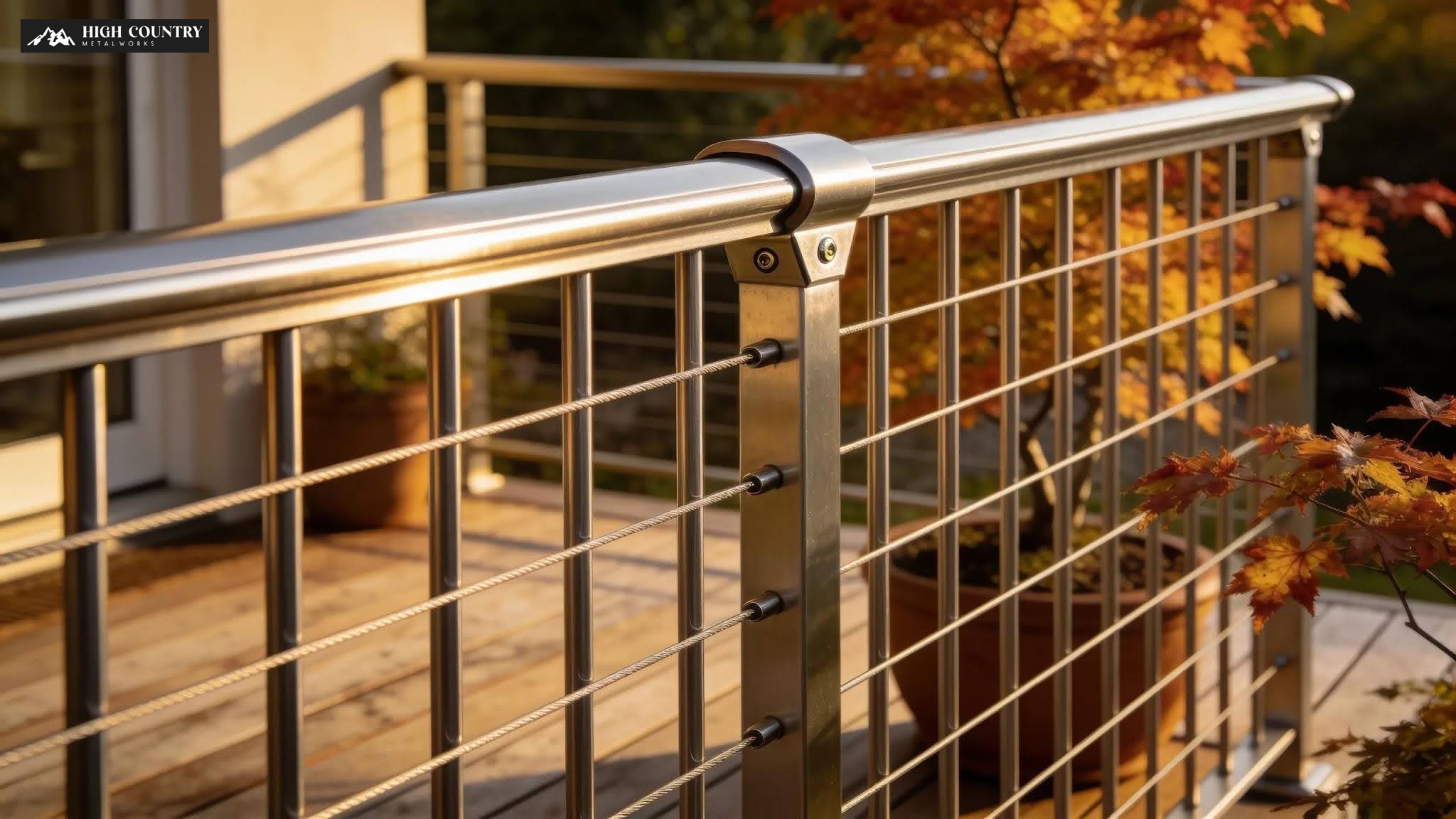
Material selection affects durability, maintenance requirements, visual character, and long-term cost. The three most widely used metals for patio railing are aluminum, wrought iron, and steel.
Aluminum
Lightweight and corrosion-resistant without additional coating
Well-suited to wet or coastal climates
Accepts powder coating in a wide range of colors
Low maintenance without sacrificing design flexibility
Wrought Iron
Delivers a classic, heavily detailed aesthetic that suits traditional and historic architecture
Strong and heavy, contributing to a solid, permanent feel
Requires regular painting or sealing to prevent rust
Best suited to moderate climates or covered outdoor areas
Steel and Stainless Steel
Offers the broadest structural performance range
Mild steel allows expressive custom fabrication but requires protective finishing
Stainless steel resists corrosion without coating and suits modern, minimalist designs
Preferred for indoor patio handrails and covered outdoor spaces due to clean welds and finish compatibility
Metal Comparison at a Glance
Aluminum: High corrosion resistance, light weight, moderate design flexibility, and low maintenance.
Wrought Iron: Low corrosion resistance when uncoated, heavy weight, high design flexibility, and high maintenance.
Steel / Stainless Steel: Variable corrosion resistance depending on the type, moderate to heavy weight, high design flexibility, and low to moderate maintenance.
How Do Metal Patio Railings Enhance Outdoor Aesthetics?
A well-designed outdoor patio railing is not a safety afterthought; it's a design element that defines the visual boundary of an outdoor living space. The profile, material, finish, and baluster pattern all contribute to the overall look of a patio, deck, or entry.
Architectural Harmony
Metal railings can be fabricated to mirror or complement the lines of a home's exterior:
Contemporary homes benefit from flat bar steel railings with minimal ornamentation
Traditional homes pair well with wrought iron featuring scrollwork or decorative collars
Finish Customization
Powder coating, paint, and brushed or polished metallic finishes integrate railings with exterior color schemes
Custom color matching is standard for fabrication shops producing one-off residential installations
Door hardware, exterior lighting, and trim can all inform finish selection
Profile and Baluster Options
Flat bar and square tube provide visual structure and a defined enclosure
Round tube offers a softer, more traditional profile
Cable railing systems preserve sightlines on scenic properties
Vertical bar systems increase perceived enclosure, useful for privacy or defining outdoor rooms
Indoor Patio Handrails
In sunrooms, enclosed patios, or interior stairways leading to outdoor spaces, railings must balance interior design standards with structural performance. Custom metal fabrication allows these transitions to feel intentional rather than utilitarian.
What Are the Key Installation Considerations for Patio Deck Handrails?
Installation quality determines how long a railing performs and how safe it is under load.
Accurate Measurement and Layout
Heights, span lengths, post spacing, and stair angle all affect fabrication dimensions
Errors at the measurement stage require costly rework at installation
Professional installers document all critical dimensions before fabricating any components
Anchoring and Post Setting
Posts must be anchored securely to the substrate using hardware rated for the expected load. Three common methods include:
Surface-mounted post bases — suited to existing deck framing or concrete slabs
Through-bolted posts — provide high strength on wood-framed decks
Embedded posts — used in new concrete pours for maximum rigidity
Improper anchoring is the leading cause of railing failure under load.
Code Compliance
Most residential jurisdictions require:
Guards (closed railings) at surfaces 30 inches or more above grade
Handrails (graspable rails) along stairs with two or more risers
Minimum heights of 36 inches (standard decks) or 42 inches (elevated surfaces)
Baluster spacing of no more than 4 inches
Requirements vary by code version and jurisdiction. Confirm applicable standards with your local building office before finalizing the design.
Professional vs. DIY Installation
Experienced fabricators read site conditions, select appropriate anchoring hardware, and achieve proper alignment
DIY installation is feasible for simple systems with documented instructions
Elevated decks, stairways, and complex geometry typically benefit from professional involvement
How Do You Maintain Metal Patio Railings Long-Term?
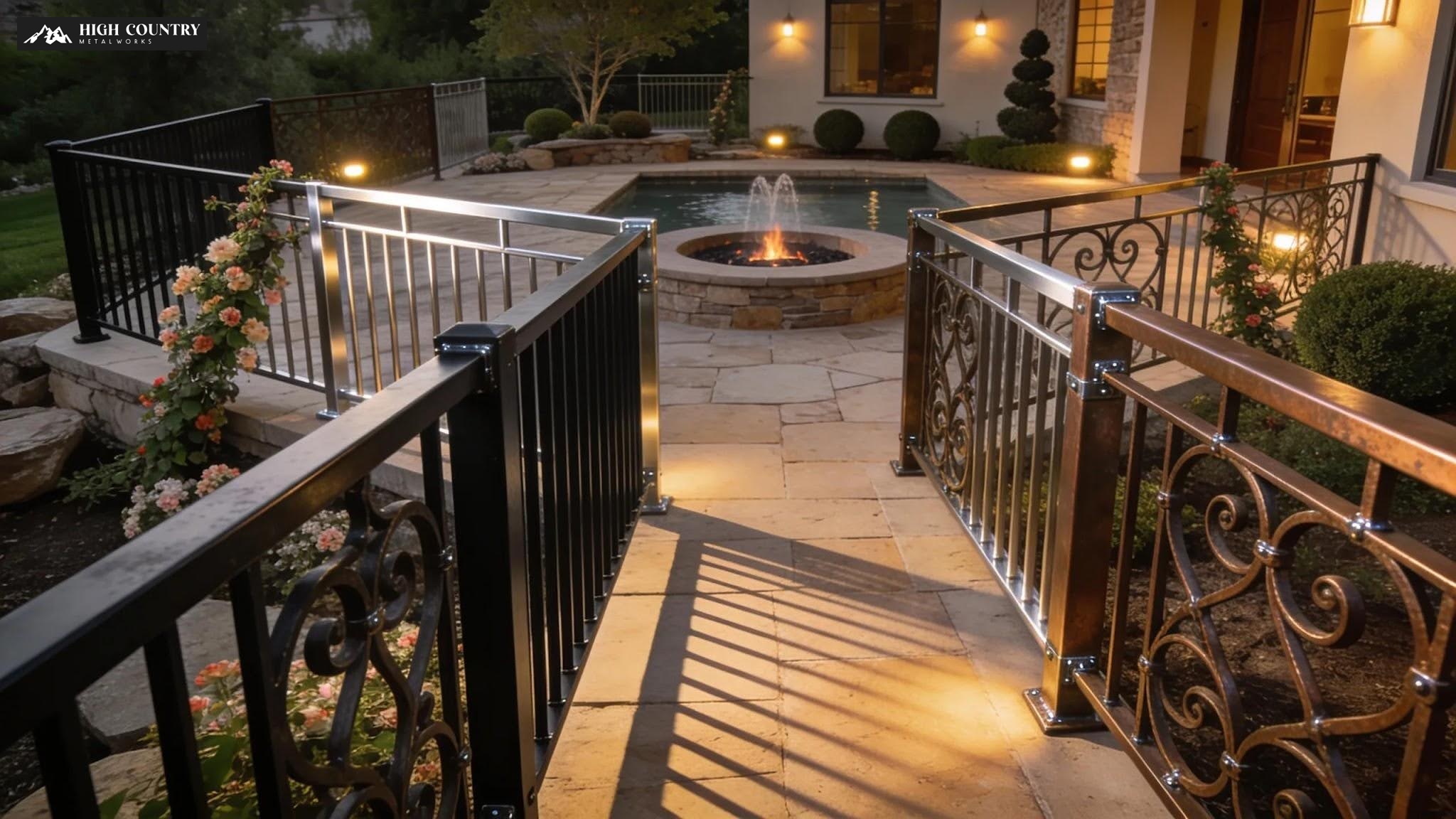
Routine maintenance preserves structural integrity, prevents corrosion, and keeps railings looking as intended for years after installation.
1. Scheduled Inspections
Inspect patio handrails at least twice per year, in spring and fall, and after any significant weather event. Look for:
Rust formation or finish deterioration
Loose fasteners or movement at post bases
Damaged welds or cracked components
Address findings promptly before minor issues compound into structural problems.
2. Cleaning
Wash with mild soap and warm water using a soft cloth or brush
Rinse thoroughly and allow to dry completely
Avoid abrasive pads, wire brushes on finished surfaces, or chlorine-based cleaners that strip protective coatings
3. Rust Management
Surface rust on steel or iron railings should be addressed quickly:
Sand or wire brush affected areas to bare metal
Apply a rust-inhibiting primer
Recoat with exterior-grade paint or powder coating
Letting rust advance compromises structural integrity at welds and post connections.
4. Protective Coatings
Reapply paint, sealant, or wax-based protective products every two to three years, depending on climate and exposure
Powder-coated aluminum requires less frequent intervention than painted steel or wrought iron
What Safety Standards Govern Patio Handrail Design?
Residential patio railings in the U.S. are primarily governed by the International Residential Code (IRC) and local amendments. Key thresholds include:
Guard height: 36 inches minimum for decks under 30 feet above grade; 42 inches for higher surfaces
Baluster spacing: 4-inch maximum opening
Handrail graspability: 1.25–2 inch diameter for stair rails
Always verify requirements with the local authority having jurisdiction before finalizing the design.
Ready to Upgrade Your Outdoor Railing?
Patio handrails are structural components that directly affect safety outcomes and property aesthetics. Choosing the right material, specifying compliant dimensions, and committing to routine inspection and maintenance determine how well your railing system performs over its service life.
At High Country Metal Works, we fabricate custom metal patio handrails, patio deck handrails, and stair railings built to exact site dimensions and finished to complement your home's design. Every system we produce is built for long-term structural performance, not just appearance.
Frequently Asked Questions About Patio Handrails
1. What height should patio handrails be?
Most residential codes require patio railings to be at least 36 inches high for decks under 30 feet above grade and 42 inches for higher elevations. Always verify with your local building department before installation.
2. What is the maximum spacing between balusters on a patio railing?
Building codes generally require baluster spacing of no more than 4 inches to prevent a 4-inch sphere from passing through a standard set to prevent child entrapment.
3. Do I need a handrail for patio steps with just one or two stairs?
Most residential codes require a handrail when a stairway has two or more risers. Even when not required, adding a handrail to patio steps significantly reduces fall risk, especially for older adults.
4. How long do metal patio railings typically last?
With proper installation and routine maintenance, aluminum patio railings can last 30+ years; powder-coated steel and wrought iron typically last 15–25 years, depending on climate exposure and maintenance consistency.
5. Can outdoor patio handrails be powder-coated to match my home's exterior?
Yes. Custom powder coating is standard for fabricated metal railings and offers a wider color range, better durability, and superior UV resistance compared to spray paint applied on-site.


