St. George Metal Fabrication Built for Year-Round Warmth and Heat
St. George metal fabrication works on the design plans for heat movement, not just heat resistance. The metal works St. George homeowners rely on pair UV-stable powder coating with lighter colors. Strong metalwork design for St. George also puts expansion allowances on the drawings, because most failures start at the joints, not in the steel.
Southern Utah gives metal a punishing job. The National Weather Service verified a state-record 117°F in St. George in July 2021, and the average July high sits near 102°F. A railing or gate must hold its shape, finish, and fit through decades of that heat, plus cold winter nights. Good metalwork design for St. George treats every season as a load case.
Key Takeaways
Heat damage comes from repeated cycles of expansion and contraction, not a single hot day.
Aluminum expands roughly twice as much as carbon steel, and 316 stainless moves more than carbon steel, so no metal removes the need for expansion planning.
Lighter, UV-stable powder-coat colors run cooler and hide fading better.
Expansion details, finish system, and fasteners belong in writing before fabrication starts.
Why St. George Heat Is Hard on Metal
Heat alone rarely ruins metalwork. Repetition does. The sun heats the metal; it expands, it cools overnight, and it contracts. St. George repeats that cycle every day of the year, with the amplitude shifting by season.
Air temperature understates the problem. KUER reported that daytime highs in July 2024 averaged a record 107.9°F in St. George. Metal in direct sun runs far hotter than the air around it. Arizona State University researchers found that playground metal railings can exceed 150°F in direct Arizona sun, and three seconds of contact can burn a child's skin. St. George shares that desert climate, so treat it as a fair benchmark for exposed handrails.
Three forces work together on every exterior install:
Solar loading and UV chalk and fade finishes.
Thermal cycling stresses welds, anchors, and joints.
Monsoon moisture reaches any chip in the coating and sits against bare metal until the sun dries it.
Winter matters as well. A sunny afternoon that follows a near-freezing night still moves a long rail. Year-round performance means designing for the full annual range, not only July.
Thermal Expansion Decides How Long a Railing Stays Straight
Every metal grows when heated. The design question is how much, and where that growth goes. This table shows the expected change on a 20-foot run for an illustrative 100°F swing, such as a 30°F winter morning followed by a 130°F sun-heated surface.
Aluminum is a popular railing choice because it sheds heat quickly and does not rust, but it moves about twice as much as steel. Stainless is not immune either. Some marketing claims that a particular alloy "handles" thermal cycling without movement. No structural metal does. The detailing does the work.
Consider a 20-foot aluminum rail welded rigidly between two fixed walls. Nearly a third of an inch of growth has nowhere to go, so the force transfers into welds, anchors, and the masonry around them.
Expansion Joints and Connection Details That Prevent Warping
Expansion planning starts on the drawings, not in the field. These details do most of the work on long runs, gates, and staircases:
Sectioned runs: Break long rails and fences into sections joined by slip sleeves or deliberate gaps.
Slotted connections: Use slotted holes at one end of long bolted members so the metal can slide.
Latch and hinge clearance: Size gate gaps for the widest seasonal opening, not the day of installation.
Dissimilar metals: Isolate aluminum from steel fasteners to prevent galvanic corrosion.
Anchor design: Choose anchor details that tolerate movement instead of locking both ends.
One practical rule: check the fit at more than one temperature. A latch that closes at 7 a.m. must still close at 4 p.m. in July. Afternoon ticking from a rail, hairline cracks in paint along weld lines, and a latch that sticks only in summer are early signs that movement has no relief path.
Installation timing matters as well. Metal installed on a 105°F afternoon is already near its expanded length, while metal installed on a cold January morning is contracted. Ask the installer to record the temperature at setting, then confirm that joint gaps leave room in both directions.
Cable infill deserves a separate note. Tension drifts as temperature and frame movement change, so specify accessible tensioners and a first-season tension check.
Finishes That Survive Southern Utah UV
Finish choice determines how metal looks in year five and year fifteen. Four decisions matter most:
Powder coat over liquid paint. Powder coating cures into a thicker, more uniform film than most field-applied paint. Ask for a super-durable polyester powder and request the manufacturer's outdoor weathering data.
Surface preparation. Cleaning, pretreatment, and primer determine adhesion. Skipped prep shows up as coating lifting from below within a few summers.
A duplex system for steel. Hot-dip galvanizing under a powder-coat topcoat gives carbon steel two barriers against corrosion.
Color. Dark bronze and black absorb the most solar energy, so they heat up fastest and chalk first. Lighter tones reflect more sunlight and keep handrails more comfortable to grip.
For families with young children or elderly residents, touch temperature is a safety issue as much as an aesthetic one. Shade and lighter color help most.
Maintenance protects the finish after installation. Wash exterior metal with mild soap and water a couple of times a year, inspect edges and weld lines for chips, and touch up damage promptly. Monsoon season is the deadline, because moisture reaches exposed metal through the smallest break in the coating.
Metalwork Design St. George Homeowners Should Specify
A strong design brief removes guesswork before fabrication begins. Put these items in writing:
Material and grade for each component, including fasteners
Finish system, including pretreatment, primer, powder type, and color
Expansion plan shown on drawings, with section lengths and joint types
Anchoring method for concrete, sandstone, or wood framing
Sun exposure, since south- and west-facing runs take the hardest load
Permit and HOA requirements, which vary by city and subdivision
Design style interacts with climate too. Open cable and horizontal-bar designs preserve views of red rock, and slim profiles suit modern desert architecture. Heavily ornamental scrollwork creates more edges and crevices where coatings thin and chip. Wind loads in open desert corridors also matter, so ask the fabricator to confirm structural capacity in writing.
Choosing a Fabricator Built for Desert Conditions
Anyone can quote a railing. Fewer can explain how it will behave in August. These questions separate climate-aware shops from generic ones:
Can you show the expansion plan on the drawings?
Which powder system do you use, and can you share its weathering data?
Can you provide references from projects that have survived several Southern Utah summers?
Who handles installation, and how are clearances set?
What does the finish warranty cover, and what voids it?
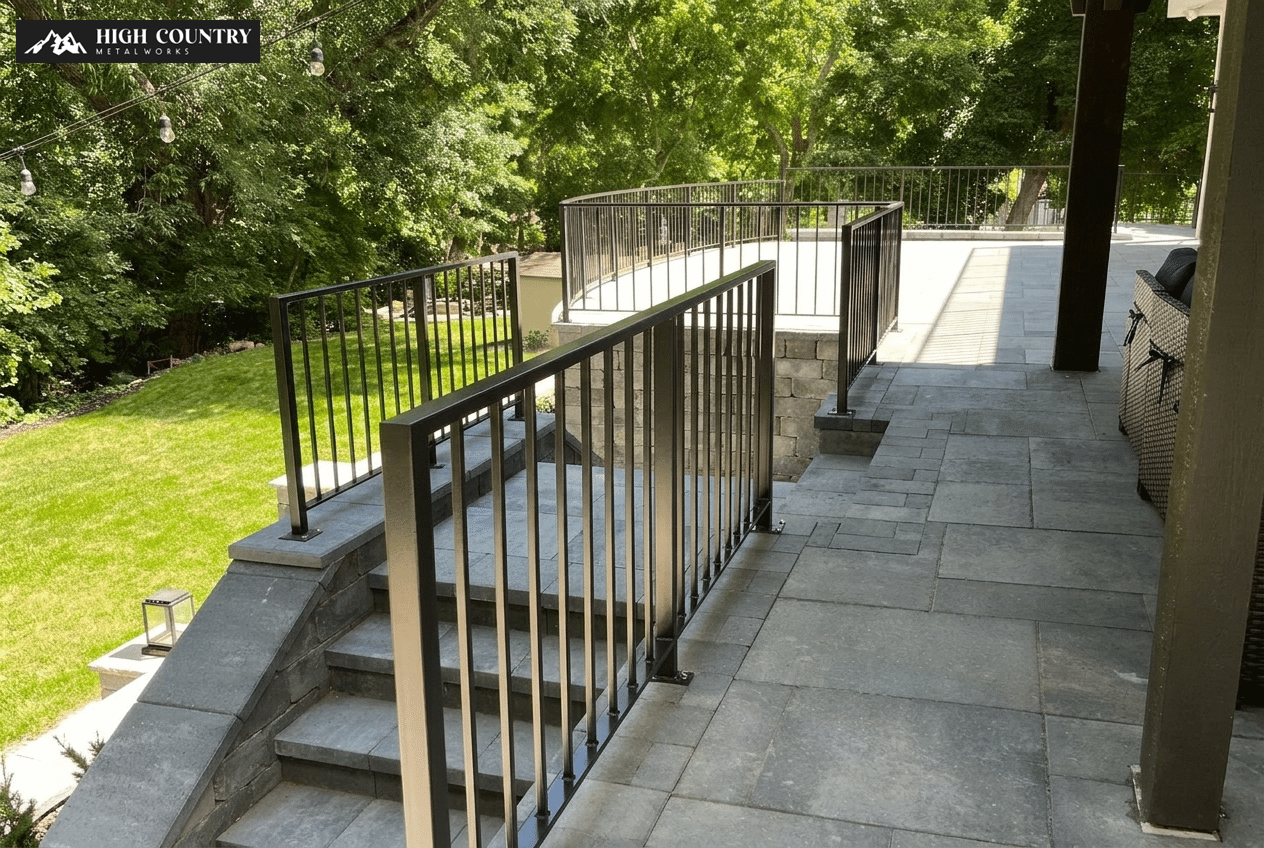
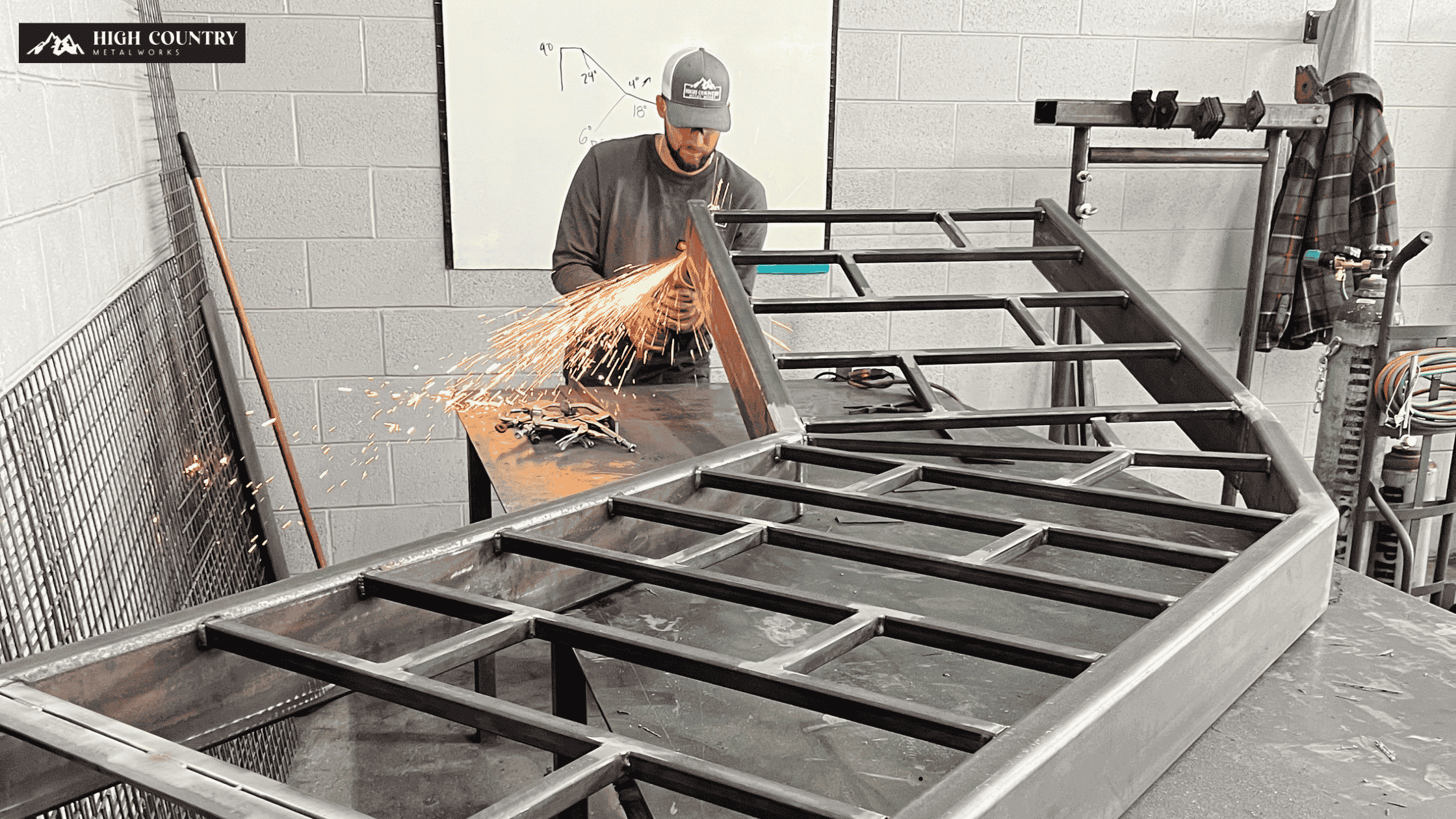
High Country Metal Works fabricates custom railings, staircases, gates, fences, planter boxes, and structural steel for homeowners, contractors, and developers, and it designs for thermal movement from the first drawing—clear communication about materials, finishes, and maintenance matters as much as the welds.
Conclusion
Metal in St. George rarely fails from heat alone. It fails when the design ignores movement, UV, and sun exposure. Choose a fabricator who shows the expansion plan, specifies a UV-stable finish system, and explains material trade-offs plainly. Do that, and railings, gates, and staircases stay straight, secure, and sharp through every season.
Homeowners comparing quotes should weigh the expansion plan and finish specification as heavily as price, because those two items decide how the metalwork looks and functions a decade from now. To discuss a project, contact High Country Metal Works for a custom quote.
FAQ
How much does metal expand in St. George heat?
A 20-foot aluminum rail can grow about 0.3 inches over a 100°F temperature swing, while carbon steel grows about 0.16 inches. Expansion joints and slotted connections give that movement a safe place to go.
What metal is best for railings in St. George?
Powder-coated aluminum is the low-maintenance choice for most residential railings, and galvanized steel with a powder-coat topcoat suits heavy-duty or security applications. Both need expansion allowances.
What color metal railing stays coolest in the sun?
Lighter colors such as white, light gray, or tan reflect more solar energy than dark bronze or black. Shade lowers surface temperature further.
Do gates and railings need expansion joints in Southern Utah?
Yes, long runs, gates, and staircases need expansion joints, slotted connections, or sleeved splices so daily temperature swings do not warp rails or crack welds. Short, freestanding sections need less.
What should I ask a St. George metal fabricator before hiring?
Ask to see the expansion plan, the powder-coat weathering data, local references, and the finish warranty terms. A fabricator who explains these clearly has built for desert conditions before.


