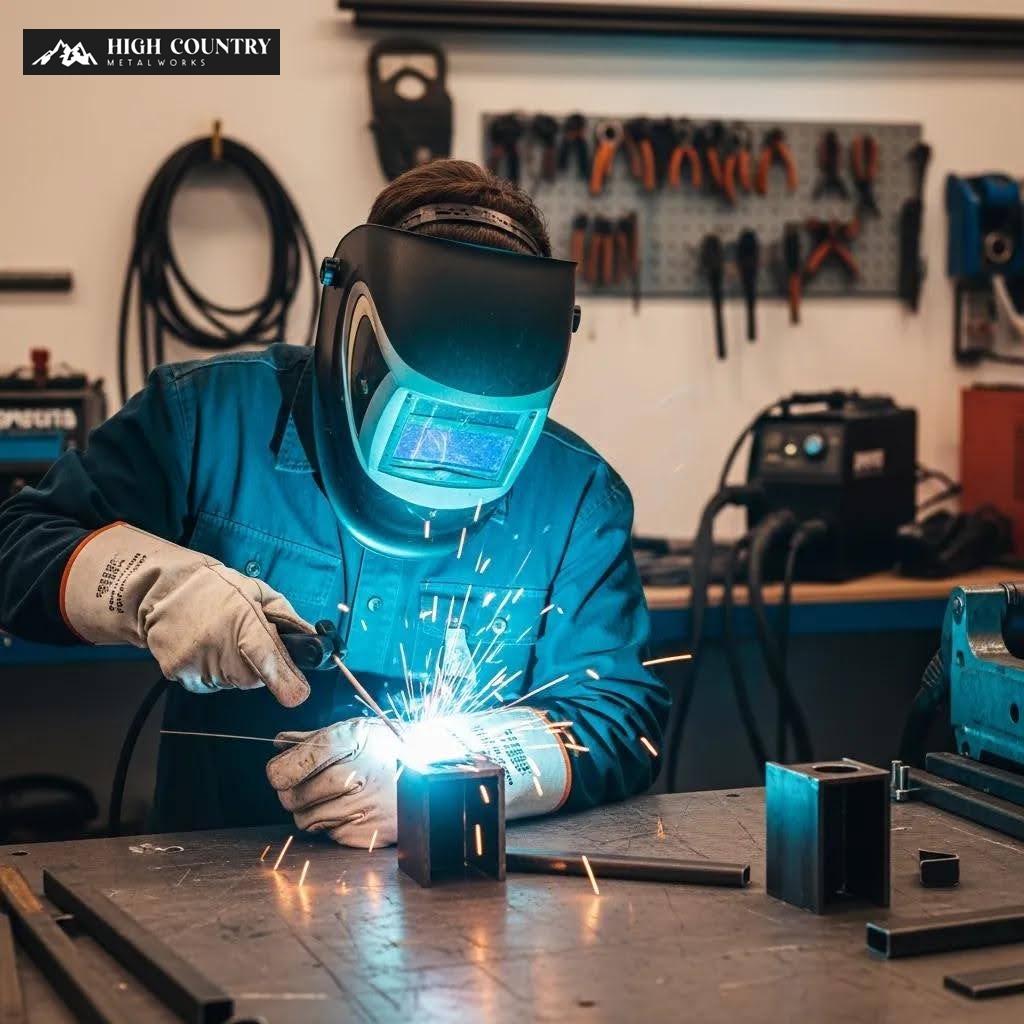
How to Weld: Beginner's Welding Metal Guide + Safety Tips
Welding joins metal by melting and fusing pieces together using heat, electricity, or gas. Beginners should start with MIG welding, use proper safety gear, clean materials thoroughly, and practice basic bead techniques on scrap metal. Consistent setup, ventilation, and patience are key to strong, safe welds.
Key Takeaways
Welding fuses metal by applying heat to create strong, permanent joints
MIG welding is the easiest and most beginner-friendly process to start with
Proper safety gear and ventilation are essential for safe welding
Clean, well-prepped metal leads to stronger, cleaner welds
Regular practice on scrap metal builds skill, control, and confidence
Welding blends hands-on craft with practical engineering; it's how separate pieces of metal become something functional and durable. Whether you're looking to tackle home repairs, build custom projects, or explore a new skill, welding offers endless creative and practical possibilities.
This comprehensive guide walks you through everything you need to know as a beginner: understanding welding fundamentals, choosing the right process, gathering essential equipment, establishing safe shop habits, preparing materials properly, mastering basic techniques through structured practice, troubleshooting common problems, and knowing when to call in professional help.
Understanding Welding Fundamentals: What Beginners Need to Know

At its core, welding joins metal by melting the contact points and letting the pieces fuse as they cool. It's used everywhere from home repairs to heavy construction because it creates strong, permanent joints when done correctly. The process works by applying intense heat, sometimes with filler material and sometimes without, so the two parts melt together and form a solid connection once cooled.
Common methods include arc welding (using electrical current), gas welding (using flame), and resistance welding (using pressure and current). Each method has its place in metalworking, so understanding the differences will steer you toward the best choice for your specific metal type, thickness, and available setup.
Which Welding Processes Are Best for Beginners?
Starting your welding journey with the right process makes all the difference. These three approachable methods dominate the beginner landscape:
MIG Welding (Metal Inert Gas): This is the most straightforward and versatile process for newcomers. A continuous wire feed serves as both electrode and filler material, while shielding gas protects the weld from contamination. The automation of wire feeding makes MIG welding forgiving for new welders and excellent for a wide range of projects. You can achieve good results relatively quickly, making it ideal for building confidence.
TIG Welding (Tungsten Inert Gas): This method gives very precise control and produces clean, high-quality welds with excellent appearance. It requires more coordination. You control a non-consumable tungsten electrode with one hand while feeding filler rod with the other, but the skill is worth learning for fine work on thin materials or when aesthetics matter.
Stick Welding (Shielded Metal Arc Welding/SMAW): Simple in equipment requirements and extremely portable, stick welding excels outdoors and in less-than-ideal conditions. It tolerates dirt and rust better than other methods, making it particularly useful for repairs, farm work, and rougher field conditions where you can't control the environment.
Most beginners find success starting with MIG welding to build fundamental skills, then exploring TIG for precision work or stick welding for versatility and portability.
Essential Equipment and Safety Gear: Building Your Beginner Setup
Before you strike your first arc, assembling the right equipment and protection is absolutely critical. Cutting corners on safety gear or choosing inappropriate tools will undermine your progress and put you at risk.

Core Welding Tools for New Welders
Welding Machine: A MIG or stick welder makes a solid starting choice; both are durable, widely available, and easier to learn than some alternatives. For MIG welding on mild steel around 1/8" thick, you'll typically set voltage between 17-19V with wire speed at a 3-4 setting, though this varies by machine. Always verify your polarity is set to DCEP (electrode positive) for MIG work.
Consumables and Accessories: For MIG welding, you'll need wire spools (typically .030 or .035 diameter for beginners) and shielding gas. A mixture of 75% Argon and 25% CO2 works well for steel. For stick welding, choose electrodes suited to your base metal and welding position. Set your gas flow between 15-20 CFH (cubic feet per hour) for adequate shielding without waste.
Welding Helmet: Invest in a quality helmet with auto-darkening lenses. This protects your eyes from harmful UV radiation while letting you see your work clearly before striking the arc. The lens darkens instantly when you start welding, eliminating the need to flip a helmet up and down repeatedly.
Welding Gloves: Thick, heat-resistant leather gloves protect your hands from sparks, spatter, and hot metal. Choose gloves that allow enough dexterity to control your torch while providing robust protection.
Clamps and Fixtures: Quality clamps, magnets, and fixtures hold parts steady so your fit-ups stay accurate while you weld. Good fixturing is essential for consistent results, especially when you're still developing steady hands.
Training tools like simulated MIG rigs can significantly shorten the learning curve by letting beginners practice equipment setup and basic hand motions safely before working with live arcs, a low-cost way to build competence and confidence.
Non-Negotiable Safety Equipment and Practices
Safety isn't optional in welding; it's the foundation of everything you do. These precautions will keep you and your workspace protected:
Complete Protective Clothing: Wear flame-resistant long-sleeve shirts and long pants made from cotton or other natural fibers, never synthetics that can melt. Add a leather jacket or apron for extra protection when needed. Closed-toe leather boots and safety glasses worn under your helmet complete the ensemble. Every inch of exposed skin invites burns from UV radiation or hot spatter.
Proper Ventilation: Weld only in well-ventilated spaces or use local exhaust ventilation to avoid breathing hazardous fumes. Welding produces metal fumes, ozone, and other airborne contaminants that pose serious respiratory risks. An outdoor workspace or shop with proper airflow is essential.
Fire Prevention: Keep an appropriate fire extinguisher within easy reach and clear all flammable materials from your work area. Sparks can travel surprisingly far and ignite materials you didn't think were at risk. Establish a clear zone around your welding area.
Follow Manufacturer Guidelines: Read and understand your machine's manual. Proper setup, correct settings, and routine maintenance prevent equipment failures and accidents. Don't skip this step; many beginner problems stem from incorrect machine setup.
Material Preparation: The Foundation of Quality Welds
Good preparation prevents many welding problems before they start. Clean surfaces, square edges, and correct fit-up make welding easier and produce stronger joints.
Cleaning and Cutting Metal for Success
Remove rust, paint, oil, and other contaminants thoroughly with a wire brush, angle grinder with flap disc, or chemical cleaner before welding. Clean 1-2 inches around the intended weld area. Contaminants cause porosity, weak fusion, and other defects. Cut practice pieces to size with a plasma cutter, metal saw, or angle grinder so parts line up cleanly.
For initial practice, prepare two pieces of mild steel plate measuring 4" x 6" and between 1/8" and 3/16" thick. Mild steel is affordable, forgiving, and widely available, perfect for building fundamental skills.
Understanding Joint Types and Proper Fit-Up
Knowing common joint configurations helps you plan fit-up and select an appropriate welding technique:
Butt Joint: Two pieces meet edge-to-edge, requiring good penetration through the full thickness. Leave a small gap (about 1/16") between pieces to ensure proper fusion.
Lap Joint: One piece overlaps another, creating a larger weld area and generally easier for beginners since you're welding at the edge of the overlap.
Tee Joint: One piece sits perpendicular to another, forming a "T" shape. This requires attention to both sides of the joint for proper fusion.
Proper alignment and tight, consistent gaps help you achieve solid, defect-free welds. Use clamps, magnets, or fixtures to hold everything in place before you start.
Mastering Basic Welding Techniques Through Deliberate Practice

Focus on fundamental motions and settings rather than chasing perfection on your first attempts. Repetition on scrap metal builds muscle memory faster and more effectively.
1. Striking and Maintaining a Stable Arc
To strike an arc with MIG welding, pull the trigger and gently touch the wire to your workpiece, then pull back slightly to establish arc length. Maintain a consistent distance of about 1/4" to 3/8" between the contact tip and the work; too close causes the wire to stick, too far creates an unstable arc with excessive spatter. Listen for a steady "bacon frying" sound that indicates proper arc stability.
Position yourself comfortably with good support. Stand or sit where you can rest your welding arm on the table for stability. Hold your gun about perpendicular (90 degrees) to the metal surface with a slight 5-15 degree tilt in your direction of travel. Practice striking and holding the arc on scrap metal until this becomes natural.
2. Running Straight Beads and Welding Common Joints
Running a straight bead means moving your torch or electrode with a steady speed and consistent angle. Start slowly on scrap material, focusing on developing a smooth, rhythmic motion. Maintain the same travel speed, roughly one inch per second, for beginners throughout the weld. Watch the weld puddle forming just behind the arc and adjust your speed to keep the puddle size consistent.
For your first practice sessions, simply run straight beads across a flat plate without trying to join anything. Use a straight edge or piece of angle iron as a guide if needed. Don't weave side-to-side yet, just push forward steadily. Consistency in angle, arc length, and travel speed creates even welds with good penetration.
After mastering flat beads, progress to actual joints. Start with butt joints on flat-positioned pieces, then move to lap joints and tee joints as your confidence grows.
3. Structured Practice Routine for Steady Improvement
Week 1-2: Focus on safety protocols, machine setup, and running straight beads on a flat plate. Work on controlling arc length and finding a comfortable travel speed.
Week 3-4: Progress to butt joints in flat position. Practice checking for adequate penetration and improving bead appearance. Aim for the "stack of dimes" ripple pattern that indicates good technique.
Week 5-6: Tackle lap and tee joints. Begin experimenting with vertical and horizontal welding positions. Consider a small first project, like simple shelf brackets or a basic toolbox.
Spend 15-30 minutes per practice session running 10-20 beads on scrap metal. Compare each bead to the previous one, noting improvements or problems. Adjust only ONE variable at a time. This makes it easier to understand what changes improve your results.
Troubleshooting Common Beginner Mistakes
Mistakes are inevitable, and valuable; they're how you learn. The key is recognizing common issues quickly and understanding how to correct them.
Identifying and Fixing Porosity and Undercut
Porosity appears as small holes or voids in your weld, usually caused by trapped gas. Common culprits include dirty metal, insufficient shielding gas coverage, improper gas flow rate, or excessive travel speed. Clean your workpiece more thoroughly, verify gas connections and flow rate, and adjust your technique.
Undercut is a groove or depression at the weld toe where the base metal has melted away but hasn't been filled with weld metal. Slow your travel speed or adjust your angle slightly to allow the molten filler to properly fill the joint.
Ensuring Adequate Penetration and Fusion
Good penetration means the weld and base metal have melted together sufficiently throughout the joint's depth. If your weld looks flat and weak or sits on top of the metal like a blob, you need more heat or slower travel. Increase the voltage slightly or reduce your speed to allow deeper melting. Visual inspection and simple destructive testing on practice pieces will show whether you're achieving proper fusion.
Quick Reference for Common Problems:
Holes in weld: Usually from dirty metal or low gas coverage, clean more thoroughly and verify gas flow
Tall, narrow bead: Travel speed too slow, move faster
Flat, wide bead: Travel speed too fast, slow down
Excessive spatter: Voltage too high, your setting, and verify the metal is clean
Wire keeps sticking: Increase the voltage slightly or check that the wire speed isn't too slow
Weld looks cold and lumpy: Increase heat, slow travel, or reduce stickout distance
When to Call Professional Welders and Explore Custom Fabrication

Some projects demand certified expertise, especially when safety, structural integrity, or building codes are involved. Understanding your limits protects both you and others.
Projects Requiring Professional Certification
Structural work supporting loads, pressure vessels, automotive frame repairs, and any application governed by safety regulations should be handled by certified professionals. When building codes apply or liability is a concern, consult an expert to ensure the work meets all requirements.
High Country Metal Works offers custom fabrication and welding services throughout Utah for residential and commercial clients. With over 15 years of experience, our certified fabricators handle custom railings, staircases, planter boxes, and complex projects, delivering craftsmanship that meets both design intent and code requirements.
Your Path Forward in Welding
Learning to weld opens practical possibilities: repairs you can handle yourself, custom builds that express your vision, and creative metalwork that blends function with artistry. Start with proper safety gear and the right equipment, focus on safe practices, and build fundamental skills through steady practice on scrap material.
Progress from running simple beads to joining basic pieces, then gradually tackle more challenging positions and joint types. Consider taking a formal class for hands-on coaching and joining welding communities where experienced welders genuinely enjoy sharing knowledge.
Ready to start? Gather your safety gear, set up your machine following the manufacturer's instructions, and strike that first arc on scrap metal. Practice deliberately with specific goals for each session, and you'll see steady improvement. Stay patient, stay safe, and enjoy mastering this rewarding craft.
Frequently Asked Questions About Beginning Welding
How long does it take to learn basic welding skills?
Most beginners can run acceptable beads within a few practice sessions, but developing consistent technique takes 20-40 hours of hands-on practice. Expect 6-8 weeks of regular practice before attempting your first real project.
What's the minimum budget needed to start welding at home?
A basic starter setup costs between $500-800, including an entry-level MIG welder, essential safety gear, and basic consumables. Quality beginner machines run $300-400, with another $200-300 for helmet, gloves, protective clothing, and initial supplies.
Can I teach myself to weld, or do I need formal training?
Self-teaching is possible with dedication and quality resources, but formal instruction accelerates learning significantly. Many successful welders combine self-study with occasional classes for expert feedback and faster skill development.
Should my first welding project be?
Start with simple flat projects using basic butt or lap joints in mild steel. Good first projects include small shelf brackets, a basic plant stand, simple repairs, or a small toolbox.
How do I know if my welds are strong enough for structural use?
Visual inspection helps, but only destructive testing truly verifies strength. For anything structural or safety-critical, have a certified inspector evaluate your work or hire a professional. Practice projects shouldn't support significant loads until you've gained substantial experience.


