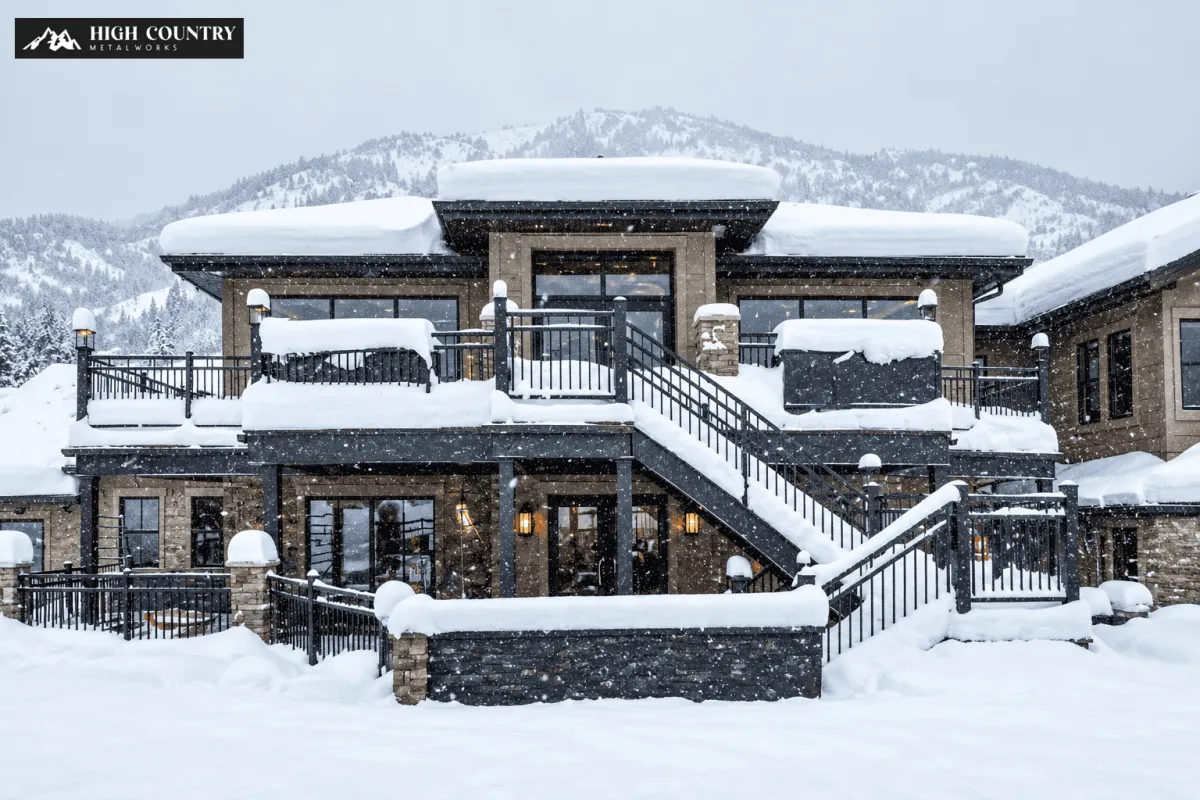
What to Fix Before Utah's First Snow Load Hits Your Property
Before snow load hits Utah properties, tighten loose railing posts and base plates, repair cracked welds and worn coatings, clear drainage around stairs, service gate hinges, and add snow guards above walkways. Then confirm your local design value under the Utah snow load code, because requirements change by jurisdiction and elevation.
Key Takeaways
Snow load is a design number set by jurisdiction and elevation, not one statewide figure.
Connections fail first: base plates, welds, fasteners, and hinges.
Sliding roof snow and trapped meltwater are common causes of bent rails and split posts.
The best repair window is October, before the ground freezes and storms stack up.
Utah winters test every piece of exterior steel on a property.
This guide covers what the code requires, where metal fixtures break down, and the fixes worth making before the first big storm.
Why Snow Load Puts Utah Properties at Risk
Snow load is the weight of accumulated snow a structure must carry, measured in pounds per square foot (psf). It is not a constant. Dense, wet snow can weigh several times more than dry powder, and that wet snow is what settles along the Wasatch Front, in Cache Valley, and in mountain-adjacent neighborhoods.
The risk builds quietly. Roof membranes crack or sag under sustained weight, and attached structures can partially fail when the load exceeds what the original design assumed. A run of heavy storms in early 2017 collapsed roofs across the western United States and pushed engineers and building officials to scrutinize snow load calculations more closely.
Metal fixtures face a slightly different problem. A railing rarely fails because of a static pile of snow on its cap. It fails because water gets into a joint, freezes, expands, and repeats that cycle a hundred times between November and March.
What the Utah Snow Load Code Requires
Utah adopts the International Building Code with state amendments, and the Utah Code amendments to the structural design chapter include the ground snow load provisions. The code assigns ground snow load values by location, so a mountain valley, a Wasatch Front city, and a high-elevation town each land on different numbers.
How ground snow load becomes a design number
Engineers start with the site's ground snow load and adjust it for elevation using a defined formula. Elevation matters enormously: a property at 7,000 feet carries a very different structural burden than one at 4,500 feet, even inside the same county. Utah State University researchers developed the underlying ground snow load data to balance safety against construction cost.
Local building officials can round the calculated roof snow load to the nearest 5 psf and can require a licensed engineer's review when site conditions call for it.
What this means for metalwork
In our work, the snow load code bites hardest on structures with a roof or a horizontal surface that collects snow: canopies, carports, pergolas, covered walkways, and structural steel attached to a building. Guardrails and handrails are governed mainly by guard height and load provisions rather than roof snow values. Residential deck guards generally need a 36-inch minimum height, measured from the finished surface to the top of the rail.
Before you order fabrication or plan an addition, call your local building department and ask for the ground snow load and any required roof snow load for your address. That single number shapes steel sizing, connection details, and cost.
Where Snow Load Damages Metal Railings, Gates, and Stairs
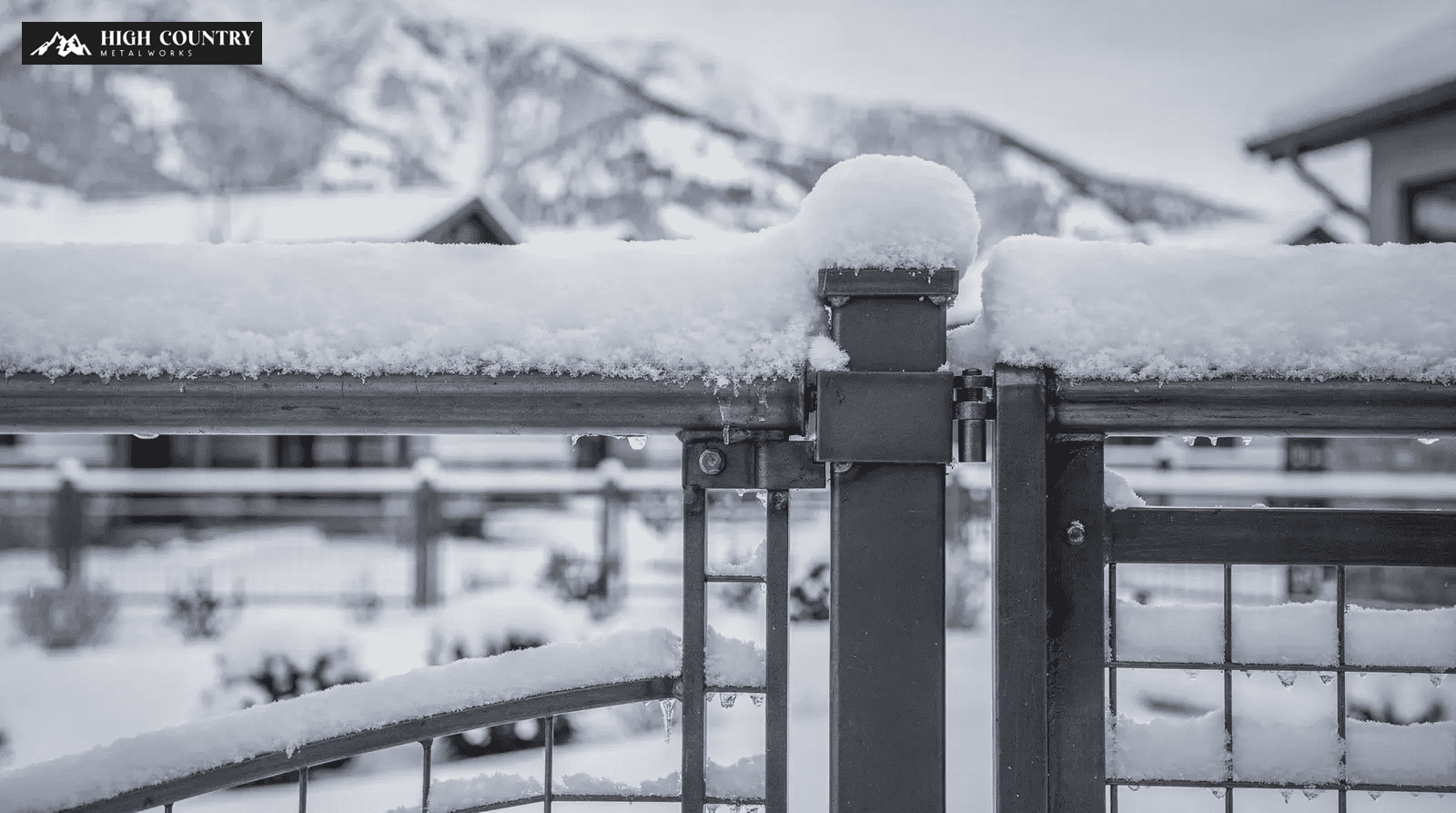
Utah's mix of heavy snow, intense summer sun, and sudden hail wears exposed steel from several directions at once, and a railing built for a mild coastal climate will not age the same way here.
Across the repairs we see, the same failure points repeat:
Post-to-deck connections loosened by repeated freeze-thaw cycling
Hollow posts and rails that trap water, freeze, and split at the seams
Welds and coatings breached by moisture during thaw periods
Fasteners that back out as metal expands and contracts through the winter
Gate hinges and latches that sag or bind once ice builds up
Frost-heaved gate posts that pull a gate out of alignment
Deicing salt makes every item on that list worse. It accelerates corrosion at any exposed weld, base plate, or scratched coating, so stairs and entry railings near walkways deserve extra attention.
That is why our custom metal railings and custom staircases are fabricated in-house for Utah's freeze-thaw conditions, with drainable posts, secure base plate connections, and durable coatings.
The Pre-Winter Fix List
A thorough walkthrough takes an hour or two and costs far less than an emergency repair in January. Work through these in order.
Push-test every post. Grip each railing post and try to rock it. Any movement at the base plate means anchors or a connection need attention before the ground freezes.
Inspect welds and joints. Look for rust streaks, hairline cracks, and chipped coating. Clean the area to bare metal and seal it with a zinc-rich primer and matching topcoat.
Confirm hollow posts can drain. Water trapped inside a tube post is one of the most common causes of winter splitting. Keep drain paths open and cap tops sealed.
Service every gate. Check hinge wear, latch alignment, and post plumb. A gate that drags in October will freeze shut in December.
Clear drainage near stairs and planters. Redirect downspouts and clear runoff paths so meltwater does not refreeze on treads, landings, or the base of planter boxes.
Add snow retention above walkways. Check what sits beneath roof edges. Sliding snow can bend railings and injure people, so entries and stairs under eaves deserve snow guards.
If any step reveals corrosion at a structural connection, treat it as a repair rather than a touch-up. Rust that has reached the load path does not stop on its own.
How Roofing Choices Change the Snow Load Picture
Metal roofing sheds snow before it compacts into dense layers, and that shedding also reduces ice dams along the eaves. Standing seam panels shed best because concealed fasteners leave a smooth, unbroken surface. Stone-coated steel and metal shingles also perform well and offer more traditional looks. Metal roofing systems commonly last 40 to 70 years, compared with roughly 15 to 20 for asphalt shingles.
There is a trade-off worth planning around. A roof that sheds snow well can release it all at once. Keep railings, stairs, gates, and parking areas out of the slide path, or install snow guards to hold the snow on the roof and let it melt off gradually.
When to Call a Fabricator and When You Need an Engineer
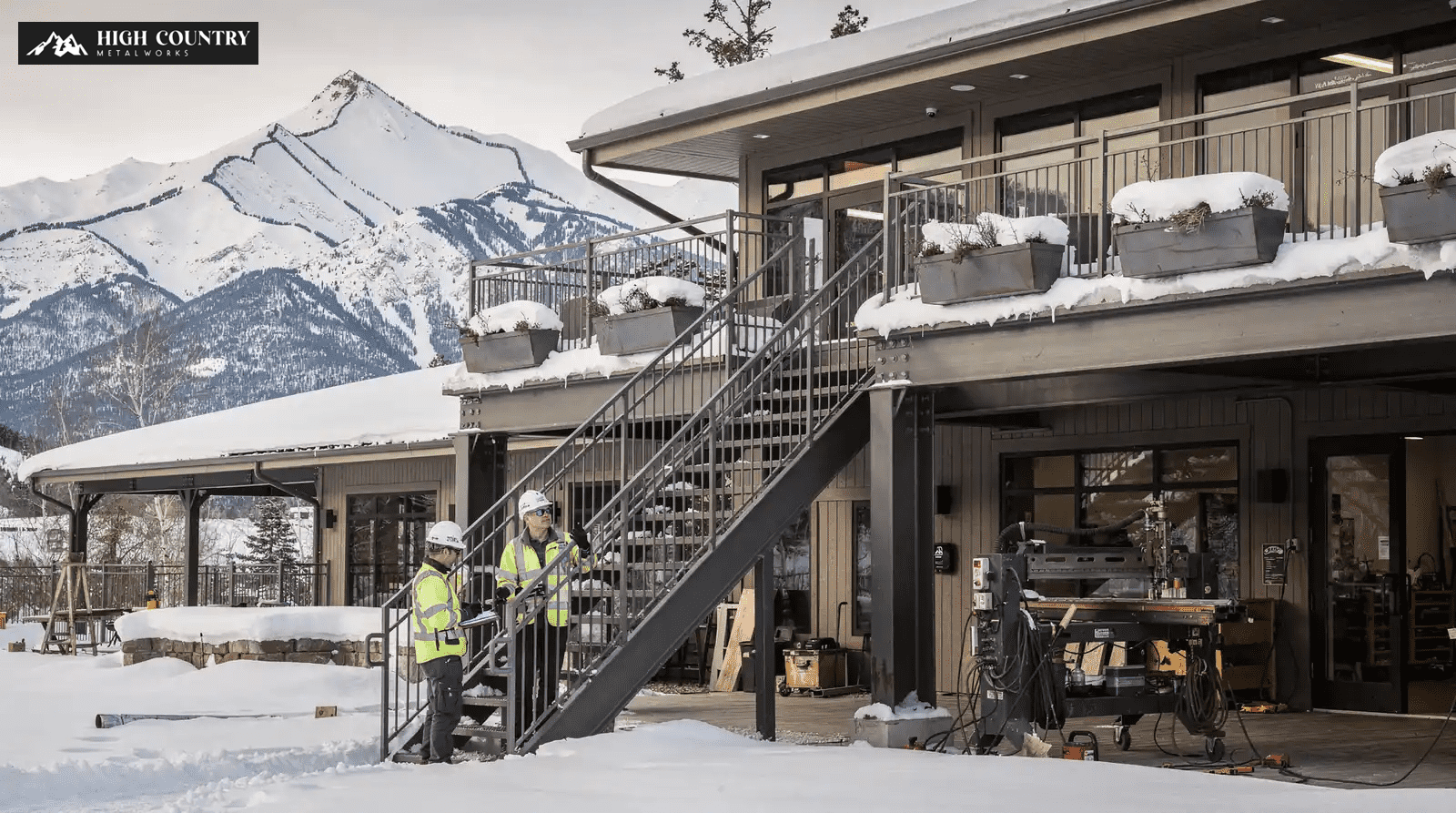
A fabricator handles the hands-on work: repairing or replacing railings, rebuilding gates, reinforcing connections, and fabricating custom metalworks to fit the site. An engineer is the right call for new structural steel, roof-mounted or attached structures, and any job where the building official asks for stamped calculations.
High Country Metal Works is based in Provo, close to some of the heaviest snow-belt properties on the Wasatch Front. Our eight-person team means inspection requests and fabrication orders get direct attention during the peak winter rush, and more than 20 years of building code-compliant railings, gates, planter boxes, and structural steel have taught us which connections fail first. If you are not sure what your property needs, start with a walkthrough of the fixtures you already have.
Conclusion
Snow load is predictable, and so is the damage it causes. Confirm your local code requirements, inspect every connection on your railings, gates, and stairs, keep water moving away from steel, and protect walkways from sliding roof snow. Do that in October, and winter becomes a routine season instead of a repair bill. If your property needs new or reinforced metalwork, High Country Metal Works can build it to Utah code and Utah conditions.
FAQ
What is snow load?
Snow load is the weight of accumulated snow that a roof or structure must be designed to support, measured in pounds per square foot (psf). Wet, dense snow produces a much higher load than light powder.
What is the Utah snow load code?
The Utah snow load code is the state's amended version of the International Building Code, which assigns ground snow load values by location and elevation. No single number applies statewide.
How do I find the snow load for my Utah property?
Contact your city or county building department and ask for the ground snow load and required roof snow load for your address. A licensed engineer can confirm the figure for a specific project.
When should I prepare metal railings and gates for snow load?
Inspect and repair them in early fall, ideally by October, before the ground freezes and heavy storms arrive. Fixing loose posts and worn coatings early prevents freeze-thaw damage from spreading.
Can snow load damage metal railings?
Yes, though the damage usually comes from freeze-thaw cycles, trapped water, and sliding roof snow rather than static weight alone. Loose base plates, cracked welds, and corroded fasteners are the most common failure points.


