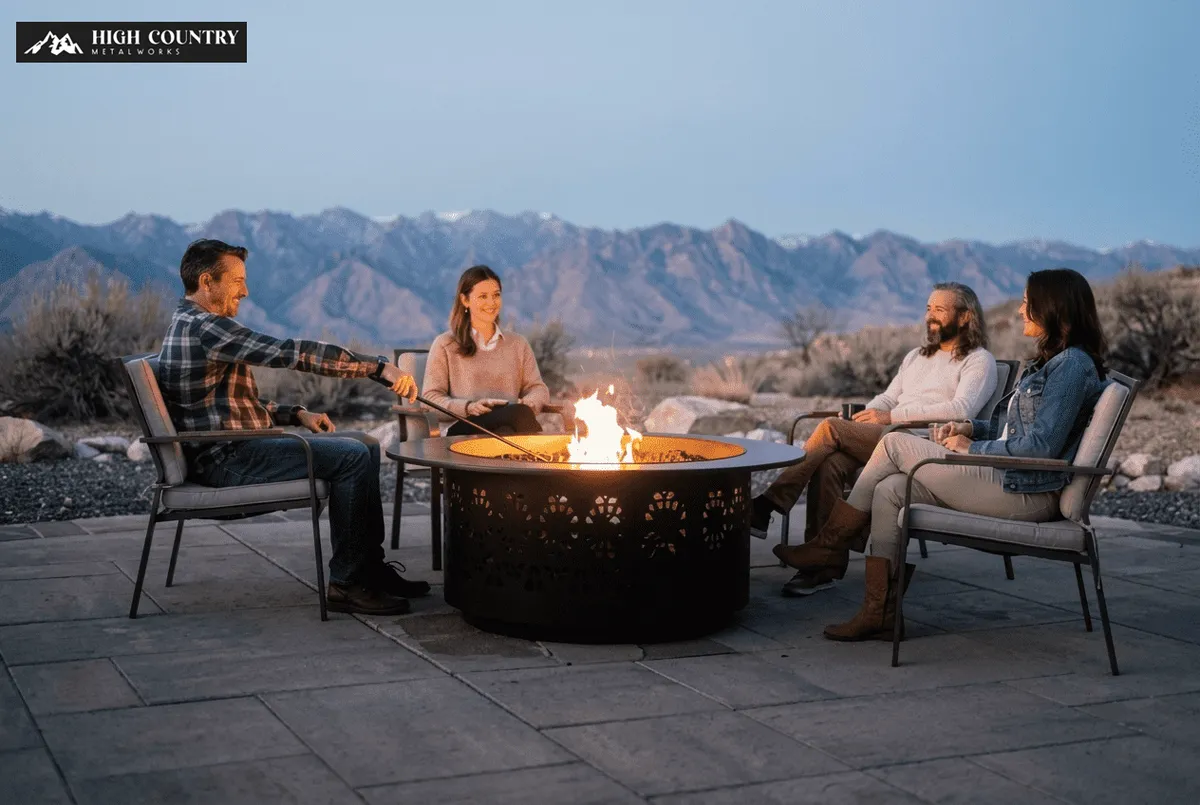
Custom Metal Fire Pits in Utah for Unique Backyard Designs
Custom metal fire pits in Utah perform best when the steel, plate thickness, and fuel type match the property. Corten and stainless steel handle freeze-thaw cycles and high-altitude UV with minimal upkeep; quarter-inch plate resists warping, and a gas burner keeps the fire pit usable on winter no-burn days.
Utah is hard on outdoor steel. Heavy snow, hail, intense sun at elevation, and sharp daily temperature swings punish anything built for a milder climate. This guide covers how we approach steel fire pits for Utah homeowners, including a topic most fabricators skip: how no-burn days and fire restrictions should shape the design before any steel is cut.
Key Takeaways
Corten and stainless steel need the least upkeep in Utah, but young Corten can stain nearby concrete and pavers.
Plate in the 3/16 to 1/4 inch range, with a reinforced rim, resists heat distortion far better than thin retail walls.
Gas burners are not solid-fuel devices, which matters on mandatory no-burn days along the Wasatch Front.
Hard-piped gas lines typically require a permit and a licensed installer.
Why Custom Metal Fire Pits in Utah Outlast Store-Bought Units
Most retail fire pits use thin sheet steel, spot-welded seams, and a light spray finish. In Utah, moisture collects in the bowl, freezes overnight, and pries at the seams every winter morning.
Custom fabrication moves the failure points. A fabricator can specify heavier plate, continuous seam welds that leave no crevices for water, and a bowl that drains. The details that matter most are the ones a shopper rarely compares: the rim, the base, and the drainage.
Wall Thickness and Rim Reinforcement
Heat distortion starts at the top edge. Thin walls heat unevenly, expand, and ripple, and an unreinforced rim has nothing to resist that movement. Plate in the 3/16 to 1/4 inch range holds its shape through a long, fire, and a rolled or flat-bar rim stiffens the edge further. When a homeowner asks for a lighter bowl to save money, we explain that the savings usually show up as a warped rim within a few seasons.
Drainage, Bases, and Seams
Standing water does more damage than flame. A bowl with no drain holds snowmelt against bare steel for weeks, and that is where rust starts. We build drain openings at the bowl's lowest point, lift the firebox on a base or legs so air moves underneath, and weld seams continuously so moisture has nowhere to settle.
Steel Fire Pits Compared: Corten, Stainless, and Mild Steel
Three metals cover nearly every project. Each trades cost, upkeep, and appearance differently.
Corten Steel Fire Pits
Corten forms a tight oxide layer that slows further corrosion, and Utah's dry air suits it because the steel cycles between wet and dry. Two cautions apply. First, runoff from a young Corten pit stains pale concrete, pavers, and decking, so we recommend setting it over gravel or a sealed surface for the first several months. Second, a pit in a sprinkler's spray never dries out, and the patina turns patchy instead of uniform.
Stainless Steel Fire Pits
Stainless resists pitting and needs the least upkeep, which makes it the sensible choice near irrigated lawns, hot tubs, and snow-melt areas. Direct flame leaves a golden or rainbow heat tint around the burner, so owners who want a flawless mirror finish should expect that change.
Mild Steel With a High-Heat Finish
Mild steel is the most economical option and the most flexible for color. Standard powder coat suits exterior surfaces, but any surface facing direct flame needs a high-heat-rated coating, because ordinary finishes blister near a fire. A recoat every three to five years is a reasonable planning figure, though exposure and use will shift it.
Outdoor Fire Pit Designs That Suit Utah Properties
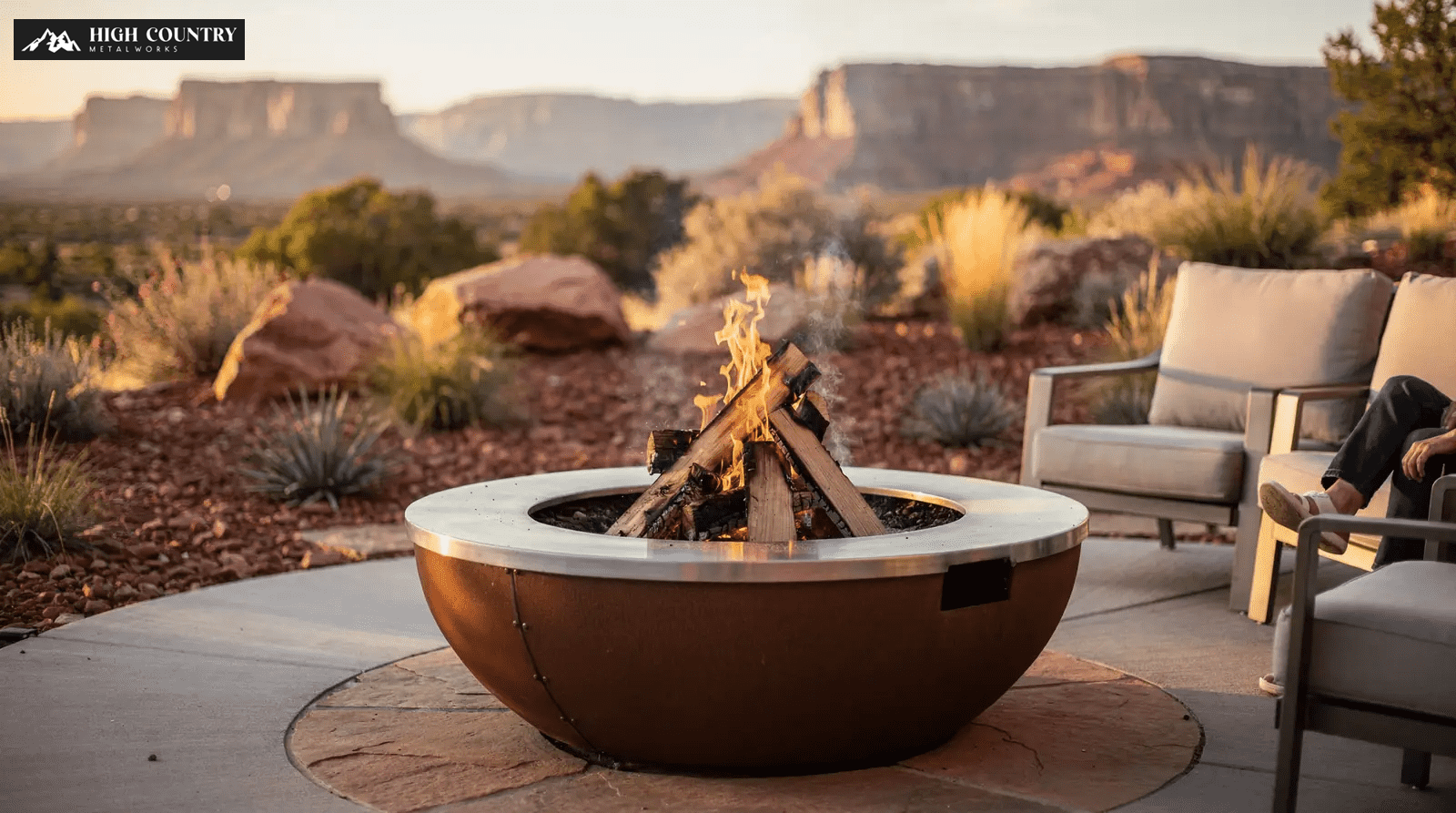
Good outdoor fire pit designs start from the site, not the catalog. A pit that looks right on a Wasatch Front patio can disappear in a wide Heber Valley yard or crowd a townhome courtyard. We size the bowl, rim height, and base against the surrounding hardscape, then check sightlines from where people will actually sit.
Several design choices pay off in Utah specifically:
Wind guards and spark screens. Canyon and bench properties see afternoon gusts that push embers sideways. A short steel guard steadies the fire without blocking the view.
Integrated seating ledges. A wide, flat rim at bench height turns the pit into furniture and keeps chairs back.
Laser-cut pattern panels. Ridgelines, aspen groves, or a family monogram throw light across the yard after dark.
Linear fire tables. A rectangular gas burner suits long, modern patios and doubles as a drink ledge.
Heat shielding on decks. Pits on combustible decking need a non-combustible pad and clearance, planned from the start.
Material tone matters too. Corten echoes red rock and sagebrush country, while stainless pairs with glass railings and contemporary stonework. Because one shop can fabricate the pit, railings, gates, and planter boxes, finish and edge detail can match across the property. That consistency is how custom backyard fire pits end up looking designed rather than added on.
Wood or Gas: Matching the Fuel to Utah's Burn Rules
Most articles on this topic stop at "wood-burning or gas." In Utah, the choice carries legal consequences that change how often the pit can be used.
Winter No-Burn Days
The Utah Division of Air Quality issues mandatory no-burn actions during winter inversions. According to the Utah Division of Air Quality, the regulations cover Box Elder, Cache, Davis, Salt Lake, Tooele, Utah, and Weber counties, and local health departments apply them to outdoor fire pits as well as fireplaces and stoves. Salt Lake County goes further and bans outdoor fires on voluntary action days too. A wood-burning pit in those counties can sit idle for stretches of the cold season, and violations carry fines.
A gas burner is not a solid-fuel device, so gas pits are generally treated differently under these programs. Check the UtahAir app or air.utah.gov for your county's status before lighting any pit. For Wasatch Front homeowners who want to use the fire all winter, gas is the practical answer.
Summer Fire Restrictions
When the State Forester issues Stage 1 restrictions, open fires are prohibited in unincorporated areas except in permanently constructed fire pits at private homes with pressurized water. Those orders do not apply to private land inside incorporated city limits, but they cover many foothill and canyon properties. A freestanding steel bowl may not count as permanently constructed, so ask your county fire marshal before lighting one.
Gas Lines, Burners, and Permits
Hard-piped gas lines to outdoor fire pits generally require a gas permit, a licensed installer, and inspection. Park City's building department, for example, asks installers to document BTU load and an elevation deration factor. Altitude reduces burner output, so burner size has to match both the pit and the elevation: an oversized burner flares, and an undersized one produces a weak flame. We design around a standard BTU burner and coordinate with licensed gas contractors for the line itself.
Metal Fire Pit Fabrication From Sketch to Installation
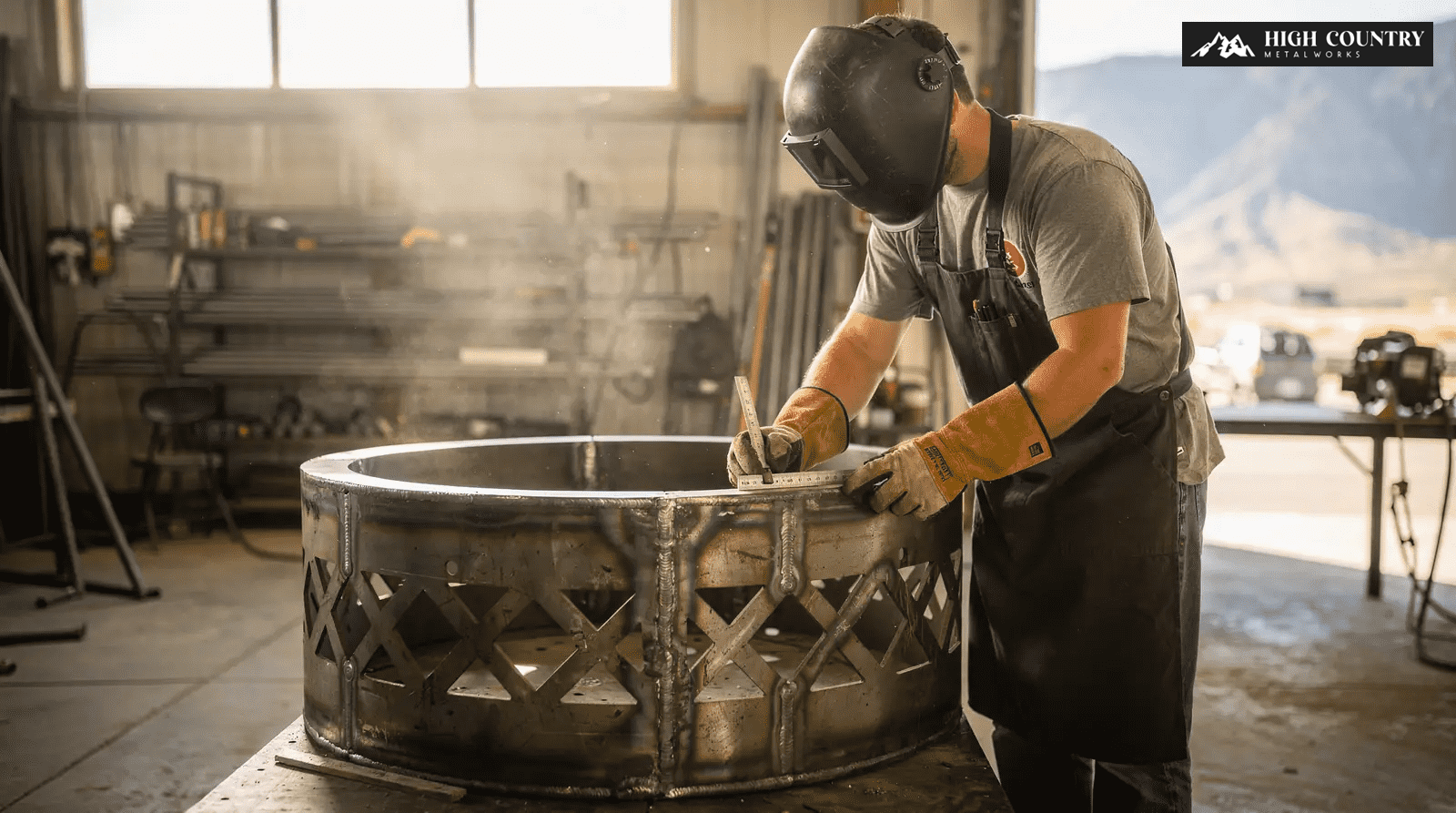
Metal fire pit fabrication follows a predictable sequence, and knowing it helps homeowners compare quotes accurately.
Site visit and measurements. Clearances, slope, drainage, and sightlines set the size and shape.
Material and finish selection. Corten, stainless, or mild steel, plus the coating specification.
Drawing approval. Dimensions, burner layout, rim profile, and base type are fixed before steel is cut.
Cutting and forming. Plate is cut, rolled, or brake-formed, and pattern work is cut here.
Welding and finishing. Continuous seams are welded and ground, then finished or left raw for patina.
Delivery and installation. The pit is leveled, anchored, and connected to gas by licensed trades.
When comparing quotes, ask each shop for plate thickness, weld type, finish rating, and drain details in writing.
Maintaining Custom Metal Fire Pits Through Utah Winters
Freeze-thaw cycles stress welds and anchors, and de-icing salts tracked onto patios accelerate corrosion on exposed steel.
Before the first snow, clear the drain, remove cooled ash, and fit a vented cover. Wet ash holds moisture against the steel and speeds rust, so never leave it in the bowl through winter. After the last freeze in spring, inspect welded seams and anchor points for hairline cracks or loose fasteners.
Rust needs a complete repair, not just removal. Follow this sequence:
Remove loose rust with a wire brush or abrasive pad.
Apply a high-heat rust-inhibiting primer immediately, before flash rust forms.
Finish with a high-heat-rated topcoat.
Conclusion
The best custom metal fire pits in Utah are designed around the climate, the fuel rules, and the property before they are designed around looks. Match the steel to the exposure, specify thick plate with continuous welds and proper drainage, and choose a fuel that fits your county's burn restrictions. High Country Metal Works can fabricate a pit sized to your space and coordinated with your railings, gates, and planters. Contact us to start the design conversation.
FAQ
1. What is the best material for custom metal fire pits in Utah?
Corten and stainless steel perform best because both resist corrosion with little maintenance. Mild steel works with a high-heat finish and periodic touch-ups.
2. How thick should steel fire pits be?
Plate between 3/16 and 1/4 inch with a reinforced rim resists warping under repeated high heat. Thinner sheet steel tends to ripple and crack at the seams.
3. Can I use a fire pit on Utah no-burn days?
Wood-burning pits are prohibited on mandatory no-burn days in several Utah counties, and Salt Lake County also restricts them on voluntary days. Gas pits are generally treated differently, but confirm current rules at air.utah.gov.
4. Do custom backyard fire pits need a permit in Utah?
Hard-piped gas lines generally require a permit and a licensed installer, while requirements for wood-burning pits vary by city and county. Call your local building and fire departments before installation.
5. How long does a Corten steel fire pit take to develop its patina?
Patina begins within days and typically stabilizes over several months, depending on weather and moisture. Wet-dry cycling speeds the process, while constant dampness keeps it patchy.


